


The U.S. wastes roughly 29 percent of its food.1 Of the estimated 70 billion pounds of food that go to waste every year, much of it is perfectly edible and nutritious. Food is lost or wasted for a variety of reasons: bad weather, processing problems, overproduction and unstable markets all cause food loss long before it arrives in a grocery store, while overbuying, poor planning and confusion over labels and safety contribute to food waste at stores and in homes. This surplus food is worth an estimated $380 billion, a staggering price tag, with very little of it being repurposed or reused.2 Uneaten food also puts unneeded strain on the environment by wasting valuable resources like water and farmland. At a time when 13.5 percent of American households are food insecure3, surplus food represents a serious misallocation of resources: The 114 billion meals’ worth of food that goes uneaten annually would be enough to feed a third of the people in the U.S. for a year.4
What is wasted food?
A simple question with a complicated answer: There are many different ways to look at the food that’s wasted throughout food supply chains, and different organizations use different definitions depending on their goals.
Food loss, as defined by the United States Department of Agriculture (USDA), is one of the broadest ways to look at wasted food. It incorporates not only the edible food that is wasted by consumers and businesses, but also the edible and inedible portions of that food that are discarded, plus all of the food that doesn’t make it to consumers, such as crops that go unharvested or food that spoils in transit.5 Surplus food is a closely overlapping definition.6 As the national surplus food statistics cited above demonstrate, these concepts are useful for thinking about the overall impact of uneaten food on the environment or calculating what it costs to produce food that goes uneaten.
Many organizations define food waste as a subset of food loss. The USDA’s food waste measures include any “food discarded by retailers due to color or appearance and plate waste by consumers.7” Food waste includes the half-eaten meal left on the plate at a restaurant (i.e., plate waste), food scraps from preparing a meal at home and the sour milk a family pours down the drain. This definition of food waste is helpful for identifying what behaviors by individuals, households and businesses lead to uneaten food. Some organizations include inedible portions of food that are thrown away, like bones or vegetable trimmings, in their definition of food waste, especially when looking at its impact on landfills and identifying the potential benefits of composting.
Where is food lost?
Edible food is discarded at every point along the food chain: on farms and fishing boats, during processing and distribution, in retail stores, in restaurants and at home.
Food loss on farms
Food production uses 53 percent of all land and 47 percent of all freshwater consumed in the U.S. 8 9 Yet nearly 17 billion pounds of produce is lost on farms every year.10
Food loss occurs on farms for a variety of reasons. To hedge against pests and weather, farmers often plant more than consumers demand. Food may not be harvested because of damage caused by weather, pests and disease. Market conditions off the farm can lead farmers to throw out edible food. If the price of produce on the market is lower than the cost of transportation and labor, sometimes farmers will leave their crops unharvested. This practice, called dumping, happens when farmers are producing more of a product than people are willing to buy, or when demand for a product falls unexpectedly. During the COVID-19 pandemic, for example, farmers lost a major portion of their business due to restaurant and school lunchroom closures. This led them to the painful decision to plow over edible crops and dump up to 3.7 million gallons of milk per day onto fields rather than go through the additional cost of harvesting and processing products they could not sell.11
While the government has programs to buy excess produce and donate it to food shelves and emergency relief organizations, the highly specialized processing and transportation networks for many products makes donation difficult and expensive.12
Cosmetic imperfections (leading to so-called ugly produce) are another significant source of food waste on farms both before and after harvest, since consumers are less interested in misshapen or blemished items. Food-safety scares and improper refrigeration and handling can also force farmers to throw out otherwise edible food.13 Finally, in recent years, farmers have been forced to leave food in the fields due to labor shortages caused by changing immigration laws.14
Food loss on fishing boats
A recent study by the Economic Forum estimates that about 11 percent of the fish caught in the world’s marine fisheries is discarded at sea — about 9.2 million edible tons per year.15 Discards are the portion of the catch of fish that are not retained and are often returned dead or dying back into the water, often because the remaining parts are less valuable for sale than fillets and other cuts. These discards could feed people, but largely go to waste. In addition to wasting fuel and labor resources, discarding throws the ocean’s ecosystem off balance by increasing food for scavengers.16
Bycatch, which describes non-target species that are caught alongside the targeted species, are also largely discarded. A recent U.S. study found that discarded bycatch makes up 16 to 32 percent of commercial catches.17 While some of these fish are edible and could make it to market, many are best left in the water. Improvements in fishing gear and avoiding fishing strategies like trawling can reduce bycatch.
Food loss in produce packing houses
Some produce that does not meet strict retailer or consumer cosmetic standards goes to suppliers for processing, but even if suppliers are willing to accept the produce, they must be close enough to justify transportation costs and able to accept large volumes of produce. These cost barriers make it particularly challenging for small and midsize farmers to get these secondary items to processors.18
Of the estimated 125 to 160 billion pounds of food that goes to waste every year, much of it is perfectly edible and nutritious.
Food loss in manufacturing facilities
Most waste at manufacturing and processing facilities is generated while trimming off edible portions, such as skin, fat, crusts and peels from food. Some of this is recovered and used for other purposes, like animal feed. Even with this recovered and reused material taken out of the calculation, about 13.6 million tons of food are wasted in the food processing or manufacturing stage.19 A number of issues, such as overproduction, product damage and technical problems at manufacturing facilities, contribute to these large quantities of food waste. Much like farms, food processing facilities are vulnerable to labor disruptions and shortages. During the COVID-19 outbreak, many meat processing facilities closed as workers fell ill, which forced processing plants to close. This meant that the animals, which could no longer be processed, were slaughtered and discarded by the thousands.20
Food loss in transportation and distribution networks
During food transportation and distribution, perishable foods are vulnerable to loss; this is especially the case in developing nations where access to adequate and reliable refrigeration, infrastructure and transportation can be a challenge. While this is not a significant source of food waste in the U.S., food waste does occur when produce spoils from improper refrigeration.21 A more prevalent problem at this stage is the rejection of perishable food shipments, which are thrown out if another buyer can’t be found quickly. It is estimated that around 2 percent of food waste stems from rejections by buyers.22 Even if these goods make it to market, they are often wasted anyway because of shorter shelf lives. Often, rejected food shipments are donated to food rescue organizations, but the quantities are sometimes too large to accept.23
Where is food wasted?
Food waste in retail businesses
An estimated 3.9 million tons of food were wasted in U.S. retail stores in 2024, costing supermarkets an estimated $26 billion annually in unsold food.24 This is particularly disconcerting given that 13.5 percent of American households were food insecure at the same time.25 Most of the loss in retail operations is in perishables, including baked goods, produce, meat, seafood and prepared meals.26 Unfortunately, wasteful practices in the retail industry are often viewed as good business strategies. Some of the main drivers for food loss at retail stores include overstocked product displays; expectation of cosmetic perfection of fruits, vegetables and other foods; oversize packages; the availability of prepared food until closing; expired “sell by” dates; damaged goods; outdated seasonal items; over-purchasing of unpopular foods; and understaffing.27
Food waste in restaurants and institutions
Food service, both at restaurants and institutions like schools, hotels and hospitals, generated an estimated 12.5 million tons of surplus food in 2024.28 Approximately 4 to 10 percent of food purchased by restaurants is wasted before reaching the consumer. Drivers of food waste at restaurants include oversize portions, inflexibility of chain store management and extensive menu choices.29 According to the Cornell University Food and Brand Lab, on average, diners leave 17 percent of their meals uneaten; 55 percent of edible leftovers are left at the restaurant.30 This is partly due to a significant increase in portion sizes over the past 30 years: They are often two to eight times larger than USDA or Federal Drug Administration (FDA) standard servings.
Kitchen culture and staff behavior such as over-preparation of food, improper ingredient storage and failure to use food scraps and trimmings can also contribute to food loss.31 All-you-can-eat buffets are particularly wasteful, since extra food cannot legally be reused or donated due to health code restrictions. The common practice of keeping buffets fully stocked during business hours (rather than allowing items to run out near closing) creates even more waste.32
Food waste in households
Households are responsible for the largest portion — 33.5 percent — of all surplus food. The nonprofit ReFED estimates that U.S. households waste 23.45 million tons of food per year.33 In the U.S., an average person wastes 256 pounds of food per year, at a cost of $728 per person per year — around 11 percent of average annual food spending.34 Seafood is the most-wasted category of food in homes: Consumers waste 53 percent of the seafood they buy. Households also waste 51 percent of the added sugars they purchase, along with 39 percent of fruits and 37 percent of vegetables.
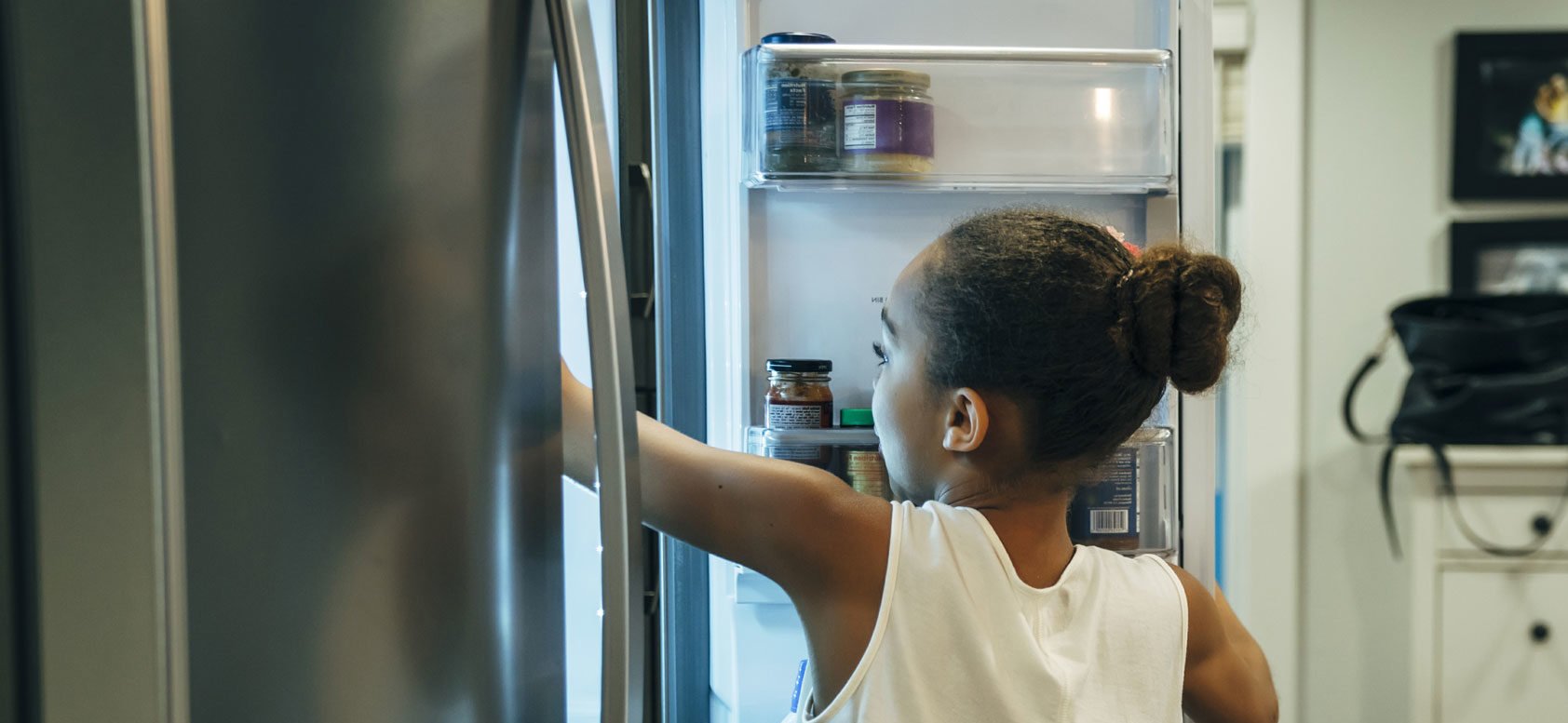
There are several major reasons that people waste food at home:
- Food spoilage — Studies have highlighted spoilage as the biggest single reason people give for throwing out edible food.35 Food spoilage at home occurs due to improper storage, partially used ingredients and misjudged food needs. Storing food in less-visible areas, along with poor planning, leads many people to forget to prepare it before it goes bad. Many people also cite leaving food out too long before refrigerating it as a reason they end up wasting food.36
- Over-preparing — People often cook and serve more food than they need. Cooking portions have increased over time, and large meals often include more food than people can finish. The Cornell Food and Brand Lab found that since 2006, serving sizes in “The Joy of Cooking,” one of the bestselling American cookbooks of all time, have increased by 36 percent.37 Many people don’t eat leftovers, forget about them, or leave them sitting out too long to eat safely, leading to waste.38
- Date-label confusion — Confusion over the meaning of date labels (e.g., “sell by,” “best if used by,” “expires by,” and so forth) leads people in the U.S. to throw away an estimated 1.5 million tons of food annually.39 In reality, “sell by” and “use by” dates are not federally regulated and only serve as manufacturer suggestions for peak quality. Adopting federal laws like the Food Date Labeling Act could help eliminate confusion and unnecessary waste of edible food.40
- Overbuying — Sales on unusual products and promotions that encourage impulse and bulk food purchases at retail stores often lead consumers to purchase items that do not fit into their regular meal plans and, therefore, spoil before they can be used.41
- Poor planning — Without meal plans and shopping lists, consumers often make inaccurate estimates of what and how many ingredients they will use during the week. Unplanned restaurant meals or food delivery can also lead to food at home going bad before it can be used.42
What are the environmental impacts of food waste?
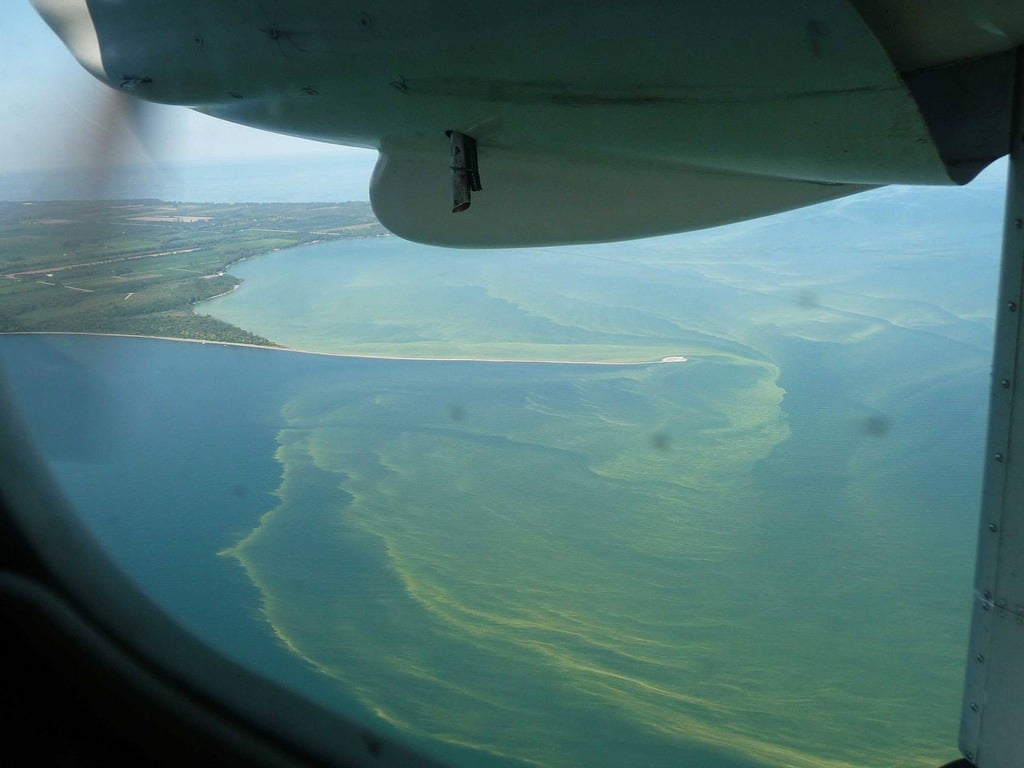
Uneaten food is a big waste of limited resources. Crops and livestock require a lot of water, and about 16 trillion gallons of that water ultimately go toward wasted food. That includes 15 percent of all the groundwater that is extracted to water crops, a dwindling resource in many drought-prone areas.43
Decomposing food also has serious consequences for the climate. In the low-oxygen environment of a landfill, bacteria quickly turn food waste into the greenhouse gas methane, which warms the climate about 28 times more than an equivalent amount of carbon dioxide. Surplus food was responsible for about 9 percent of U.S. methane emissions in 2024.44 Composting surplus food can help avoid some of those emissions, but only about 16 percent of surplus food is composted, compared to the 32 percent that ends up in landfills.45 Even though composting can help reduce the carbon footprint associated with surplus food, it would still be most efficient if that food were eaten: Regardless of where it ends up, uneaten food represents about 3.5 percent of total U.S. greenhouse gas emissions.
The land used to grow unwanted food — about 140 million acres — also factors into its environmental cost. Without food waste, that area, about 15 percent of U.S. farmland, could be returned to wildlife and used to sequester carbon from the atmosphere, rather than being degraded by industrial agriculture that worsens soil and water quality and reduces biodiversity.46
Are we making progress on food waste?
Despite efforts by individuals, communities, governments and international organizations to raise awareness, food waste remains a persistent problem in our food system. Because loss and waste occur at every node in the food supply chain, no single policy or approach can resolve it.
In the U.S., the USDA and Environmental Protection Agency (EPA) adopted federal targets to cut food waste by 50 percent by 2030, reaffirming their commitment to these goals in 2024. ReFED signed a formal agreement with the EPA in 2019 to assist with this goal, and has helped the agency quantify the extent of U.S. food waste and mapped out the impact of many different food-waste reduction strategies.47 Some of these strategies, like centralized composting and other programs to keep food scraps out of landfills, require investment from local and federal governments.48
Other solutions rely on food businesses: The adoption of advanced inventory management and demand-planning tools could help cut back on unsold and uneaten food that’s produced everywhere from the farm to the store or restaurant. Meanwhile, investor activity is expanding the market for upcycled products — items made from redirected food waste — or for expanded food-recycling streams that divert potential waste from landfills and toward productive uses like animal feed.49 Businesses can also redirect food toward food banks and other organizations, though distribution and storage logistics and funds needed for gleaning, collecting, packaging and distribution remain a barrier, as does the fear of legal liability for food that has gone bad. The Good Samaritan Food Donation Act, signed into law in 1996, provides legal liability protection for food donors and recipients and tax benefits for participating businesses. However, awareness about this law and trust in the protections it offers remain low.50
If funded, these strategies can all deliver big savings in money and resources, but they don’t address the biggest driver of food waste: the behavior of individuals. Changing that is complicated. Despite a 205-percent increase in media coverage of food waste between 2011 and 2016, and survey data indicating most adults agree that food waste is important to them, turning awareness into action has been slow: Household food waste has remained stubbornly high.51
However, from 2023 to 2024, ReFED data shows households finally reduced food waste by about 5 percent, with most reporting simple behavior changes like checking what they have before shopping, freezing more food and more careful meal planning.52
What drove these changes? In short, rising food prices pushed many households to treat food more carefully. These shifts show that consumer change is not only possible, it can have big implications for food waste nationally: These consumer shifts helped push waste down 2.2 percent in a single year, the first such reduction since the COVID-19 pandemic.53 Cementing such behavioral changes could be assisted by education and outreach programs, as well as common sense legislation like the federal Food Date Labeling Act.
What you can do
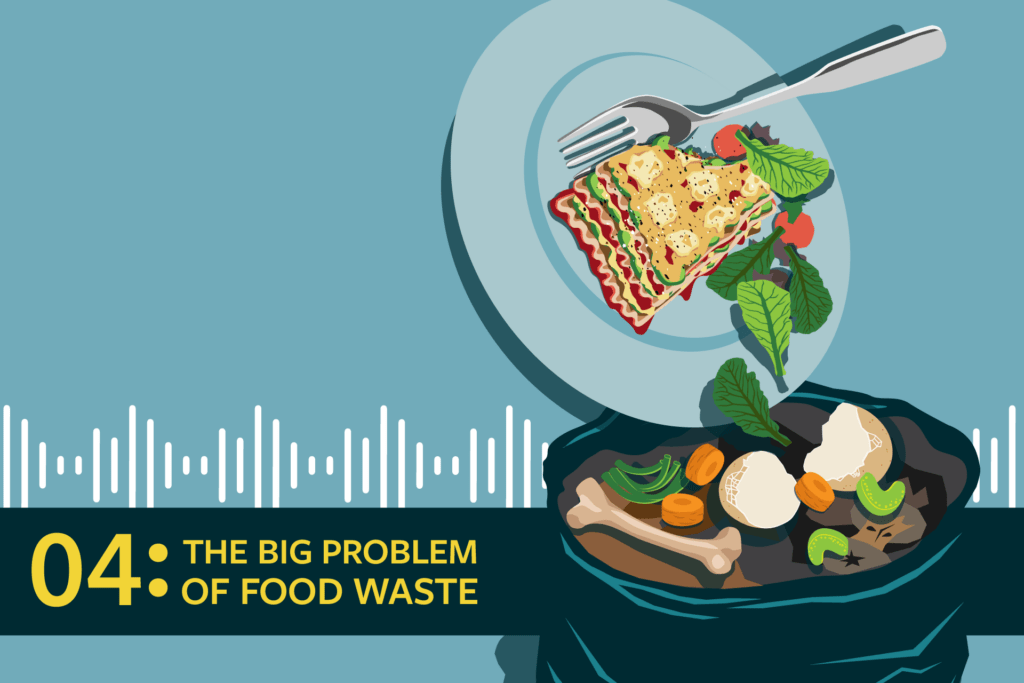
- Listen to our podcast episode, “The Big Problem of Food Waste.”
- Learn what you can do at home to help reduce food waste with our ideas for cooking with less waste.
- Try planning meals and shopping in advance, and other tips for creating a zero-waste kitchen.
- Learn how to compost at home or see if your local government has a municipal composting program you can participate in. You can also check local organizations or farms to see if they do drop-off of food waste.
Get the latest food news, from FoodPrint.
Photo on previous page by Pixavril/Adobe Stock.
Hide References
- ReFED. “Progress on the Plate: 2026 ReFED U.S. Food Waste Report.” ReFED, 6 Apr. 2026, refed.org/uploads/2026-food-waste-report-design-final-1.pdf.
- Ibid.
- Economic Research Service. “Food Security in the U.S. – Key Statistics & Graphics.” Economic Research Service, U.S. Department of Agriculture, 30 Mar. 2026, www.ers.usda.gov/topics/food-nutrition-assistance/food-security-in-the-us/key-statistics-graphics.
- ReFED. “Progress on the Plate: 2026 ReFED U.S. Food Waste Report.” ReFED, 6 Apr. 2026, refed.org/uploads/2026-food-waste-report-design-final-1.pdf.
- Thyberg, Krista L., and David J. Tonjes. “Drivers of food waste and their implications for sustainable policy development.” Resources, Conservation and Recycling, vol. 106, Jan. 2016, pp. 110–123, https://doi.org/10.1016/j.resconrec.2015.11.016.
- ReFED. “Progress on the Plate: 2026 ReFED U.S. Food Waste Report.” ReFED, 6 Apr. 2026, refed.org/uploads/2026-food-waste-report-design-final-1.pdf.
- Thyberg, Krista L., and David J. Tonjes. “Drivers of food waste and their implications for sustainable policy development.” Resources, Conservation and Recycling, vol. 106, Jan. 2016, pp. 110–123, https://doi.org/10.1016/j.resconrec.2015.11.016.
- Economic Research Service. “Irrigation & Water Use.” Economic Research Service, U.S. Department of Agriculture, 27 Jan 2026, www.ers.usda.gov/topics/farm-practices-management/irrigation-water-use/.
- Economic Research Service. “Land Use, Land Value & Tenure.” Economic Research Service, U.S. Department of Agriculture, 5 May 2025, www.ers.usda.gov/topics/farm-economy/land-use-land-value-tenure.
- ReFED. “Food Waste by Sector: Farm.” ReFED, 2025, https://refed.org/downloadswww.ers.usda.gov/topics/farm-practices-management/irrigation-water-use/by-sector-farm-2025.pdf.
- Yaffe-bellany, David, and Michael Corkery. “Dumped Milk, Smashed Eggs, Plowed Vegetables: Food Waste of the Pandemic.” The New York Times, The New York Times, 11 Apr. 2020, www.nytimes.com/2020/04/11/business/coronavirus-destroying-food.html.
- Charles, Dan. “Food Shortages? Nope, Too Much Food In The Wrong Places.” NPR, National Public Radio, 3 Apr. 2020, www.npr.org/sections/thesalt/2020/04/03/826006362/food-shortages-nope-too-much-food-in-the-wrong-places.
- Gunders, Dana, et al. “Wasted: How America Is Losing up to 40 Percent of its Food …” NRDC, Natural Resources Defense Council, Aug. 2017, www.nrdc.org/sites/default/files/wasted-2017-report.pdf.
- ReFED. “Progress on the Plate: 2026 ReFED U.S. Food Waste Report.” ReFED, 6 Apr. 2026, refed.org/uploads/2026-food-waste-report-design-final-1.pdf.
- Bottema, Mariska, et al. “Investigating Global Aquatic Food Loss and Waste 2024.” World Economic Forum, World Economic Forum, Apr. 2024, www.weforum.org/publications/investigating-global-aquatic-food-loss-and-waste/.
- Groenewold, Stefan and Fonds, Mark. “Effects on benthic scavengers of discards and damaged benthos produced by the beam-trawl fishery in the southern North Sea.” ICES Journal of Marine Science, 57(5): 1395-1406 Oct. 2000, doi.org/10.1006/jmsc.2000.0914.
- Love, Dave C. et al. “Wasted seafood in the United States: Quantifying loss from production to consumption and moving toward solutions.” Global Environmental Change, 35, 116-124. Nov. 2015, https://www.sciencedirect.com/science/article/pii/S0959378015300340.
- Gunders, Dana, et al. “Wasted: How America Is Losing up to 40 Percent of its Food …” NRDC, Natural Resources Defense Council, Aug. 2017, www.nrdc.org/sites/default/files/wasted-2017-report.pdf.
- ReFED. “Progress on the Plate: 2026 ReFED U.S. Food Waste Report.” ReFED, 6 Apr. 2026, refed.org/uploads/2026-food-waste-report-design-final-1.pdf.
- Douglas, Leah. “Chicken Company to Cull Birds as Processing Capacity Plummets.” Food and Environment Reporting Network, 12 Apr. 2020, thefern.org/ag_insider/chicken-company-to-cull-birds-as-processing-capacity-plummets.
- Gunders, Dana, et al. “Wasted: How America Is Losing up to 40 Percent of its Food …” NRDC, Natural Resources Defense Council, Aug. 2017, www.nrdc.org/sites/default/files/wasted-2017-report.pdf.
- ReFED. “Progress on the Plate: 2026 ReFED U.S. Food Waste Report.” ReFED, 6 Apr. 2026, refed.org/uploads/2026-food-waste-report-design-final-1.pdf.
- Gunders, Dana, et al. “Wasted: How America Is Losing up to 40 Percent of its Food …” NRDC, Natural Resources Defense Council, Aug. 2017, www.nrdc.org/sites/default/files/wasted-2017-report.pdf.
- ReFED. “Progress on the Plate: 2026 ReFED U.S. Food Waste Report.” ReFED, 6 Apr. 2026, refed.org/uploads/2026-food-waste-report-design-final-1.pdf.
- Economic Research Service. “Food Security in the U.S. – Key Statistics & Graphics.” Economic Research Service, U.S. Department of Agriculture, 30 Mar. 2026, www.ers.usda.gov/topics/food-nutrition-assistance/food-security-in-the-us/key-statistics-graphics.
- Gunders, Dana, et al. “Wasted: How America Is Losing up to 40 Percent of its Food …” NRDC, Natural Resources Defense Council, Aug. 2017, www.nrdc.org/sites/default/files/wasted-2017-report.pdf.
- Ibid.
- ReFED. “Progress on the Plate: 2026 ReFED U.S. Food Waste Report.” ReFED, 6 Apr. 2026, refed.org/uploads/2026-food-waste-report-design-final-1.pdf.
- Gunders, Dana, et al. “Wasted: How America Is Losing up to 40 Percent of its Food …” NRDC, Natural Resources Defense Council, Aug. 2017, www.nrdc.org/sites/default/files/wasted-2017-report.pdf.
- Bloom, Jonathan. American Wasteland: How America Throws Away Nearly Half Its Food (and What We Can Do About It). Cambridge, MA: Da Capo Press. p 143.
- Gunders, Dana, et al. “Wasted: How America Is Losing up to 40 Percent of its Food …” NRDC, Natural Resources Defense Council, Aug. 2017, www.nrdc.org/sites/default/files/wasted-2017-report.pdf.
- Ibid.
- ReFED. “Progress on the Plate: 2026 ReFED U.S. Food Waste Report.” ReFED, 6 Apr. 2026, refed.org/uploads/2026-food-waste-report-design-final-1.pdf.
- Kenny, Shannon. “Estimating the Cost of Food Waste to American Consumers.” EPA, U.S. Environmental Protection Agency, Apr. 2025, www.epa.gov/system/files/documents/2025-04/costoffoodwastereport_508.pdf.
- Blondin, Stacy, et al. “Identifying Priority Behavior Change Solutions to Key Drivers of Household Food Waste in the United States.” WRI, World Resources Institute, 10 Sept. 2025, doi.org/10.46830/ wrirpt.24.00003.
- Ibid.
- Lehner, Peter. “Tackling Food Waste at Home.” NRDC, Natural Resources Defense Council, 21 Aug. 2012, https://www.nrdc.org/experts/peter-lehner/tackling-food-waste-home
- Blondin, Stacy, et al. “Identifying Priority Behavior Change Solutions to Key Drivers of Household Food Waste in the United States.” WRI, World Resources Institute, 10 Sept. 2025, doi.org/10.46830/ wrirpt.24.00003.
- ReFED. “How Do Date Labels Contribute to Food Waste—and What Do They Really Mean?” ReFED, 2026, refed.org/food-waste/date-labeling/.
- ReFED. “Food Date Labeling Act.” ReFED, 19 Mar. 2026, https://policyfinder.refed.org/federal-policy/food-date-labeling-act.
- Blondin, Stacy, et al. “Identifying Priority Behavior Change Solutions to Key Drivers of Household Food Waste in the United States.” WRI, World Resources Institute, 10 Sept. 2025, doi.org/10.46830/ wrirpt.24.00003.
- Gunders, Dana, et al. “Wasted: How America Is Losing up to 40 Percent of its Food …” NRDC, Natural Resources Defense Council, Aug. 2017, www.nrdc.org/sites/default/files/wasted-2017-report.pdf.
- ReFED. “Progress on the Plate: 2026 ReFED U.S. Food Waste Report.” ReFED, 6 Apr. 2026, refed.org/uploads/2026-food-waste-report-design-final-1.pdf.
- Ibid.
- Ibid.
- Ibid.
- “Federal Interagency Collaboration to Reduce Food Loss and Waste.” EPA, United States Environmental Protection Agency, 6 Mar. 2026, www.epa.gov/sustainable-management-food/federal-interagency-collaboration-reduce-food-loss-and-waste.
- ReFED. “Progress on the Plate: 2026 ReFED U.S. Food Waste Report.” ReFED, 6 Apr. 2026, refed.org/uploads/2026-food-waste-report-design-final-1.pdf.
- Ibid.
- Harvard Food Law and Policy Clinic. “Recommendations to Strengthen the Bill Emerson Good Samaritan Act.” NRDC, Natural Resources Defense Council, Sept. 2017, https://www.nrdc.org/sites/default/files/recommendations-bill-emerson-good-samaritan-act-fs.pdf.
- Gunders, Dana, et al. “Wasted: How America Is Losing up to 40 Percent of its Food …” NRDC, Natural Resources Defense Council, Aug. 2017, www.nrdc.org/sites/default/files/wasted-2017-report.pdf.
- ReFED. “Progress on the Plate: 2026 ReFED U.S. Food Waste Report.” ReFED, 6 Apr. 2026, refed.org/uploads/2026-food-waste-report-design-final-1.pdf.
- Ibid.