
RFK Jr. calls for regenerative agriculture — companies heed the call by greenwashing
In 2020, Cargill announced it will advance regenerative agriculture across 10 million acres in North America by 2030. Three years later, Nestlé said it will source 50 percent of its key ingredients from farmers adopting regenerative practices by 2030. By the same year, General Mills wants to advance regenerative agriculture on 1 million acres of farmland. “Regenerative agriculture” is everywhere, but what does that phrase actually mean?
Though it is historically known as a sustainable farming philosophy grounded in Indigenous knowledge that prioritizes soil restoration and ecosystem biodiversity, regenerative agriculture has no universal definition. Like many terms in the sustainability stratosphere — eco-friendly, all-natural, net-zero — regenerative is quickly becoming a buzzword used by corporations to exaggerate sustainability claims without actually changing their food production practices.
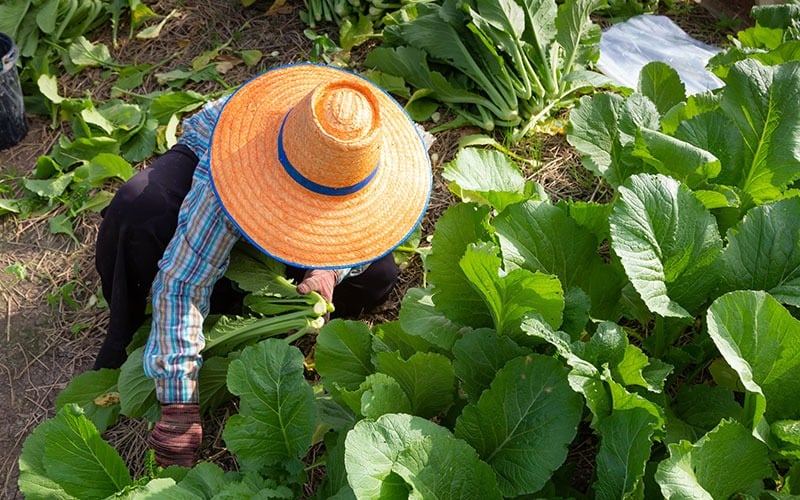
“Regenerative has become a term that’s just a catch all. It doesn’t have an official or standardized definition. There’s no metrics or accountability for it,” said Stephanie Feldman, the science director at the Center for Biological Diversity.
A 2024 report by the New Climate Institute, a nonprofit dedicated to climate change research, found that many of the world’s leading food and agriculture companies including PepsiCo, Cargill and Unilever heavily referenced regenerative agriculture in their climate and sustainability strategies, but the majority did not specify how their production practices would change. Thirty companies were analyzed in the report, and only a third of those that referenced regenerative had set targets for implementation. Similarly, research from the Changing Markets Foundation found that regenerative agriculture practices simply cannot keep up with the scale of industrialized animal farming enough to offset the industry’s emissions.
“What we’re seeing is that anybody is labeling whatever practice they want as regenerative, and that’s not only harmful in terms of misleading consumers about it and greenwashing, but it hurts the producers and farmers who are truly trying to adopt better practices,” Feldman added.
That ambiguity could be particularly concerning as U.S. Health and Human Services Secretary Robert F. Kennedy Jr. touts the benefits of the practice and pledges to fiscally support regenerative farmers. In December 2025, he and Brooke Rollins, the agriculture secretary, announced a $700 million Regenerative Agriculture Initiative (RAI) to help American farmers transition to regenerative agriculture practices that “improve soil health, enhance water quality, and boost long-term productivity.” Much of the program’s funds are a repackaging of existing U.S. Department of Agriculture (USDA) conservation programs like the Environmental Quality Incentives Program (EQIP) and the Conservation Stewardship Program (CSP). While RFK Jr. has been particularly vocal about the benefits of regenerative, the Biden administration also promoted and extensively funded regenerative practices.
Financial assistance like this is vital to farmers looking to truly transition to regenerative systems, which, if done correctly, is a yearslong and expensive process, said Dan Kane, an agricultural ecologist and science director at Mad Agriculture.
“It means new practices, new equipment. It might be learning new rotations, new markets, all those different things. In the first few years, finance is critical. It can make or break your operation,” Kane said.
But funding for regenerative agriculture doesn’t mean much if there aren’t adjacent regulations in place. Though RFK Jr. claims to support small-scale farmers through initiatives like this one, he has simultaneously failed to persuade his higher-ups to regulate pesticide use on farms amidst pressure from the agrochemical industry, and has also proposed weakening the EPA’s regulation of factory farm waste in line with Trump’s deregulatory agenda.
The Trump administration’s recent staffing cuts at the USDA’s Natural Resource Conservation Service may also make it difficult to evaluate applications and properly implement the program on the ground, Kane said.
Moreover, the USDA removed an income eligibility cap on EQIP and CSP funding, which could lead to larger farms and agribusinesses receiving funds over smaller producers, he added. The majority of EQIP dollars already go to CAFOs to help them manage their exorbitant waste, which diverts funds from smaller producers that implement true conservation practices. A 2024 report from the Institute of Agriculture and Trade Policy found that a disproportionate share of 2023 EQIP funding went to farms implementing practices with little conservation benefits, while two-thirds of farmer applicants were rejected. Removing the income cap will likely worsen this discrepancy.
And without a clear definition of what regenerative actually means — both on a universal scale and within the policy itself — Feldman fears there could be additional challenges in ensuring the funding goes to producers who are actually implementing regenerative practices.
“If there is a policy that is shuffling funds toward regenerative agriculture, it should be clearly defined within that policy,” she said. “What is regenerative? What qualifies as regenerative agriculture, and how will that be measured and monitored?”
The roots of regenerative agriculture
The term regenerative was first popularized in the 1980s but is based on millennia of ancestral Indigenous knowledge and practices. It’s a holistic approach to growing food that goes beyond sustainability and focuses on restoration and healing soil and its surrounding ecosystem to build a more equitable food system long term. Whereas industrial agriculture has taken from and depleted the land, regeneration gives back.
With soil health at the heart of the movement, regenerative farmers use practices like cover cropping, crop rotation, grazing and reduced tillage to sequester carbon, rebuild depleted soil and increase biodiversity. In the last decade, it’s garnered attention as a meaningful and universal climate solution. But, as we’ve seen with almost every green movement, corporations have not only corrupted the term regenerative, but also the practices within it.
A 2024 report from Friends of the Earth found that when large food corporations implement no-till — a practice often considered to be the heart of regenerative agriculture — at an industrial scale, its intended environmental benefits may fall short. Ninety-three percent of U.S. corn and soy acreage grown in no-till systems (the majority of which is grown not for human consumption but rather for animal feed and ethanol) relies on pesticide use to kill cover crops or weeds before planting.
Rather than using cultivation-based strategies to kill off a cover crop as a regenerative approach would, no-till in industrial-scale, chemical-intensive systems may increase the use of chemical herbicides and pesticides, which is detrimental to soil health.
“The vast majority of no-till agriculture is far from regenerative; it’s actually very degenerative. High carbon footprint, enormous use of toxic chemicals that have an impact on the soil, not to mention our own health ecosystem,” said Kendra Klein, the science director at Friends of the Earth and co-author of the report.
“With regenerative, it runs the gamut from deeply meaningful, truly transformative initiatives and farming to absolute greenwashing."
But the alternative — conventional tillage — isn’t the answer either. It degrades soil and leaves it vulnerable to wind and water erosion. The reality is, monoculture production at an industrial scale can’t really be regenerative; industrial operations are often without biodiversity and ecosystem balance, which are core pillars of the philosophy. To truly move toward regeneration, industrial farms would need to revolutionize how they produce food.
“With regenerative, it runs the gamut from deeply meaningful, truly transformative initiatives and farming to absolute greenwashing,” Klein said.
But standardizing and defining such a broad movement isn’t easy. Is regenerative about the practices implemented, or the amount of carbon it sequestered? Can a farm be regenerative if it doesn’t use cover crops, but is still hitting certain environmental metrics?
“Practice versus outcome is one of those debates,” said Charlotte Vallaeys, an organic expert and independent agriculture consultant who works with companies on their sustainability plans. She believes that if regenerative practices are implemented the right way, it will lead to positive outcomes. In other words, a definition and verification process should focus on changing the way we produce food, not hitting sequestration metrics.
“When writing a standard, it’s much easier for an inspector to verify if a farm has correctly implemented a certain practice, rather than measure an outcome,” she said. “If you’re going to do outcomes-based, then you have to essentially turn every farm into a scientific research site.”
Both Vallaeys and Klein pointed out that people seem to forget there’s already a strong certification standard that encompasses many of regenerative agriculture’s practices and principles: organic. Though USDA organic is criticized for a number of reasons, it has a specific set of rules for farms about pesticide use, livestock health and environmental protection. Unlike regenerative, all organic claims are meticulously verified by an independent auditor; consumers can trust the label.
“Organic is a deeply meaningful regenerative food label, and that is a huge disconnect,” Klein said. The certification’s rigidity is likely a reason so many companies are turning to regenerative instead: It’s a word that may mean something to consumers but doesn’t have the same compliance tied to it, she added.
Standardizing organic was an arduous 10-year process, however. Doing the same for regenerative could be beside the point. Regenerative, when done how it was intended, is actually far more rigorous than organic. While it may be helpful in some specific cases, Kane of Mad Agriculture said there will always be people and companies who think the definition is too broad or too narrow, that it’s doing too much or too little.
“I find [regenerative] more useful as a kind of framing, more than anything,” Kane said. Any change to food production that’s in line with regenerative values in some way is a step in the right direction, he added. “It’s really, you know about doing better, reducing harm and looking towards restoration as a valid goal within agricultural context and agricultural systems.”
Last year, the state of California completed a two-year public process to define regenerative agriculture. It included seven public-listening sessions with hundreds of farmers, scientists and food advocates from across the country. The resulting definition is broad and lacks accountability mechanisms, leaving much up for interpretation — and co-option. A national process could bring similar challenges, not to mention a huge use of time, funding and resources.
It would likely be better for both consumers and small-scale producers for the Trump administration to pour that time, funding and resources into properly regulating large agri-corporations and factory farms, which would better protect public health and ultimately level the playing field for true adopters of regenerative agriculture.
Get the latest food news from FoodPrint.
By subscribing to communications from FoodPrint, you are agreeing to receive emails from us. We promise not to email you too often or sell your information.
Photo by Margaret Burlingham/Adobe Stock.
More Reading
Oats can improve soil and water quality. All that’s missing is a market for them.
March 12, 2026
California's new folic acid mandate for tortillas sparks controversy over fortified foods
February 27, 2026
What to do when your favorite "better" brand gets called out online
February 25, 2026
MAHA wants to reform food, health and scientific systems — why is it ignoring nitrates?
December 18, 2025
From goldenseal to reishi, what is the true cost of the wellness industry's obsession with wild foods?
December 2, 2025
The invisible immigrant labor sustaining America’s chicken obsession
October 21, 2025
Can extended producer responsibility programs push food companies to use sustainable packaging?
October 16, 2025
The meat industry smeared the Planetary Health Diet. Now its creators are back with more evidence.
October 10, 2025
300 million male chicks are killed every year. Can in-ovo sexing change that?
September 30, 2025