
What if we imagined the fates of humans and animals as interconnected?
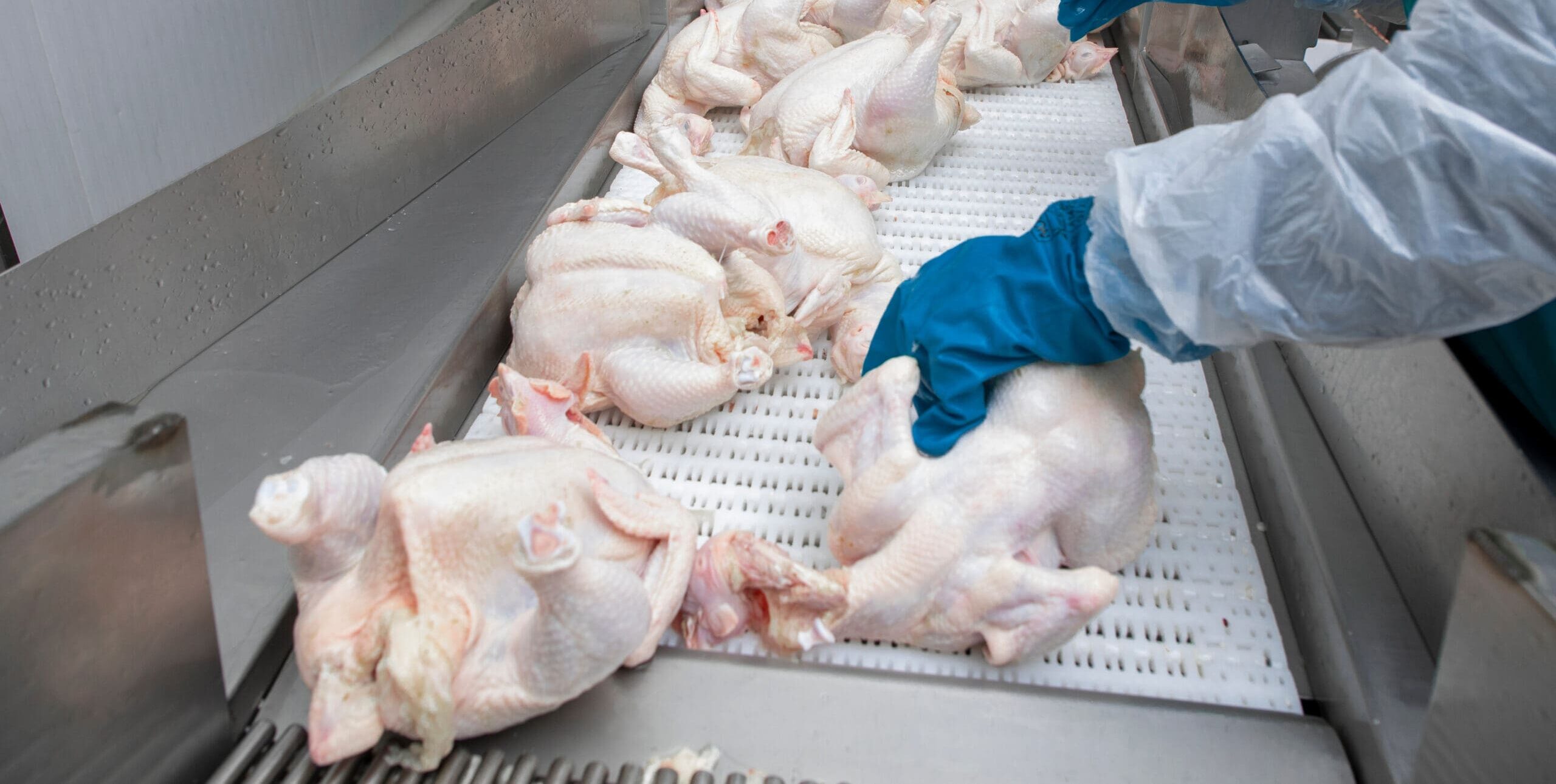
What is the difference between an animal meant for love and one meant for food? The answer, for many people, will be clear: The fates of the pet and the livestock will never overlap. In October 2025, Health and Human Services Secretary Robert F. Kennedy Jr. said that the presidential administration would be looking to phase out animal laboratory testing, not two months before announcing a new food pyramid that placed meat and dairy at the top. This exemplifies the pretzel logic of the Make America Healthy Again (MAHA) movement when it comes to animal welfare: Ending animal testing on one hand while encouraging the consumption of more steak on the other; pushing to end puppy mills while speeding up the slaughter of chickens and pigs (which also endangers workers and can lead to spread of disease). And yet, this convoluted approach to the matter of “animal welfare” points to the contradictory ways in which many people understand the differences between the animals we love and those we eat.
A new ecofeminist perspective
Ecofeminism — a philosophy that sees the troubles faced by women, the environment and animals as interconnected — offers a more holistic way forward. Three recent ecofeminist books explore this intersection, tapping into historical and Indigenous knowledge that regards nature and animals as sacred.
In “Governing Bodies: A Memoir, a Confluence, a Watershed,” engineer, animal activist and writer Sangamithra Iyer stakes her claim in what could be understood as a new wave of ecofeminism, which originally came to prominence in the 1970s. Along with Leanne Betasamosake Simpson’s “Theory of Water: Nishnaabe Maps to the Times Ahead” and Alexis Pauline Gumbs’s “Undrowned: Black Feminist Lessons from Marine Animals,” these writers are refreshing its ideas for a new generation.
While the question of which animals deserve care is an age-old conundrum, these books are coming into a political moment in which the government is enshrining the difference through ever-worsening conditions for livestock and the humans who process them while simultaneously trying to get credit for “bettering” pet life.
As Iyer writes, “There is a disconnect between caring about animals (which everyone seems to do) and eating them (which everyone seems to do).” As a lifelong vegetarian, she has a particularly pointed perspective on the contradictions inherent in making this decision. While on a family visit to India, where her parents grew up, she demands that a poor family crushing sugarcane for juice using a chained-up bull named Raja let him loose. She knows that this is the family’s livelihood and that as a visitor from the West, she should not judge how they treat their bull, whom they understand solely as a source of income; she also can’t bear to witness the suffering. Her response to these tensions in her own life has been to be vegan, become an editor at a now-defunct vegetarian magazine called Satya, and work with chimpanzee rescues, meaning that she focuses her energy on what is within her control. There’s a lesson there for those who are sensitive to violence suffered by animals yet feel overwhelmed by the systemic ways in which it has been sanctioned or deemed necessary.
In a world where animals are so often sidelined, their wellbeing relegated to a niche concern, and in which humans, too, suffer the effects of extreme weather, war and poverty, it can seem silly to concern oneself with non-humans. Indeed, that sort of view is often mocked.
At a writing residency in France that Iyer chronicles — where writers are considering the relationship between humans and nature — she mentions being ridiculed for being vegan after inquiring about what is in the salad dressing: A fellow writer jokes that it contains beef or pig’s blood. “He wants to upset or amuse me, and I don’t want to give him the satisfaction of either,” she writes. “We live in a society where the torture and destruction of animals on a mass scale is so normalized that those who choose to question it are ridiculed.” She goes on to explain how conditioned she’s been to be polite about this — to respond in kind only supports the stereotype of an angry, humorless vegan.
Seeing a pathway forward for all
These books demand the reader to consider that the interconnectedness of this experience might unlock a better future relationship with nature — and by extension, our food — as a whole.
Iyer is connected to water in her engineering work and ancestrally through her grandfather’s experience in the same field, and this deepens the ways in which she understands the interconnectedness of human, animal and ecological life. This is what makes her book so useful alongside that of Simpson, an Indigenous Canadian, who notes that our relationship to our ecological surroundings “is most powerful when it can connect the intimate to the global and move between scales effortlessly.” Gumbs, in studying marine mammals, asks, “Could we learn to love the humpback whale beyond its marketable mythology and love ourselves beyond what capitalism tells us is valuable about being us? Marine mammal mentorship offers us the chance for presence as celebration, as survival and its excess, as more than we even know how to love about ourselves and each other.”
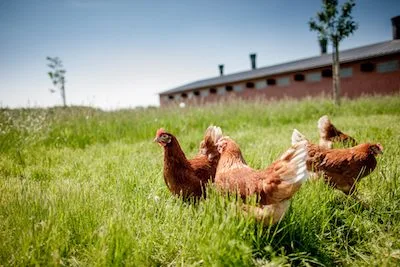
Each of these writers is asking the reader to think beyond the human without shifting one’s care entirely away from it: Too often, any concern with animal wellbeing or ecology is met with a response that suggests these are special interests, problems that can’t be addressed until people’s needs are met, rather than acknowledging the connections and lessons that can come from understanding such issues as intertwined. “I believe collaboration is natural and can be reclaimed,” writes Gumbs.
Perhaps the pressing need for collaboration and understanding between species has never been more strikingly clear. MAHA is extremely misguided in its priorities, and the questions and concerns of any movement seeking to make our food system better should be very different. What would the effects be if everyone in the United States did decide to follow the new food pyramid and prioritize beef? Cattle is already responsible for 3 percent of U.S. greenhouse gas emissions and livestock generally uses 50 percent of arable global farmland. The meat industry is a locus of ongoing human rights abuses. More than 30 million cows are slaughtered each year in the U.S. already; it’s estimated that 90 million animals total are slaughtered for food each year around the world. The speed of slaughter and the demand for meat requires the suffering not just of these animals, but of human laborers who are often undocumented, and the environmental effects are most pointedly felt in lower income areas: CAFOs and meatpacking plants are usually situated in low-income communities of color, where residents have less power to speak out against them. There is no clearer instance of the interconnectedness of these struggles than the one offered by the meat industry, but many people feel it a massive burden to consider their meat consumption, or think it is merely an issue of animal rights.
Remembering the complications of these connections and being willing to untangle what they mean for our own lives is what these books of the new ecofeminism are asking readers to do. Is it possible for more people to accept that there is little real distinction between the animals we consider pets and those we consider food? Or that industrial animal agriculture hurts not only farmed animals but also human workers and the planet? These writers tell us that it is possible — that it must be.
Get the latest food news from FoodPrint.
By subscribing to communications from FoodPrint, you are agreeing to receive emails from us. We promise not to email you too often or sell your information.
Top photo by By Studio Peace/Adobe Stock.
More Reading
What to do when your favorite "better" brand gets called out online
February 25, 2026
300 million male chicks are killed every year. Can in-ovo sexing change that?
September 30, 2025
What do faster line speeds in slaughterhouses mean for animals, workers and food safety?
May 8, 2025
When "Made in America" isn't really: Country-of-origin labeling for beef
May 8, 2025
This vegan tiramisu will bring you joy
March 11, 2025
Finding a pet food that aligns with your values
February 11, 2025
The environmental benefits — and limitations — of hunting as a food source
January 6, 2025
The USDA updated label guidelines to increase transparency — is it enough?
September 12, 2024
How can ecofeminism help us envision the future of food?
July 18, 2024