
Oats can improve soil and water quality. All that’s missing is a market for them.
As of this writing at the end of the first week of March 2026, millions of gallons of nitrogen and other fertilizer exports originating in the Middle East are stranded at the top of the Strait of Hormuz, as the U.S. and Israel bomb Iran. Some of this supply should by now have been making its way to the U.S., where farmers in the top corn– and soybean-producing states of the Midwest are getting ready to kickstart a new planting season by applying nitrogen to their cornfields — some of which will leach out into waterways and aquifers. The fertilizer backlog arrives on top of already-high fertilizer prices and increasing stress as farmers continue to absorb a year’s worth of negative effects from tariffs, fewer markets to sell their crops into, and low crop prices. And it has likely left many of them thinking about ways to reduce their need for costly fertilizer — or at least, keep more of it on their land.
A much smaller sub-group of about 200 corn and soy farmers, though, is a big step ahead of this pack; by adding a third crop of oats to their planting rotations, they are well-suited to weather this input-related ordeal. Calling themselves the Oat Mafia, six years back the group’s founders set out simply to share knowledge and resources with each other about growing food-grade oats. They wound up solving a different problem related to nitrogen fertilizer: its deleterious impacts on drinking water. In mostly southern Wisconsin, southeast Minnesota and large swaths of Iowa — all heavily invested in conventional corn and soybean farming — wells and surface waters test far above the safe limit of 10 milligrams per liter for nitrate, which has been linked to blue baby syndrome, colorectal cancer and thyroid disease. “The excessive amounts of nitrogen that are being applied [in these places] is a shining example of how terribly things can go wrong,” said Shea-Lynn Ramthun, a sixth-generation Minnesota farmer and Oat Mafia member. But adding high-quality oats to corn-soybean rotations has started to turn things around dramatically — both for farmers like Ramthun and their surrounding communities.
Growing oats in the region is nothing new. According to Silvia Secchi, a natural resource economist at the University of Iowa, Iowa grew 4 million acres of oats back in 1935; the practice started plummeting in the 1960s. “But it’s this idea of looking back to do forward-looking scenarios,” she says.
Improving the soil
By now, the Oat Mafia’s push to get companies like General Mills and Quaker to purchase their crops has been well reported; despite being located right in the Oat Mafia’s backyard, these companies now source the majority of this small grain from Canada. The Oat Mafia’s eagerness to find a big local buyer is understandable. Being able to offload food-grade oats that might sell for around $7 a bushel, rather than lower-quality oats for livestock (recently, somewhere around $3.25 a bushel), is a way for farmers to get paid more to offset the expense of trying something different. It also minimizes the carbon footprint associated with transporting oats to American factories from north of the border.
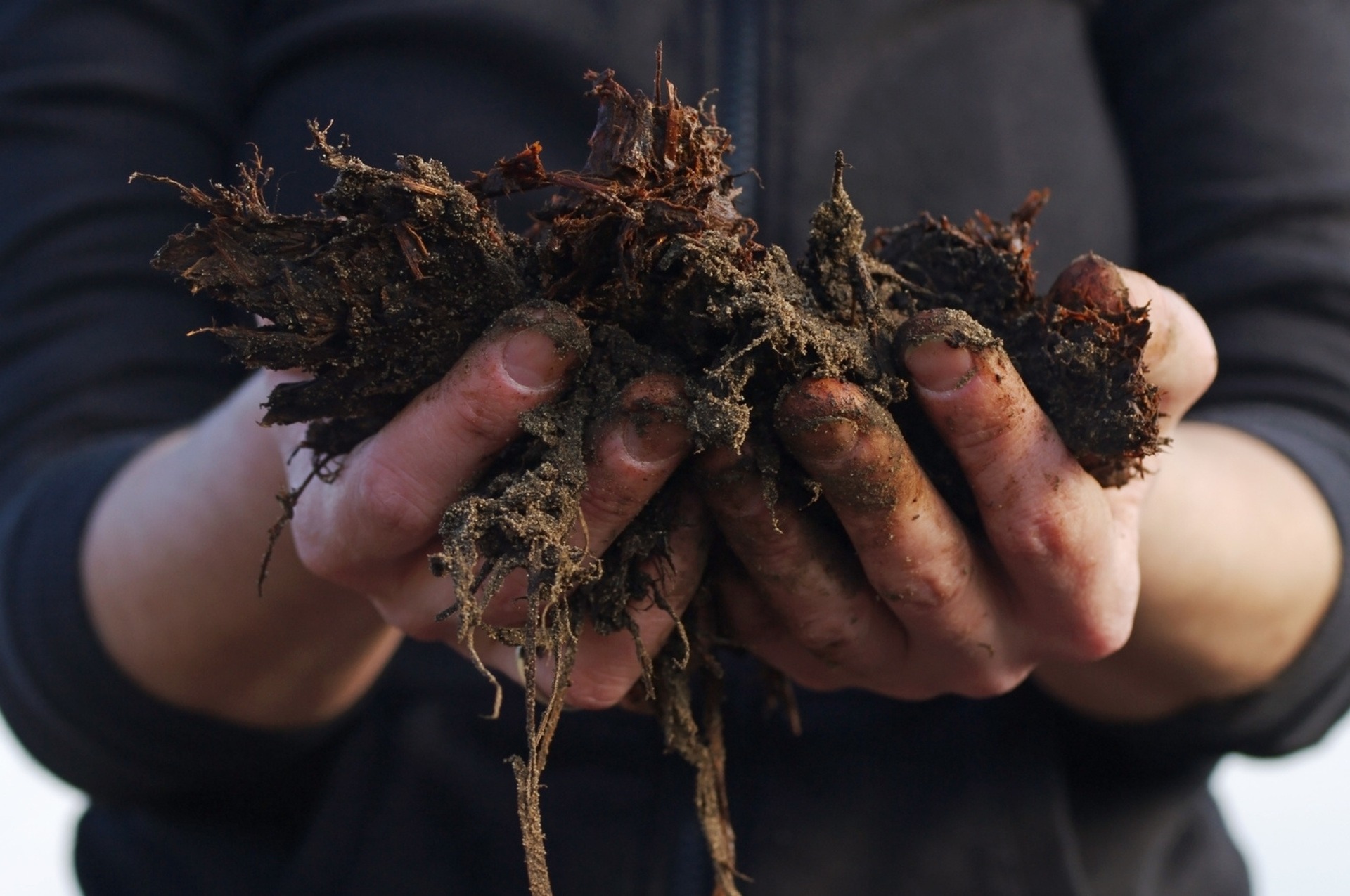
But perhaps even more impactfully, oats are what former agronomist and Oat Mafia co-founder Martin Larsen calls “a healing crop of the soil.” Unlike corn and soybeans, oats get planted when the weather’s still cool, putting down roots to hold the soil and mitigate erosion much earlier than those other plants. Additionally, says Larsen, “They have a different rooting structure, they have different plant exudates” — secretions from the roots that inhibit harmful microbes and encourage useful ones. “They’re feeding a different set of biology.”
Traditional corn and soybean farmers till their land to plant crops, which destroys the soil’s structure, kills off beneficial soil organisms, and increases erosion, among other ill effects. Adding oats to a rotation — Ramthun typically puts soybeans in the first year, followed by oats inter-seeded with a cover crop of clover in year two and corn in year three — helped Larsen and some other Oat Mafia members transition to no-till. Oats can help restart a degraded system — “like putting booster cables on your car when the battery’s dead,” Larsen says.
An additional oat rotation reduces the need for pesticides in subsequent corn and soy plantings, which Larsen calls “the most dangerous things we apply,” because a pest like a soybean aphid “isn’t going to be able to live on an oat plant, and a corn rootworm can’t eat oat roots.” It reduces the need to use weedkillers like glyphosate, because fast-growing oats don’t give weeds a chance to get a toehold in a field. And the need for commercial fertilizer also goes way down. Soybeans naturally add nitrogen to soil, and so does clover, “Supplying it the way Mother Nature intended,” says Larsen, and leaving plenty around for the corn that gets planted next.
This is where oats in a field begin to play a huge ecological role.

Improving the water
Those aforementioned regions of Minnesota, Wisconsin and Iowa all have some amount of karst in their underlying geology. Karst is a porous, soluble rock formation usually made up of limestone, through which chemical nitrogen applied to corn readily seeps. Nitrogen is usually spread on a field about a week before corn is planted in late May/early June. In the Midwest, this coincides with rainy season. “If you get more rain, you lose more [nitrogen]. If you get less rain, you lose less,” says Larsen.
Regardless, young, partially developed corn can only take up so much of that nitrogen. Same for the soybeans that come after corn. Still, many conventional farmers would rather overapply than risk a nitrogen deficiency in a young corn crop, so any nitrogen those plants do not pull up out of the soil flows through the karst — or in other parts of Iowa, through the drainage tiling installed under fields. It then enters aquifers and streams and rivers. And because so many farms are applying so much nitrogen at the same time, very quickly, says Larsen, “You’re going to surpass the drinking water standard.”
But where a corn and bean rotation “takes nitrogen in drinking water to an extreme level,” says Ramthun, ”oats bring it down nearly to zero — it’s actually taking the nitrates out of the groundwater and reversing the issue.”
As Larsen explains it, “Their root structure is really fibrous” — he equates it to the fine pores in a window screen versus the wide openings in a fishing net — which can deftly capture nitrates. In fact, the roots are so efficient at this task that Larsen helped establish a program in Olmsted County, Minnesota, where an alarming number of private wells were testing high for nitrate. Called the Olmsted County Groundwater Protection and Soil Health Program, it pays farmers switching to practices like growing oats who show positive results in removing nitrates from water. The program has been so successful that the Minnesota legislature is expanding it to include farmers in 11 of the state’s southeast counties.
To ramp up these benefits to a meaningful degree, more farmers need to grow oats, though, and that means a few other critical pieces of the puzzle have to fall into place. For starters, farmers need access to the right varieties. To that end, Stefan Gailans, research director at Practical Farmers of Iowa (PFI), has conducted 10 years’ worth of trials to figure out which oat types are high yielding, plump and heavy enough for easy milling, and also resistant to diseases that proliferate in the Midwest’s humid summers. Secchi wishes better-resourced land grant universities like the University of Minnesota and Iowa State, which have collectively spent billions of dollars to research and market corn and soybeans, would step up to help PFI on oats, especially since farmers both express interest in diversifying their rotations and say they need help to do it.
This is directly related to the biggest hurdle that oat farmers face, which is finding a steady market. Some members of the Oat Mafia have become farmer-investors in a new mill, Green Acres Milling, that’s set to come online in August of 2026 and has committed to taking oats from them this season. A Minnesota-based cereal company called Seven Sundays, which can be found on shelves at Walmart, Target and Whole Foods, might be ready to buy from Green Acres, although a deal has yet to be inked.
But to get more American farmers to grow a lot of oats — enough, say, to fulfill a contract with a company like General Mills — they’d need to be assured of a steady buyer, and in a classic chicken-and-egg conundrum, General Mills has not expressed interest. That’s where members of the Oat Mafia say consumers have a part to play, by letting companies know “They’re wanting to support the local family farm. They’re wanting to know where their food is coming from. They’re wanting to know how it’s grown and why it’s grown that way,” says Ramthun. “Otherwise, Big Ag will continue to hold the power, and that will benefit nobody.”
Get the latest food news from FoodPrint
By subscribing to communications from FoodPrint, you are agreeing to receive emails from us. We promise not to email you too often or sell your information.
Top photo by LariBat/Adobe Stock.
More Reading
Plastics are everywhere in agriculture. Why researchers are worried.
January 22, 2026
In a beefy moment, beans?
November 4, 2025
Can extended producer responsibility programs push food companies to use sustainable packaging?
October 16, 2025
The meat industry smeared the Planetary Health Diet. Now its creators are back with more evidence.
October 10, 2025
The latest Global Plastics Treaty talks failed. Where does that leave the plastic pollution crisis?
September 23, 2025
For these cocoa farmers, sustainability and the price of beans are linked
September 17, 2025
This fall, get involved in one of these campus sustainability initiatives
August 26, 2025
What we’re reading this summer
July 17, 2025
A new book says tech-supported industrial ag will feed the world. Agroecologists would like a word.
July 9, 2025