


Plastics are everywhere in agriculture. Why researchers are worried.
The impacts of plastic use in agriculture are poorly understood, but ignoring potential harms puts human and environmental health at risk.
“It’s like we’ve forgotten how to cut fruit,” says Judith Enck, a former Environmental Protection Agency regional administrator and founder of the nonprofit Beyond Plastics. Enck is referring to the pre-sliced and -diced melons and kiwis and pineapples — all packaged in sparklingly clear plastic containers — that proliferate in supermarket produce aisles.
As Enck outlines in her new book, “The Problem with Plastic,” fruit cut for our convenience comes with a huge ecological cost. An estimated 37 million tons of plastic food packaging is used globally every year and production is only expected to rise. Despite optimistic industry claims and the false promise of the chasing arrows recycling symbol pressed onto the bottoms of containers, much of this plastic not only can’t be recycled but often finds its way into the ocean. Earthlings have become all too familiar with images of the destruction this has wrought: beaches awash in discarded soda bottles, turtles with straws embedded in their nostrils, the bellies of dead sea birds cut open to reveal ingested bottle caps. And yet, even as we contend (or fail to) with these impacts, there’s another consequential plastic problem brewing. As a 2025 report from the United Nations Food and Agriculture Organization (FAO) lays out, the widespread use of plastics in agriculture has become “a serious environmental issue with measurable impacts on soil health, crop productivity, and ecosystem function.” Unless it’s stanched, it may soon come to threaten both food security and human health.

Soil pollution
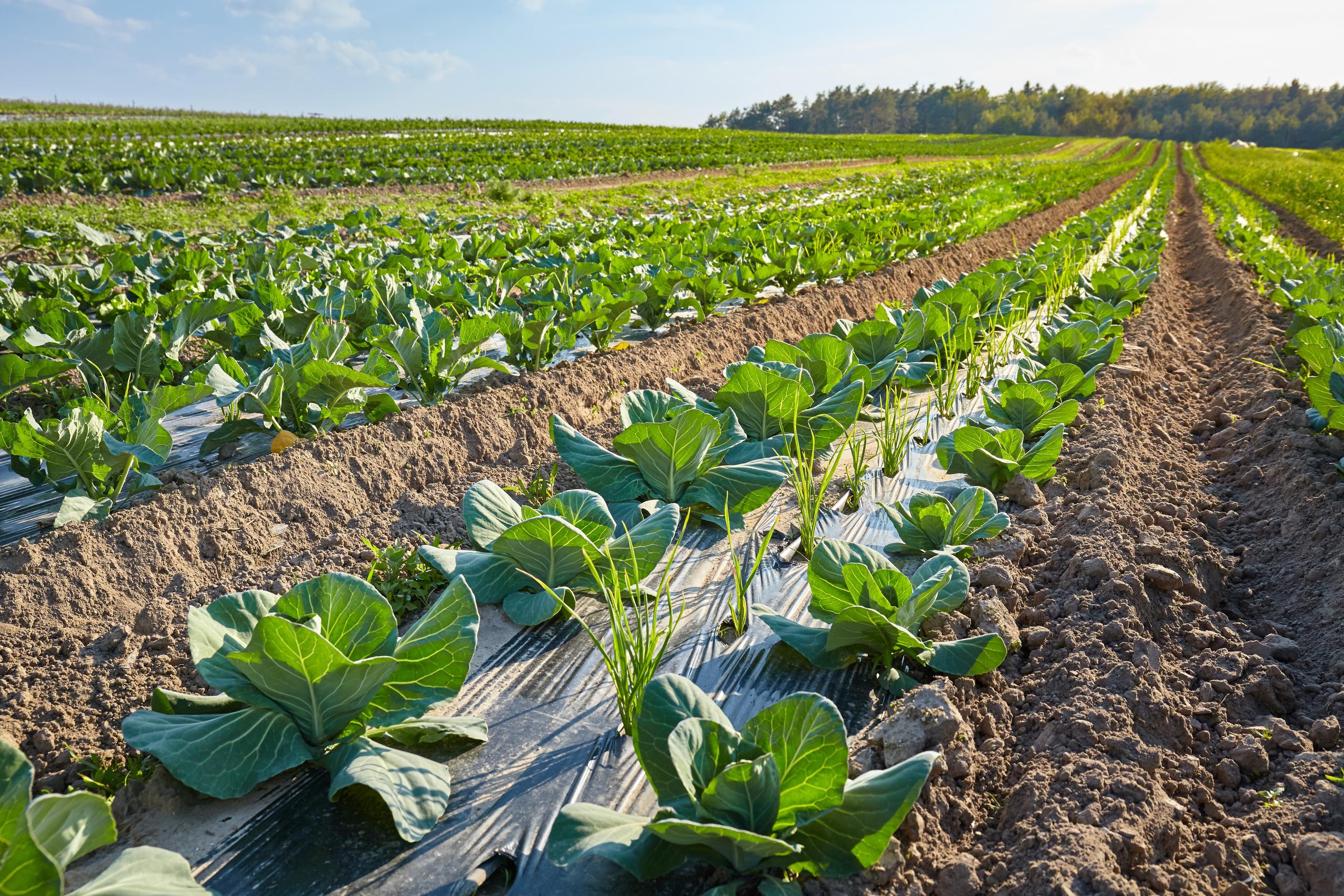
Worldwide, FAO estimates that all facets of the agricultural industry use more than 13 million tons of plastic every year, mostly in the crop and livestock sectors (other sectors are fisheries, aquaculture and forestry). Black plastic mulching film made of polyethylene (PE) is unrolled over crop fields to suppress weeds and keep soil moist and is the number one use of plastic in agriculture. But there are also ethylene vinyl acetate (EVA) films that cover greenhouses; low-density polyethylene (LDPE) wraps to keep hay bales and silage dry; high-density polyethylene (HDPE) nets used to shade crops; polyvinylchloride (PVC) drip lines and pipes serving irrigation systems; polyurethane (PU) ear tags for livestock; polypropylene (PP) pots for growing seedlings; and polyethylene glycol (PEG) coatings used to adhere pesticides to commodity crop seeds. Such plastic use presents “a unique risk with agriculture, because it’s building up in agricultural soil year after year — it’s not a one-time exposure,” says Enck.
As plastics endure the elements, they break down into microplastics (5 millimeters to 1 nanometer) and nanoplastics (basically, smaller than 1 nanometer). These contain some of the 16,000 or so chemicals that are added to plastics to “adjust their properties,” says Richard H. Thompson, a sustainability specialist who coauthored the FAO report — to make them durable, fire-resistant, flexible. These could leach out into the food chain, and be taken up by the roots and leaves of plants. It’s true that plastics can find their way into soil through transportation — e.g., through car tires shredding as we drive — and also, “through the air, through wind, through runoff,” and through the application of biosolids (also known as sewage sludge) to crop fields, Thompson says. However, studies have shown that farms that use plastic in their operations contain the greatest amounts of microplastics in their soils.
China is the greatest user of agricultural plastics in the world. An estimated 12 percent of their “cultivated land mass is covered in plastic and there’s pretty good evidence, and growing evidence, that the plastics degrade in the soil even when they are removed at the end of the season,” says Joe Yates, codirector of the Agriculture, Nutrition & Health Academy at the London School of Hygiene & Tropical Medicine. Adds Thompson, “China was using very thin mulching films, and they were impossible to pull up at the end of the planting season or harvest.” (They tend to disintegrate and fragment and get tangled in dirt, roots and farm implements.) “So they just got plowed into the soil, and they found, after many years of using these thin films, that the residual plastic was impacting on their yields” even at relatively low levels of contamination. As the FAO report highlights, there’s almost no data (and very little corresponding research) about soil plastic pollution in agriculture in North America. The information we have from China and a few other countries, however, is sobering.
Negative impacts
A reduction in crop yields isn’t the only negative outcome linked to agricultural plastic use. Plastic pollution has been shown to alter the water-holding capacity of soil. Plastic can change soil’s pH, which can alter what nutrients are available to plants and also make heavy metals that exist naturally in soil, like cadmium, more available to them. It can reduce the richness of the microbial community that lives in soil — the nematodes and bacteria and fungi that make it a living thing — and it’s also been shown to cause lesions on earthworms that increase their susceptibility to disease. It can deplete soil nitrates and nitrites that plants require to grow. It can stress the guts and brains of pollinators like honeybees. In fact, “Current contamination levels observed in over 50 percent of agricultural soils analysed fall within the range of concern for adverse effects on soil health and plant production and quality,” according to the FAO report.
The general proliferation of plastics and microplastics and chemicals has already reached a point that we’re seeing red lights flashing.
When it comes to human health, some of the chemicals in plastic are known endocrine disruptors and carcinogens; some are teratogenic — they cause birth defects. “The uptake of plastic particles and chemicals into food crops raises additional concerns about the implications for human health that require urgent investigation,” the FAO authors write.
Researchers are quick to point out that there are viable reasons to use plastic products in agriculture, especially as climate change makes food production more vulnerable to weather extremes. Greenhouses can protect crops from too much rain, netting can shade fruit from a too-powerful sun. But the unintended consequences of all this plastic are cumulative — we’re adding plastic on top of plastic with each growing season — and possibly irreversible. How do you remove near-infinite amounts of tiny particles, some too small to see with the naked eye, from vast tracts of soil? Despite the many research gaps that remain, “The general proliferation of plastics and microplastics and chemicals has already reached a point that we’re seeing red lights flashing,” says Yates. Perhaps most concerning: “Most of the microplastics that we’re going to have to deal with have yet to fragment.”
Of course, this raises the critical question of what to do to protect ourselves and other living organisms. There are calls from some quarters to improve recyclability, which is a measure Enck balks at, calling plastics recycling an “abysmal failure” that was “designed to make us feel better” about the problem of plastic waste (only plastic numbers 1 and 2 are recyclable in the U.S., and the rest are landfilled, burned and/or somehow end up in the environment). She also points out that both recycled plastic and the recycling of plastic can be even more toxic than making and using virgin plastic. An FAO report from 2021 floated the possibility of substituting bio-based plastics, made from sugarcane, corn or beets rather than fossil fuels. The most recent report found that these are not necessarily safer than conventional plastics; as they decompose they, too, “produce significant effects on soil characteristics and plant growth or quality,” the authors write.
Thompson favors the idea of schemes in which the maintenance for greenhouses, for example, is outsourced to companies that come in and remove their plastic films “at a time when they still have sufficient resistance to be taken off completely,” rather than films left “in place far too long, and they’re disintegrating, and then they end up in the environment,” he says. This and similar schemes are considered in a series of voluntary guidelines for governments that FAO suggested in 2025.
Both Yates and Enck advocate for reducing the amount of plastic that’s used on farms and where feasible — and supported by funding for always cash-strapped farmers — finding alternatives (researchers call this the “essential use concept”). Copper piping can replace PVC in irrigation systems; straw can fill in for plastic mulch. Rather than asking researchers to attempt endlessly to determine the negative effects of agricultural plastic use, Yates would like to shift the burden of proof about safety to plastic manufacturers. It should be incumbent upon “industries that are putting these materials on the market to demonstrate that they are absolutely safe and sustainable,” he says. Because at the moment, “We’re on a journey, and we can see the road ahead, and it doesn’t look great.”
Related Posts
 Public Health
In new journal issue, researchers warn about “Big Food’s tobacco moment”
June 4, 2026
New research suggests ultra-processed foods may be genuinely addictive, using tactics similar to Big Tobacco.
 Food & The Environment, Sustainable Agriculture, The Industrial Food System
Oats can improve soil and water quality. All that’s missing is a market for them.
March 12, 2026
A group of Midwestern oat farmers wants to improve soil and water quality and grow a nutritious local crop. All that’s missing is a market.
 Public Health, The Industrial Food System
California’s new folic acid mandate for tortillas sparks controversy over fortified foods
February 27, 2026
California now requires folic acid in corn masa to prevent birth defects but the mandate is drawing backlash.