
How I used cookbooks to spring clean my pantry
Are you also over it? And by “it” I mean winter? The flat gray overhead, the cold and damp, the threat of more snow (again)? By the time March rolls around, our early-winter hygge fantasies have given way to desperation: for the days to get longer and warmer, for the moment we can get back out to the garden or the farmer’s market to see what green things are also searching for the sun. The good news is: That time is coming! The bad news is: We need to wait a little longer. But in the meantime, we can stave off a Misery sequel by spring cleaning our pantry, freezer and fridge.
Playing pantry connect-the-dots
If you’ve taken part in our Eat Down Your Pantry (EDYP) challenge, which we ran last year in collaboration with April McGreger of Preserving the South, you’ll know how satisfying a process it can be. April has lots of smart ideas for digging into and clearing out the mess — from shopping your shelves to meal planning with what you find. Another bonus? Learning how to conjure a meal from your pantry or freezer or fridge means you can skip the panic-shopping the next time a big storm approaches (after all, this year’s panic-shop is next year’s EDYP).
I kickstarted my spring awakening while stuck inside with my teenager over the long, snowy midwinter break. As April suggests, I began with a 30-minute pantry inventory sprint. The results were a little startling. So much pasta. Nearly a dozen cans of beans and tomatoes (whole, crushed and paste). And apparently I alone am keeping Big Olive in business. Loosely following April’s guidance, I separated the items into two groups: Stuff that I had in bulk but that would be easy to use up (e.g., pasta) and stuff that would be more challenging (e.g., olives). Then I sat down to play a game of pantry-freezer-fridge connect-the-dots: figuring out what meals I could make from what I had without needing to buy yet more ingredients.
Cookbooks to the rescue
There were some obvious meals to spin from this cleanout, but after a long winter stuck in assorted emotional and physical ruts, I wanted something new. So, I turned to a handful of cookbooks: some pantry-focused, some pantry-friendly, all excellent (below). Then, like a 12-year-old bowed over a Ouija board, I posed my questions to the cookbooks. What do I do with all this pasta? Can I make more than my usual chili with these beans? Enough with the tomatoes already — please help! Below, the results of my inventory, the cookbook oracles I consulted and the answers they provided.
The inventory
These items were either nearing their best-by date or threatening to crowd out any potential new purchases. The ones that I had in excess and that could be more foundational to a meal are in bold.
Pasta (2 boxes spaghetti, 3/4 box ditalini, assorted small shapes in assorted amounts)
Canned tomatoes (2 cans whole peeled, 1 can crushed, 2 cans paste)
Beans (4 cans black, 3 cans chickpeas, 5 cans (!!) cannellini beans — all just recently “expired”)
Assorted olives
Assorted nuts (almonds, cashews, walnuts)
Anchovies
1/2 bag of green lentils
1/2 jar of brown rice
Frozen kale
Frozen 1/2 baguette
Assorted cheese nubbins: Feta, Cheddar, Gruyere
Eggs
Leftover crudite platter (mostly celery, broccoli and cauliflower)
1 butternut squash, 1 acorn squash
Head of cabbage
Lemons
Shallots
Fresh (but getting old) sage and cilantro
Opened jars: tahini, harissa, bouillon paste, kimchi, preserved lemons
Spices (getting very old): ground allspice, ground coriander
The books*
Dinner: 120 Vegan and Vegetarian Recipes for the Most Important Meal of the Day by Meera Sodha
Justine Cooks: Recipes (Mostly Plants) for Finding Your Way in the Kitchen by Justine Doiron
Pantry to Plate: Kitchen Staples for Simple and Easy Cooking by Emily Stephenson
Something from Nothing: A Cookbook by Alison Roman
Tahini, Baby: Bright, Everyday Recipes That Happen to Be Vegetarian by Eden Grinshpan
*plus a Substack: 40 Ingredients Forever by Ali Slagle
The challenges, the solutions — and the lessons learned
CHALLENGE #1: THE PASTAS
I love Alison Roman’s pasta recipes and, given the glut of shallots in my possession, was excited to discover that her famous Caramelized Shallot Pasta would deplete not only my spaghetti stores, but also six of the tasty little stinkers. The pasta is as delicious and easy to make as everyone says, and it’s an EDYP superstar — it also uses tomato paste and anchovies — transforming familiar ingredients into something special.
I came across this second pasta dish serendipitously, while looking for a home for the preserved lemons in the index of Eden Grinshpan’s book “Tahini, Baby.” She is a big fan of them for their bright, tart punch of flavor, and when I found her Pine Nut and Preserved Lemon Pasta, I knew I’d hit on a triple-win: preserved lemons, spaghetti and walnuts (since I didn’t have pine nuts). It’s another simple recipe that far exceeds the sum of its parts.
For the ditalini, I cheated on the books. Instead I looked to Ali Slagle’s brilliant Substack, 40 Ingredients Forever, which is a pantry eater-downer’s dream. (Check out her Dinner Tetris column for more inspiration.) I found this recipe for pasta, beans & broccoli that took care of the ditalini and some cannellinis in one fell swoop, plus some of the jarred bouillon. Since I didn’t have a lot of broccoli, I tossed in both the brocc and the cauliflower from the crudite leftovers, and we were in business. Simple and comforting, with the additional plus of being a one-pot meal.
Finally, to tackle the junk drawer of noodle oddments that remained: Justine Doiron’s recipe for Brown Butter Tahini on Any Noodle. It’s basically a slightly nutty, creamy, grownup version of buttered noodles, and it’s beyond versatile. Lacking enough of a single shape to make full servings, I leaned into the hodgepodge I had, adding the noodles to the pot in order of their cook times, longest first. Visually, the results reminded me a little of my friend Steve’s signature Super Formal Pasta Surprise (pasta with jarred sauce — the “super formal surprise” is a single bowtie tossed into the pot), but it tasted great. The delicious sauce is definitely going on repeat.
CHALLENGE #2: THE CANNED TOMATOES
Eden Grinshpan’s Harira took out my crushed tomatoes and a can of chickpeas, plus some tomato paste, ground coriander and a cup of the lentils. Though the recipe calls for French lentils, I used the green I had and they worked well. The results were sultry, aromatic and rib-sticking, a welcoming balm after a day spent trudging through yet more snow.
The tomato paste was a little challenging to use since many recipes call for just a bit. Justine Doiron’s Blackened Squash in Tomato Brown Butter was really yummy — I used ½ butternut squash and 1 acorn squash — and the tangy tomato-y butter makes the dish. The rest of that can went into a dead-easy penne vodka that will be in heavy rotation. And I learned this clever hack for freezing the remnants.
And since the weather (still) called for soup, I decided to try Alison Roman’s savory-spicy Kimchi-Tomato Soup with Rice & a Soft Egg. I had many of the ingredients but not the exact types or amounts called for (like brown rice instead of basmati, most of but not a whole jar of kimchi), but I just rolled with it. The results were very flavorful and the soft egg added silkiness and substance, making it a more interesting and hearty bowl.
CHALLENGE #3: THE BEANS
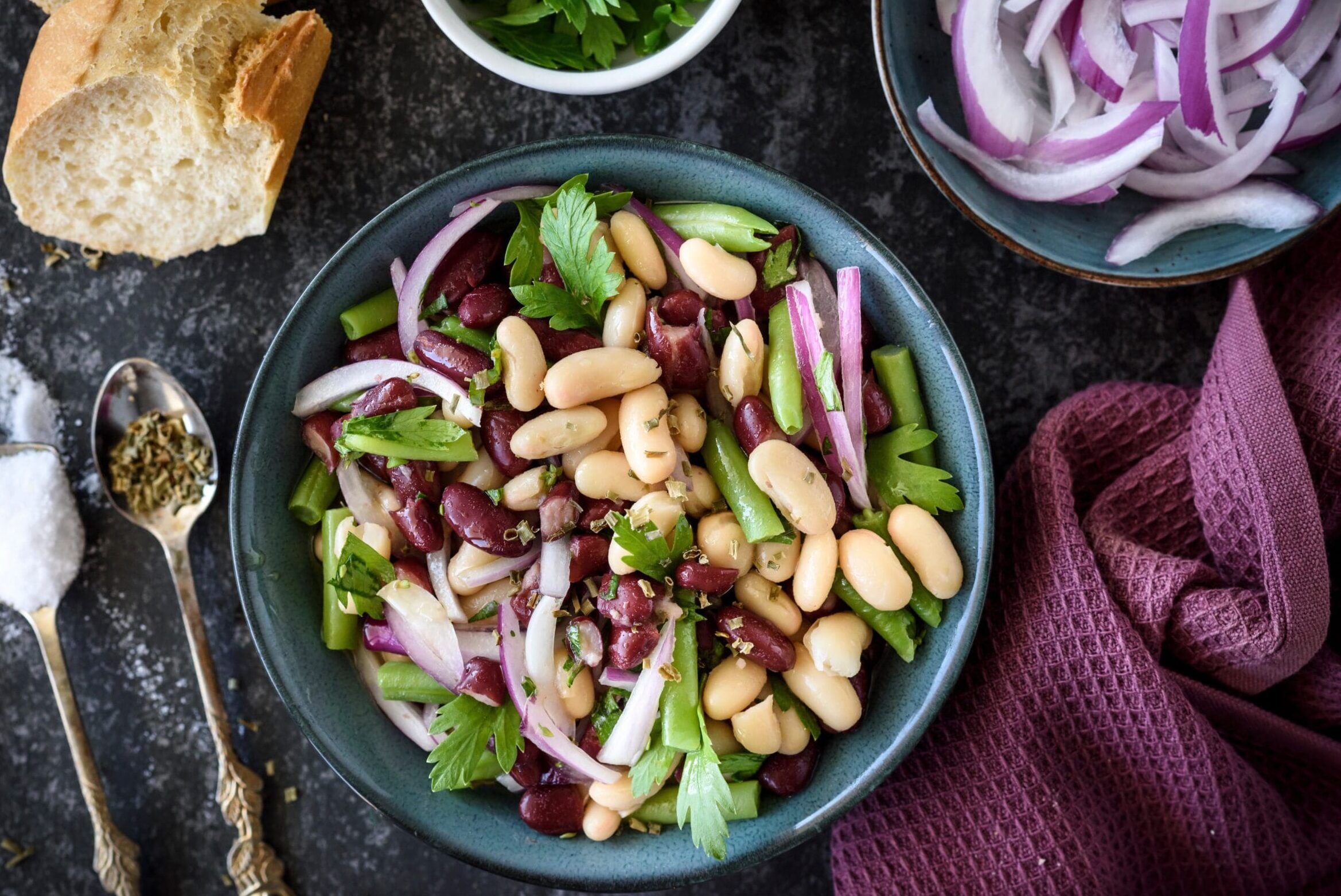
Justine Doiron is a beanhead like the rest of us here at FoodPrint, so I looked to her book first when tackling my stack. She did not disappoint. Her Cinnamon Romesco Chickpeas & Charred Greens used up two cans of chickpeas plus the frozen kale. I also made her Sizzled Sage & Olive Beans with Ricotta Salata, which uses a handful of common ingredients and hits the earthy-salty-tangy-herby notes I crave in deep winter. First things first: I could use up some of that sage! And although the recipe calls for butter beans and ricotta salata, respectively, I had cannellinis and feta — not the same, but close enough for horseshoes. It also consumed a half-jar of the olives I’m drowning in.
For the remaining cannellinis, I had a few thoughts in mind. One, to make Ali Slagle’s Marinated White Beans, which would also nick into my lemons and shallots (she adds flavor by charring and caramelizing the latter) — and then to puree some into a savory dip. I’d use the rest in a riff on Hetty Lou McKinnon’s White Bean, Feta and Quick-Pickled Celery Salad, which would also take care of some feta, those celery crudites and more shallots (instead of the requisite red onions). Next, since I still had two cans to use, I turned to Meera Sodha’s “Dinner,” a book that’s full of flavorful and filling vegetarian dishes. Friends have raved about her Iraqi Spiced White Bean Stew with Lemon Herb Oil, and given that I also had wilting cilantro, lemons, canned tomatoes and allspice to eat down, I decided to check it out. I served it over some of the brown rice (she calls for basmati) and it was comforting and delicious — the lemon oil makes the dish!
Finally, I used up three whole cans of black beans by making Emily Stephenson’s Black Bean Tacos. Adobo sauce (from a can of chipotles) perked up the beans, I subbed that feta for queso fresco, and the crunchy-tart cabbage slaw used up some of the head of cabbage. Since there were chipotles left over, I blitzed them up with some mayo and sour cream to make a spicy, smoky sauce.
FINAL CHALLENGE: THE ODDS AND ENDS
After taking out most of the big “problem” areas, I still had a few lingering randoms.
Since snacks are always on the menu: I mixed together the remaining nuts with some spices and roasted up some spiced nuts, and made marinated olives with preserved lemon and harissa.
Thankfully, I also had eggs — and as Emily Stephenson says in a whole chapter dedicated to them: “…eggs truly are your clutch quick-and-easy pantry ingredient.” They can be used to make a meal out of so many different bits and bobs, which is exactly what I did.
The Okonomiyaki was one of my favorite recipes in Stephenson’s book. It was so easy to make, used up the rest of the cabbage and offered us a break from the egg-based dishes I usually rely on. And the creamy-tangy silken tofu “mayo” elevates the whole experience.
At the end of the week, with a few more eggs left, I made a strata — essentially a savory bread pudding — using Sohla El-Waylly’s tried-and-true method as a springboard. This polished off the half baguette (which I defrosted, cubed and toasted) and the butternut squash, which I sauteed in butter with the rest of the sage. I tossed in the Cheddar and Gruyere, both grated, and behold! A company-worthy dish made from the scraps in my pantry, freezer and fridge. I invited over my neighbors, and we feasted on the strata along with the spiced nuts and olives I’d made earlier. Dots connected, dinner solved.
The lessons
- Consider new ways to use familiar ingredients.
- Don’t worry about looks; it’s all about taste.
- Tomato paste isn’t just for tomato sauces — freeze pucks of leftover paste to amplify umami on the fly while also reducing waste.
- Form follows function: Beans can be mashed into dips, whole tomatoes can be grated or torn (as Meera does in the bean stew, Alison in the shallot pasta).
- Don’t fear the weird: Embrace it, mix and match, you might love what you create.
- Lean into your spice and condiment cache — it’s an important pantry player, too. April McGreger is also a big fan of condiments, dressings and sauces.
- Substitutions are your friend. There’s little harm in swapping ingredients with similar flavor and texture profiles.
- Another April adage: Limitations can boost creativity!
More Reading
Simple ways to turn kitchen scraps into delicious soups
December 23, 2025
Leftover garlic? Our tips to use every clove
June 16, 2025
4 tips for stretching your food dollars
April 16, 2025
How to use extra onions
April 9, 2025
For lessons in thrifty, climate-friendly cooking, look to vintage cookbooks
March 10, 2025
Fermenting and freezing are your secret weapons for preserving root vegetables
October 17, 2024
Resources to help you pickle, ferment, jam, can and more
October 16, 2024
Quinces are due for a renaissance
September 16, 2024
How can we cut food waste in half by 2030?
September 5, 2024