
This fish sauce company is tackling modern environmental issues with an ancient recipe
In the days of the Roman Empire, there were only so many ways to preserve food. When fishermen in ancient Greece brought a school of sardines or anchovies out of the sea and into the unforgiving sun, they had no refrigeration to keep time from taking its toll. What they had was salt. By combining the two — fish and salt — they could harness decay for their own purposes. Salt drew water out from the fish and supported the disintegration of its viscera, whose natural enzymes spurred on the process of decomposition. The resulting dark-amber liquid — known by various names across the Mediterranean, depending on location and recipe, but now commonly referred to as garum — was a robust and savory distillation of the ocean’s flavors. As it traveled across cultures via conquest and trade, it became as fundamental a component of a good meal as olive oil, vinegar or wine. The modern cook might be more familiar with a Southeast Asian counterpart that developed independently: fish sauce.
Like the ancient Greeks and Romans who often brewed garum in in-ground pits, Liam Fisher, a former line cook in modern-day Maine with a penchant for fermentation, found himself several years ago with a pile of fish on his hands that he didn’t want to see spoiled. His roommate had returned home from a day of ice fishing with a few dozen smelts, “beautiful, perfect, ungutted,” so Fisher tried his hand at recreating a classic. With an engineering background, the research and technical tinkering required to strike the right balance in his fish sauce felt natural. So did the notion of remaking what might otherwise be wasted into something to savor. And, he realized, it was the parts most likely to be tossed out — the fish’s guts — that were the catalyst for enzymatic hydrolysis, the process that produced the rich, umami-packed sauce.
From ancient methods, a new business
By the time he made his first batch of garum, Fisher had wandered through a couple of stints turning waste into value, first at a startup aiming to feed aquaculture oysters with fermented organic material and then in product development at a fertilizer company. He’d stepped out of the kitchen but never stopped cooking at home, testing out new methods of fermentation at every chance. Fish sauce was never far from his mind — a relic of family meals from his restaurant days, spiked with kimchi and the Vietnamese dipping sauce nước chấm. When he made his first batch — in a mason jar in an old mini-fridge — everything clicked into place. Here was an opportunity to convert waste streams into something special.
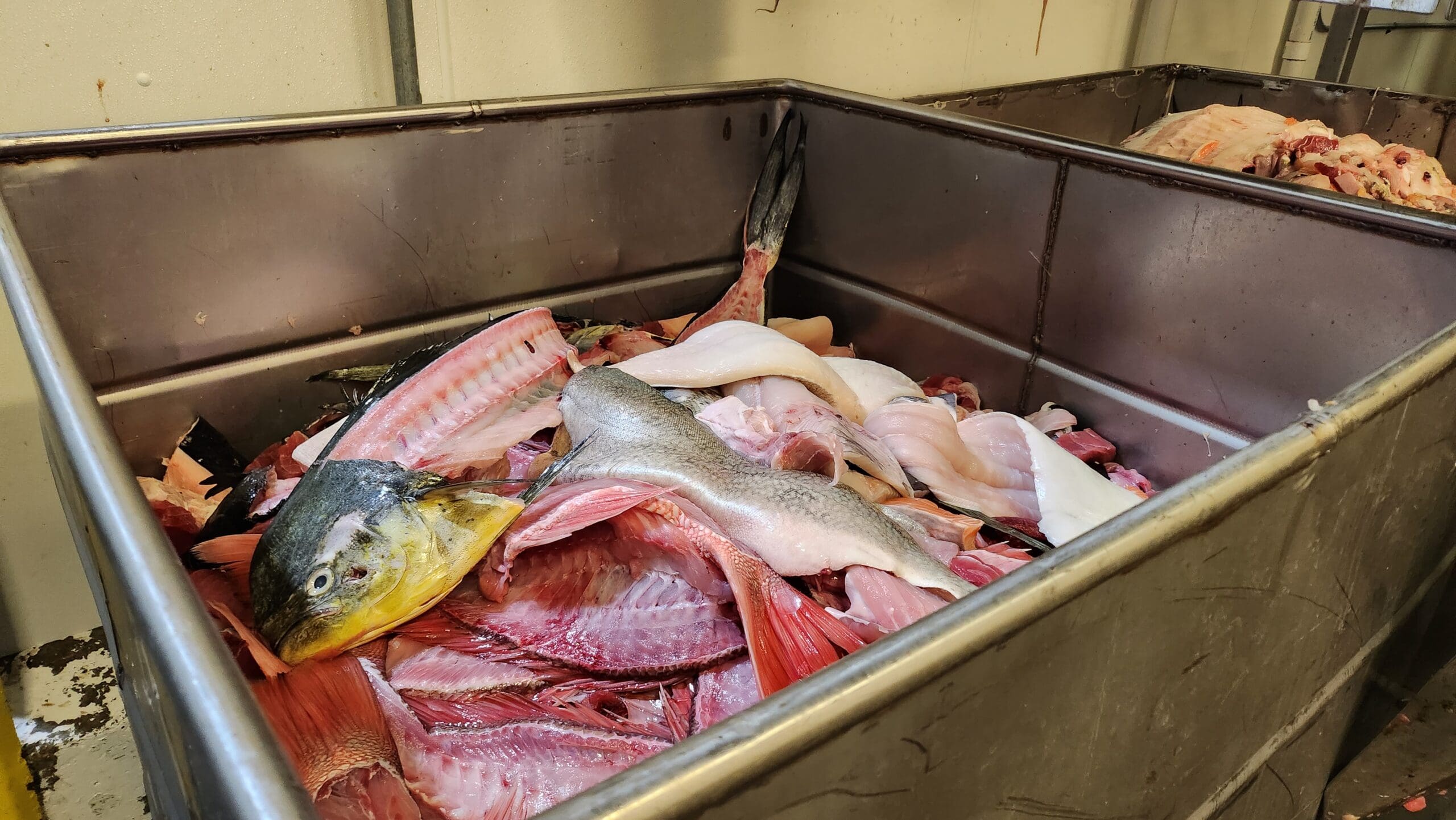
During his time in aquaculture, Fisher had learned about American Unagi, an eel farm in Waldoboro, Maine, which was filleting its eels and tossing their trim in the trash. He picked up a job on the line and eventually became production manager, under the condition that he could launch his own garum business using the heads, bones and spines that were otherwise headed for the landfill. At the same time, he began running the fermentation program for a now-defunct restaurant, where he tested out garum in every imaginable variety: mussel, pork, lobster, mushroom, more than a dozen styles in all. He fused it all together into the Maine Garum Co., which began selling fish sauce in the summer of 2024. The garum he produces is both an update on an ancient tradition and a call for creativity in building a more sustainable food system.
“This was a component that was essential to Western cuisine and it’s a really unfortunate thing we lost,” Fisher says. “If you look to Asian cultures that have maintained their relationship to their umami sauces, it’s what makes their food so delicious. So I use the word garum to signal the revitalization of a Western tradition around umami and reincorporating it into our culture and cuisine.”
Whether or not garum’s producers in the ancient world understood that they were solving an environmental problem by turning fish viscera from foul waste into a nutritious food, their umami-laden creation was “just magic,” says Sally Grainger. A former chef turned Roman food historian and archaeologist, Grainger is the author of “The Story of Garum: Fermented Fish Sauce and Salted Fish in the Ancient World.” In her work, which inspired Fisher’s own experiments, she translates and recreates ancient recipes as a way of reclaiming forgotten foodways and making them accessible for modern cooks. Garum “formed the basis of virtually all the [European] recipes that we have” from that period, she says, explaining that it stood in for salt while adding a powerful punch to dips and sauces.
Garum never truly went away, Grainger says, instead transforming into products like colatura, an anchovy-based sauce from the Amalfi Coast, and pissalat, a variant from France. “It was just hiding in plain sight amongst local fishermen,” she says.
Whether it’s made in Europe, Asia or the U.S., “fish sauce is a great way to extend the harvest,” says Andrea Nguyen, a Vietnamese-born cookbook author based in the San Francisco Bay Area. It’s known to bring good health and good flavor to Southeast Asian cultures, she says, but it’s also an avenue for maximizing the ocean’s bounty — an ethos that transcends regional boundaries.
Although fish sauces from Thailand, Vietnam and the Philippines have traveled from Asian cuisines into the American culinary consciousness, Mediterranean varieties have never quite made the leap. Fisher is hoping to change that. When Maine Garum started up its operations, it was the first domestic fish sauce producer, he says. The business started with eel garum, which has less funk than other fish sauces. When he began fermenting it, “it smelled like a buttered lobster roll in my processing space,” he says.
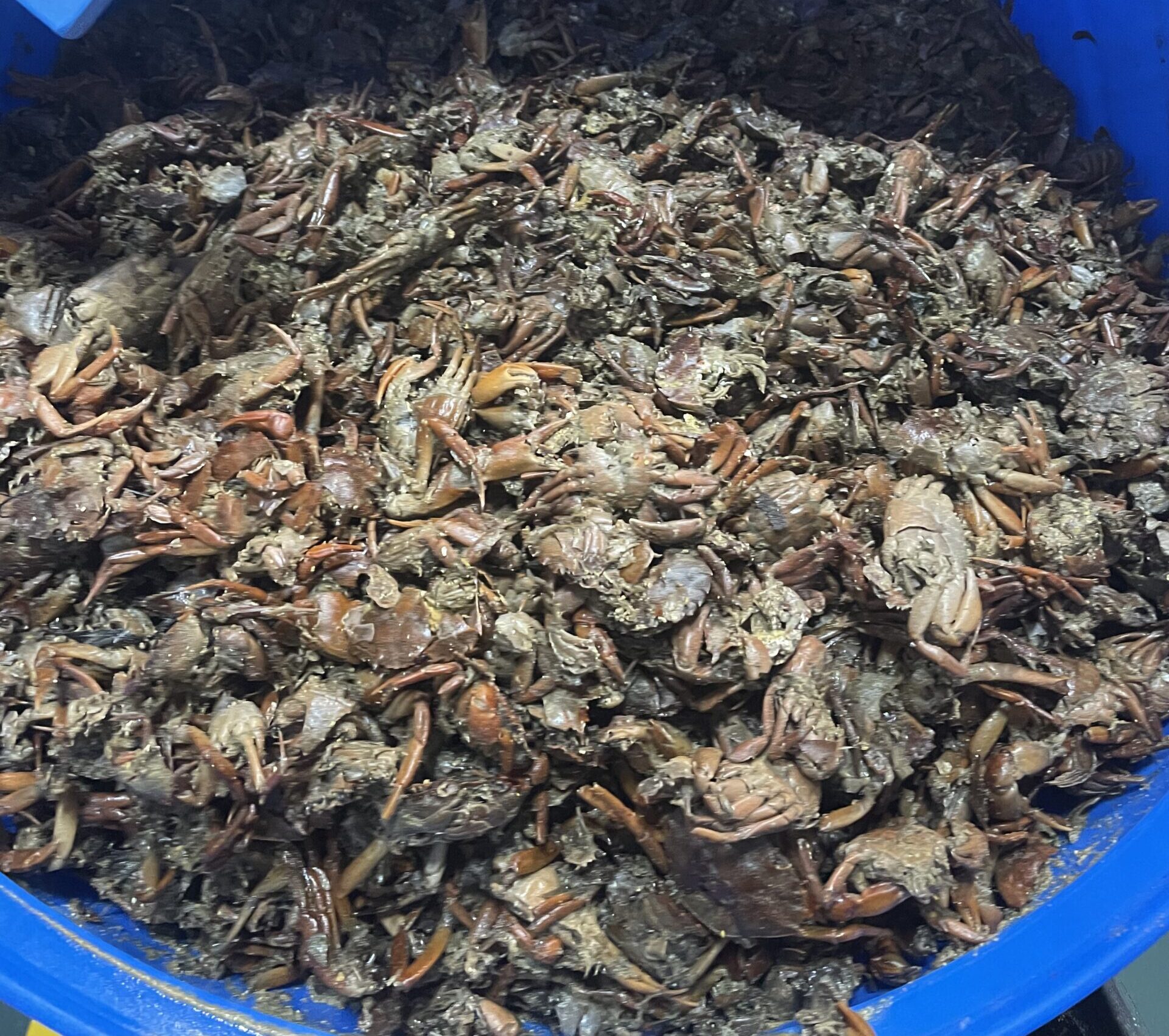
Maine Garum has since expanded from upcycled eel to include a version made with invasive European green crabs, sourced from harvester Mike Masi at Shell + Claw. The crabs are voracious predators that eat into softshell clam and lobster populations and destroy eelgrass habitats while digging for prey, destabilizing riverbanks and salt marshes in the process. Fisher’s work is just a small part of a much larger movement to turn green crabs into food to mitigate their invasive impacts, but every bit helps. He estimates he’ll use around 3 tons of crabs this year — and more if the garum takes off.
Fisher’s garum is now stocked at dozens of retailers, mostly in Maine and New England but reaching down the East Coast as well. At tastings, he offers it to the uninitiated atop whipped cream. Dan Boccuzzi, director of operations at Portland, Maine, seafood purveyor Browne Trading Co., says that “allows the fish sauce to flourish on the palate and is a great expression of what that product really is” — something both smoother and more complex than what people might expect.
Benjamin Sukle, chef and owner at the restaurants Oberlin and Gift Horse, in Providence, Rhode Island, had been searching for a domestic fish sauce to use in his kitchens when Fisher’s garum entered the scene. He uses the eel garum in a pesto tossed with linguine and crudo. The green crab garum adds “a background presence” to dishes featuring crab meat. “We’ll sneak it into everything and anything we can,” he says.
Beyond flavor
As compelling as the garum’s culinary uses is the role it occupies in the food system — addressing waste and helping to turn green crabs from the enemies of eelgrass into a food that can expand their culinary market.
“It’s getting back to how food systems were originally built,” Sukle says. “There was very little waste. … This is how cooking and food systems should always be. There’s no byproduct. There’s nothing that goes into a landfill. Everything has a purpose, because we’ve shown through millennia of practice that there’s always a role for an organic product.”
“Our food system in America needs to go in a direction where we are taking ideas from a multitude of foodways — from foodways that are old and that have for a long time known how to make the most of very little and to make the most of what they have at hand."
For Nguyen, fish sauce is both a cultural and a culinary force. Given the choice of her final meal, she says she wouldn’t ask for much more than a bowl of rice and some fish sauce. She’s pleased to see garum making inroads in the U.S., particularly given the solutions-oriented mindset Fisher has brought to his work.
“Our food system in America needs to go in a direction where we are taking ideas from a multitude of foodways — from foodways that are old and that have for a long time known how to make the most of very little and to make the most of what they have at hand — and then to feed ourselves deliciously and sustainably on our local harvest,” Nguyen says. “If we can reach for those ideas across cultures and also help one another to bring these ideas to market, that’s when you’re going to make it viable and sustainable and appealing for the long haul.”
Get the latest food news from FoodPrint.
By subscribing to communications from FoodPrint, you are agreeing to receive emails from us. We promise not to email you too often or sell your information.
Top photo courtesy of Liam Fisher.
More Reading
The MARA Act would open our oceans to the harms of factory farming
March 18, 2026
Reimagining wild fisheries with the whole ecosystem in mind
February 13, 2026
More than food: Making seafood more sustainable by using 100% of the fish
February 6, 2026
Salmon hatcheries: unsuccessful conservation, insufficient regulation, and poor animal welfare
September 16, 2025
Why farmed seafood deserves an ethical debate
September 8, 2025
Think you’re eating local seafood? Beware of 'local-washing'
May 21, 2025
When bycatch is on the menu
December 12, 2024
The quest for more sustainable caviar
July 3, 2024
Celebrating the Black history of oysters with chef Jasmine Norton
June 21, 2024