


Can independent grocers offer affordable food?
With food costs skyrocketing, municipalities and entrepreneurs are experimenting with alternative models for grocery shopping. But no one model can fit every community’s needs.
The recent midterm elections drew to a close after months’ worth of campaign promises focused on affordability — promises, in fact, that resulted in radical change at all levels of government that pundits are calling a Blue Tsunami. It’s no secret why: At least 5 million low-income Americans have lost their eligibility for SNAP benefits to help defray the cost of groceries, which has risen by 2.5 percent over the last year — all while food banks and pantries, some contending with historically high demand, struggle to keep their communities fed.
Meanwhile, the heavily consolidated industry in which a handful of companies like Walmart, Costco, Kroger and Albertsons control a huge slice of the grocery market continues to reap enormous profits as their customers flounder. Cities and municipalities have been pushing back against this functional oligopoly, with New York poised to open five public grocery stores that subsidize essentials like milk, produce and meats, and the states of Rhode Island and California banning restrictive covenants that transform neighborhoods into food deserts. But we wondered: Was there a place in the affordable grocery discussion for independent stores?
That’s a question that community health nonprofit Fair Food Network (FFN) recently sought to address in a whitepaper on indies’ potential to “balance affordability, access, fairness, and local economic impact while staying financially viable,” the paper’s authors write. They found that the various models that fall under the indie umbrella show promise when it comes to supporting both communities and farmers. But, critically, they need a host of supports from governments and other funders to build supply chains, keep costs down and offer living wages to their employees. Even with all that, there’s still no guarantee of success (Exhibit A: Boston’s super-popular five-store Daily Table, which got clobbered by Covid and closed in 2025).
What makes an indie grocer?
The definition of an indie is highly fungible — anything from a mom-and-pop bodega to a multistore local mini-chain like Long Island’s King Kullen; from nonprofits like New York City’s public-grocer model to for-profits like California’s (now-defunct) Mexican-product–based Mi Pueblo Food Center; cooperatives and even large regional chains like Publix and H-E-B count as indies, too. But what sets the best of them apart is “they are interested in giving the communities that they’re operating in more of a voice and control over the food that they have,” said FFN senior fellow Noah Fulmer.
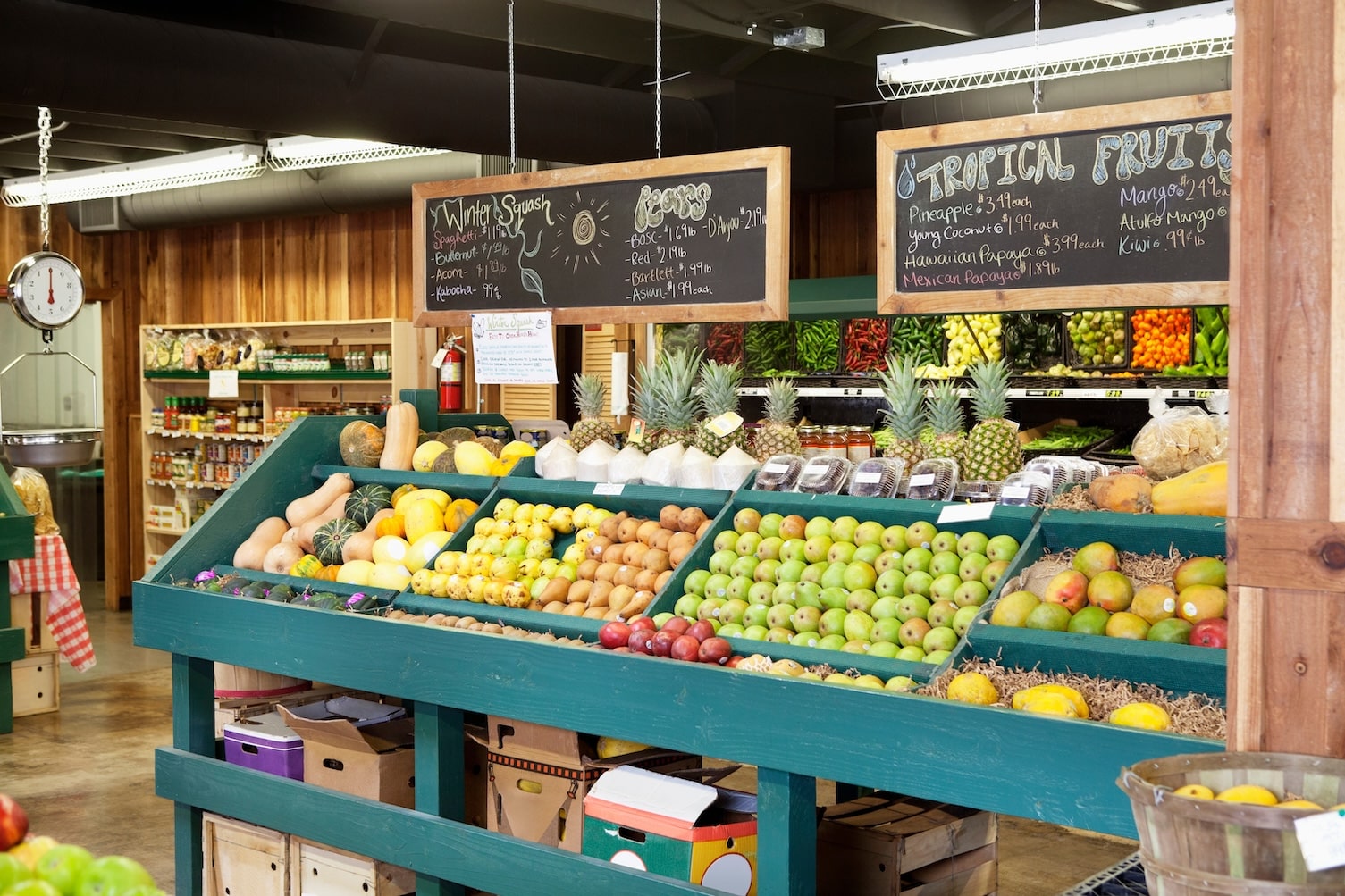
For Fulmer, indies of particular interest are those that are part of what he calls “a new movement among grocery stores” to address not just a lack of affordability but a dearth of access to “what people want to buy.” Namely: grocery perishables and local and/or “culturally connected” farm produce, within easy striking distance of home. For example, Hmong Village in St. Paul, Minnesota, is a seven-day, 200-vendor indoor farmers market around which “a whole food economy has developed,” Fulmer said. It gives customers “access to all sorts of other small businesses that have been started within the community and run by the community that cater to the needs that folks have identified.” It’s the kind of situation that allows for what Grocery Nerd Erroll Schweitzer calls “keeping income and value in the community” — in direct contrast to a giant like Aldi, which is “owned by German billionaires; they extract wealth from communities, they don’t pay that great and they have high [employee] turnover,” he said.

There are similar models to Hmong Village. Balls Food Stores in Kansas City, in the absence of a willing distributor, built a warehouse where local farmers could drop off produce for delivery to what has grown to be a 25-store chain in that metro area. Twelve years ago in Ann Arbor, Michigan, Kathy Sample and Bill Brinkerhoff saw an opportunity to create what Sample called “a hybrid between a farmers’ market and a grocery store. No bananas, no citrus, no tin foil, but Argus Farm Stop has every single thing our food shed can produce.” This is provided by more than 300 small farms and producers, mostly in-state, every day year-round except major holidays.
The challenges and goals of indie grocers
Argus, Hmong Village and Balls can each address at least a few of the challenges that prevent consumers from embracing farmers markets wholeheartedly. As agriculture reporter Sarah Mock recently put it in her newsletter, “Regular people aren’t able or don’t want to do their grocery shopping across town, only on Saturday mornings, in five separate transactions, facing an unpredictable selection while paying a premium, and then still have to hit up the grocery store for nonlocal/out-of-season essentials anyway.”
Nevertheless, Sample and Brinkerhoff recognize that there are limits to how completely they can help their community: “We’re a mission-driven entity for farms,” said Sample, and that mission is to “make it economically viable to be a small farmer.” Farmers sell directly — no middleman — into Argus; they set their own prices and keep 70 percent of sales. “You can grow these people by giving them an outlet to consumers,” said Brinkerhoff. As opposed to, “In Ann Arbor, if it’s a Saturday and it’s a game day, the farmers market is cranking, but it’s full of tourists and they’re not buying lettuce.”
Customers have access to a full panoply of produce, meats, eggs, dairy of all kinds, Great Lakes fish such as perch and whitefish, value-added products like jams and jellies, frozen produce in the offseason, pasta made from locally grown grains, granola. Michigan farmers can grow things all year long in hoop houses but before Argus, “There was never a place for them to sell because many farmers markets are closed from January through May,” said Sample — months that give Argus one-third of its produce sales “when farmers are used to getting zero.”
Sample and Brinkerhoff cite the often-heard talking points about selling food for what it really costs to grow, and admit that that is higher than what lower income community members could purchase from, say, Walmart. To try to bridge that gap they partner with Jewish Family Services and Food Gatherers to provide produce boxes to underresourced groups every week, and offer discounts that are funded by FFN. They’re also set up to take SNAP, as well as Double Up Food Bucks that cuts the cost of produce in half. With most of their offerings comprised of fresh healthy foods, it’s unlikely that Argus will run afoul of the new SNAP Stocking Standard rule. Many other indies, though, “are worried right now about losing their ability to take SNAP EBT, which is just horrible because it’s a huge percentage of their business; it’s 20, 30, 50 percent of their business,” said Schweitzer.
This is not to say that Argus is a cash cow. Sample and Brinkerhoff’s earnings are still going to pay off their startup costs and they try to do right by their employees — many of whom are part-time workers going to college. Wages start at over $17 an hour and full-time positions come with medical and retirement benefits and three weeks paid vacation. The business is able to stay afloat because it has no wholesaler to negotiate with, it can team up with nonprofits to offer discounts to low-income customers, and the couple used their retirement savings to get the operation off the ground. Perhaps most importantly, they run two cafés in addition to their two grocery locations, which Brinkerhoff calls “the engine that drives the train,” allowing them to pay farmers as much as possible.
Helping indies launch and stay afloat
There are lessons to be learned from how they’ve run their business, with that sort of diversified operation being paramount. They’d like to see more support coming in from municipalities for other operations like theirs: friendly financing grants, city-owned buildings offered at low rents, better connections to companies “looking to support initiatives that help grow the local food economies,” said Brinkerhoff.
To help indies get and stay in business, Schweitzer said federal antitrust law needs to be updated and enforced so that the likes of Walmart can’t “bully suppliers,” he said, into giving them lower prices than other grocers. “I think there needs to be a deep dive into retail/wholesale partnerships, business practices that box out smaller independents from accessing some of the deals and products and inventory that are available to the larger customers of these distributors,” he said. Beyond that, he said it’s essential for indies to band together into purchasing coops for maximum purchasing power. These already exist: Natural food stores have the Independent Natural Food Retail Association; cooperative stores have National Co+op Grocers; South Asian-owned convenience stores in Austin, Texas, have the Greater Austin Merchants Association; everyone else has the mega-coop National Grocers Association.
FFN offers a collaborative network that helps would-be indies access grants, loans and business readiness to help founders figure out “operations, staffing, supply chain, inventory, their distribution side, who they’re working with vendors-wise, energy costs,” Fulmer said. Beyond that, he cautions, “It’s not going to be a moneymaker. Hopefully, you’re coming at it from a place of passion.” And hopefully, more of these stores, given the right supports, can help provide and grow more stable, resilient and affordable communities.
Related Posts
 Social Justice, Sustainable Agriculture
A new book honors Black contributions to American agriculture
September 23, 2026
Eleventh-generation farmer Michael Carter Jr. talks about his new book “Africulture” and how Africans and their descendants made American agriculture — and America itself.
 Food Policy & Economics, The Industrial Food System
Preserving farmland for farmers
September 8, 2026
As farmers struggle to afford arable land, a new bill seeks to ban corporate interests from buying the acreages under their feet.
 Food Policy & Economics, Social Justice
Can nutritious and sustainable hickory oil compete in a crowded cooking oils market?
March 19, 2026
Agroforestry experts and farmers are turning to hickory oil as a flavorful, nutritious, and sustainable local cooking oil.