


Understanding food recalls: Why they happen and what you can do about them
Lately, it seems like there’s a new food recall in the news every day. Here’s what to know about why foods are recalled, how the recall process works and what to do if you have bought a recalled product.
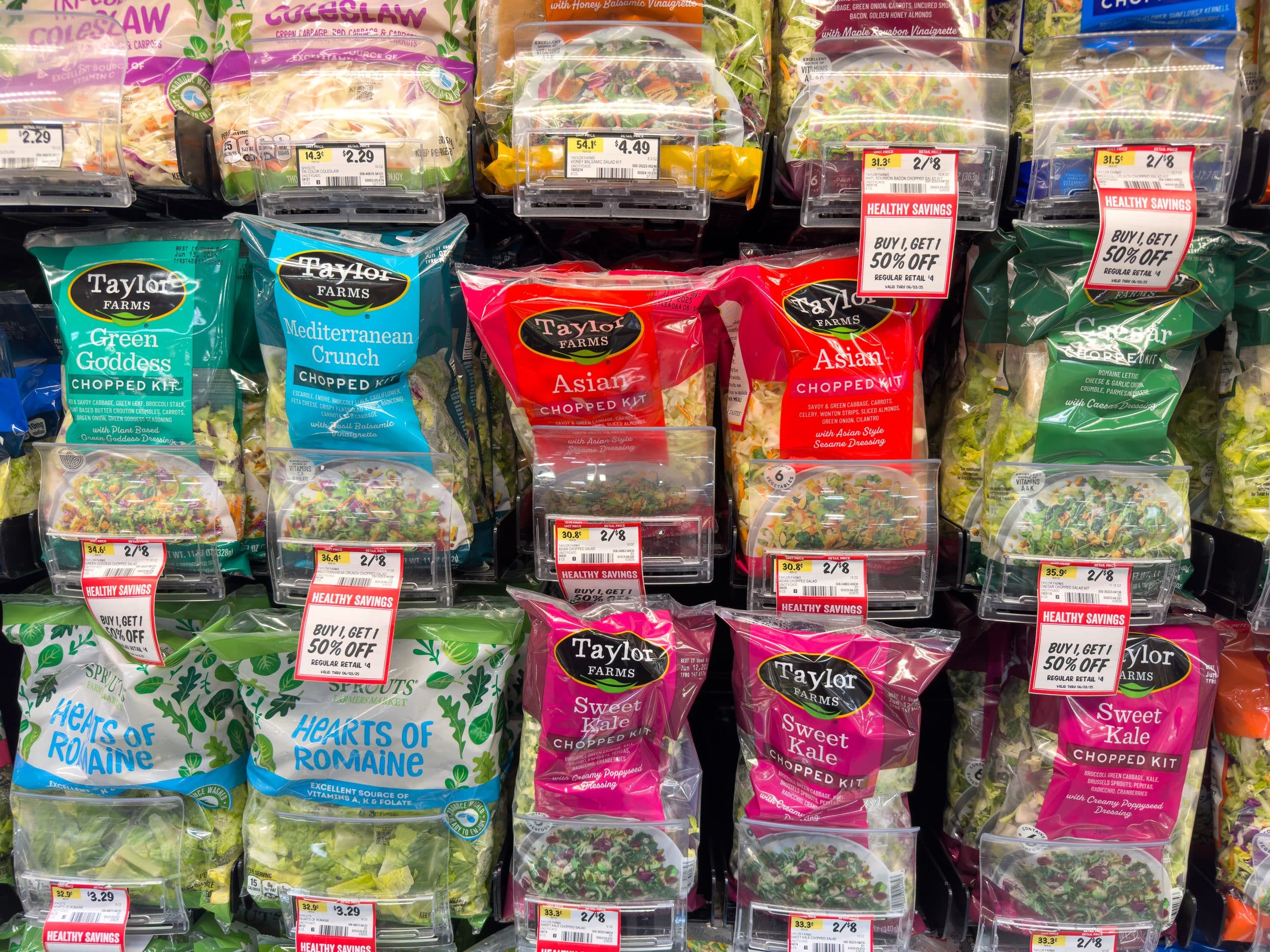
The summer of 2026 was a long, anxious period of wondering if there was anything safe to eat. Between the record-breaking cyclosporiasis outbreak in iceberg lettuce, listeria in pork and E. coli in blueberries, it seemed like there was a new foodborne illness popping up every day. The abundance of memes about explosive diarrhea and mournful jokes about ultraprocessed foods being the only safe things to eat reflected a collective anxiety about our food supply and skepticism about the regulatory system that’s supposed to keep it safe.
Most of these outbreaks were announced to the public as recalls, which are intended to be one of the last lines of defense against potential illnesses and other hazards, since it’s better to catch these problems before food goes out for sale. But with deregulation stripping down the rest of the safeguards meant to protect us, and budget cuts leaving food safety agencies too short-staffed to monitor the entire food supply, these end-of-the-line recalls are how some foodborne illnesses are ultimately being managed. Whether or not they’re actually getting more common is up for debate: On the one hand, some experts say we’re seeing more recalls because of companies and regulators implementing improved testing and investigation protocols that are simply catching more problems, albeit too late to prevent them. But on the other hand, the Trump administration has cut funding for a number of monitoring programs and rescinded rules that would have forced companies to be more transparent about potential problems, effectively compounding the blind spots in an already flawed food safety surveillance system.
Regardless of why these recalls are happening, they ultimately rely on consumers like us hearing about them and taking the appropriate steps to protect ourselves, so it’s a good idea to know a little about how they work. What does it actually take for a company to recall a product? How can you tell if you are at risk? And what do you do if there’s a recall affecting a particular brand you’ve bought, or a whole category of foods you like, such as this summer’s blueberries?
Why food gets recalled
Foods can be recalled for a few different reasons. Pathogens, like bacteria, viruses or parasites, can contaminate foods anywhere from the farm to the processing plant, and while food safety inspections are designed to catch these early, they don’t always discover problems until food is out to consumers.
Sometimes, foreign inedible objects can get into foods as they’re being processed or packaged. Often these items are metal or plastic shavings that fell from worn machinery, or small pieces of glass or plastic from packaging that broke near the production line. Even tiny foreign objects can seriously injure people when swallowed, so the presence of just a little piece of metal, glass or plastic often leads to entire batches of a product being recalled.
Allergens can also be a reason for a recall. Food manufacturers are required to list whether their products contain major allergens, such as soy, dairy or nuts. Sometimes, thanks to a switch-up in formulation or a mistake during production or packaging, manufacturers might not disclose the correct allergens. Sometimes foods that are imported from another country may list incorrect ingredients or fail to list allergens, leading to a recall.
Finally, foods can be recalled because manufacturers, retailers or marketers failed to follow the correct processes for making or importing the food. A missed inspection for imported meat, for example, could result in a recall. These kinds of recalls often stem from simple administrative errors, and sometimes the food may be safe to eat.
How food recalls work
It might seem like a recall is fairly simple: The Food and Drug Administration (FDA) discovers a product is contaminated and then recalls it. But the process for recalling foods is actually largely voluntary and one that companies undertake with the cooperation of the agency that oversees their products, with slightly different processes depending on whether the food falls under the jurisdiction of the FDA or the USDA’s Food Safety Inspection Service (FSIS).
About 80 percent of the food produced and sold in the U.S. falls under the oversight of the FDA. But meat, poultry and eggs — along with products that contain them — are the responsibility of FSIS. These are relatively high-risk foods, thanks to the possibility of contamination with bacteria from the animals’ bodies during slaughter and processing. As a result, FSIS is supposed to inspect meatpacking and other facilities continuously, and also approve product labels before foods go to market. The FDA, on the other hand, is tasked with inspecting food production facilities less frequently and has less oversight of products before they appear on store shelves.
When a contaminated or otherwise faulty food goes out to the market, it’s most often the manufacturer who identifies the problem first, whether through quality control inspections, finding broken equipment or discovering an administrative error that led to a mislabeling.
Sometimes, FSIS or FDA inspectors determine the problem either in the plant or by testing products.
But sometimes finding products that need to be recalled takes a bit of detective work. This comes from collaboration with state and local departments of health and the Centers for Disease Control and Prevention, which all conduct monitoring programs to report and trace cases of foodborne illness. Epidemiologists working with these partners interview people who have been sick to isolate products or brands that may have caused the illness, then turn that information over to the FDA or FSIS.
Once the regulating agency hears about a problem, investigators work with companies to identify what products and batches might have a problem, how severe the problem is, and what action needs to be taken. From there, if the company hasn’t already issued a voluntary recall, the FDA or FSIS can recommend they do so.
Recalls are divided into three categories based on the possibility of harming people:
- Class I recalls, the most urgent, involve serious risk of adverse health effects or death. Most foodborne illnesses qualify as Class I recalls, as do foreign-object contaminants when those objects are sharp, hard or pose a choking hazard.
- Class II recalls involve “temporary or medically reversible adverse health consequences or where the probability of serious adverse health consequences is remote.” This can include foreign objects like small flakes of plastic that don’t pose a major choking risk, or contamination with bacteria that won’t make people seriously ill.
- Class III recalls pose little to no intrinsic health risk, and typically reflect administrative errors or other kinds of noncompliance with manufacturing or labeling law.
When classifying recalls, the FDA or FSIS take into account not just the hazard, but the population that’s most likely to be exposed to the food, the amount they’re likely to eat and the ways that population might specifically be impacted. As a result, recalls involving foods marketed to infants or children might receive a higher classification than those marketed to adults.
Companies are required to have their own plans in place to help facilitate recalls, detailing how they will inspect the products, how they will warn the public about potential hazards and how they will remove the products from the marketplace. The FDA and FSIS also publish recalls to their own websites. In the case of Class I and II recalls, they also contact local media in the area where the recalled products were sold to get the news out to consumers as quickly as possible.
From there, it’s up to retailers and consumers to get recalled products off the shelves or out of their homes. Recalled products are typically destroyed by the manufacturer or the retailer. After a recall, the company that sold the food works with the FDA or FSIS to track recalled products; they ensure items are no longer being sold and work out how much of the recalled food has been accounted for. Inspectors also often visit the production site or conduct sampling of future batches of the food to ensure that the problem that caused the recall in the first place has been ameliorated.
When food recalls go wrong
Typically, voluntary recalls are enough to get faulty or dangerous foods off the market relatively quickly, given that companies want to protect their image from being associated with illness and death. But sometimes, companies might disagree about their own liability or the safety of their product and refuse to issue a recall.
In these cases, FSIS and the FDA have slightly different options. Because FSIS has more authority to prevent faulty products from entering the food supply in the first place, it actually lacks the authority to issue a mandatory recall. The FDA can do this when there’s enough evidence that a product could qualify for a Class I recall but the company hasn’t issued a voluntary recall itself.
Issuing a mandatory recall is essentially a formality, however. Both agencies do have the authority to detain or seize foods that they’ve deemed harmful, and can condemn the products to ensure they aren’t sold. These actions are the last-resort scenario, given that recalls run much more smoothly when the companies cooperate with notifying the public and getting the food off of shelves.
In cases where companies deny their own liability, they still often end up issuing requested recalls. In April 2026, the FDA requested that Raw Farms, a company selling unpasteurized milk and cheeses, recall some of its raw cheddar after epidemiological evidence linked it to a string of E.coli infections that led to three hospitalizations. The company declined to recall the products, insisting that its cheese was safe because their own tests didn’t show the matching strain of bacteria in the batch. After further investigation unveiled numerous sanitation problems at the plant, the FDA issued a second recall request, which the company agreed to, although it released a statement claiming it still did not agree it was responsible for the contamination.
Although the FDA didn’t end up issuing a mandatory recall or seizing products, Raw Farm’s delay in issuing the recall certainly kept the contaminated cheddar on shelves longer than it should have been. Critics say the agency should have been more proactive in removing the impacted product, and that the episode represented a serious weakness in the way recalls work.
Even when companies are more willing to be compliant to protect their image, they can still delay investigation and evade corrective actions. During this summer’s cyclosporiasis outbreak in lettuce, health department investigators in Michigan requested records from Taco Bell multiple times before the company complied. With nearly two weeks between the request for information and health officials receiving the data they needed to link Taylor Farms lettuce used at the restaurant to the cyclospora outbreak, many more people were left vulnerable to illness. That situation could have been avoided if the Trump administration hadn’t blocked a new rule requiring companies to submit requested data to health authorities within 24 hours. Food companies had lobbied against the rule, arguing they weren’t prepared to meet its recordkeeping requirements.
Later, after the FDA announced that iceberg lettuce from Taylor Farms de Mexico was the likely culprit of the burgeoning outbreak, the company appeared to comply and issued a voluntary recall the next day. And while the FDA said it subsequently found lettuce from Taylor Farms tested positive for cyclospora, they later announced those results were a false positive.
As food and agriculture journalist Helena Bottemiller Evich pointed out, that kind of false positive isn’t uncommon, but Taylor Farm’s next step — announcing the FDA had apologized to the company — was a deception; it made it look like they were off the hook despite all evidence still pointing to the recalled iceberg. That increased confusion for consumers, who treated the news and the company’s response as evidence the outbreak’s true source was still at large. As a result, many people became wary of consuming any fresh produce at all, seeing it as a potential source of illness despite the evidence pointing to lettuce alone.
Ultimately, the current recall system has two major weak points: relying on companies to be proactive partners with the FDA, and relying on consumers to hear the news about outbreaks and respond appropriately. That first step is largely out of your hands, but staying informed about recalls and knowing what to do can help you feel better equipped to respond.
What to do when a food has been recalled
Hearing that a recall has affected a product you buy can be scary. It might leave you wanting to throw out what you have and avoid buying that food again, but that’s not always necessary.
Lately, it seems like hardly a day goes by without a news story or social media post detailing a new or ongoing recall. Sometimes it feels like there’s nothing safe to eat. But the reality is that most recalls don’t affect whole categories of the food system, and the food safety outbreaks that seem to have a widespread impact — like this summer’s cyclospora outbreak — are usually narrowed down to a more specific source over time.
If you hear about a recall of any kind of food product you buy, look for a detailed announcement from the company or search the FDA’s list of recalls (or USDA FSIS website for meat, poultry or eggs). That should give you much more detailed information about the scope of the outbreak, which retailers carried the affected product and why the product was recalled.
If you’d like to learn about recalls proactively, you can sign up for notifications from the FDA or FSIS. These can be overwhelming, however, so you might prefer to set up Google alerts or notifications from a similar program that’s limited to food recalls in your area.
The largest recalls might cover foods distributed to many different retailers and might even cover multiple food products marketed under different brands, but many are limited to a single product. Regardless of scope, recalls will always cast a wide net rather than a narrow one. So if, for example, you hear about a recall impacting chicken, you only need to worry about it if the chicken in your fridge came from a brand or retailer listed in the recall.
If the food was recalled for causing illness or for foreign contaminants, you should always be cautious and either return the product to the store for a refund or throw it away. However, if the food is recalled for an undeclared allergen that you’re not sensitive to, you can safely consume it. Still, regardless of cause, you can return recalled products to the store where you bought them and receive a refund — just be sure to act quickly to avoid consuming something unsafe by accident.
Sometimes, as in the case of the cyclosporiasis outbreak, foodborne illnesses can hit the news before the product is actually recalled. In these cases, it’s a good idea to follow any guidance from the FDA or your local health department about what foods are known to be safe versus those that could make you sick, and how to process and prepare foods safely. Practicing proper food handling in the kitchen — carefully washing fruits and vegetables, cooking foods to the proper temperature and disinfecting surfaces that might come into contact with raw foods — is always an important line of defense that can minimize your risk of getting sick even if they can’t always eliminate it.
Related Posts
 Public Health, The Industrial Food System
Are we getting any closer to defining and labeling ultraprocessed foods?
October 15, 2026
As concerns about ultraprocessed foods grow, defining and regulating them remains a challenge. While California has taken a step toward a clearer definition, meaningful federal policy has stalled.
 Public Health, The Industrial Food System
The ongoing PFAS problem
October 5, 2026
PFAS are once again making headlines as the Trump administration rolls back efforts to regulate and remediate these “forever chemicals.” Here’s what to know about PFAS, how they get into our food and what you can do about them.
 Public Health, The Industrial Food System
Ticks, cyclospora, screwworm: Farmworkers are at risk
September 3, 2026
Farmworkers face daily exposure to parasites, pathogens, pesticides and other hazards, yet their health is often overlooked in broader public-health conversations — even as climate change intensifies these risks.