


Are we getting any closer to defining and labeling ultraprocessed foods?
As concerns about ultraprocessed foods grow, defining and regulating them remains a challenge. While California has taken a step toward a clearer definition, meaningful federal policy has stalled.
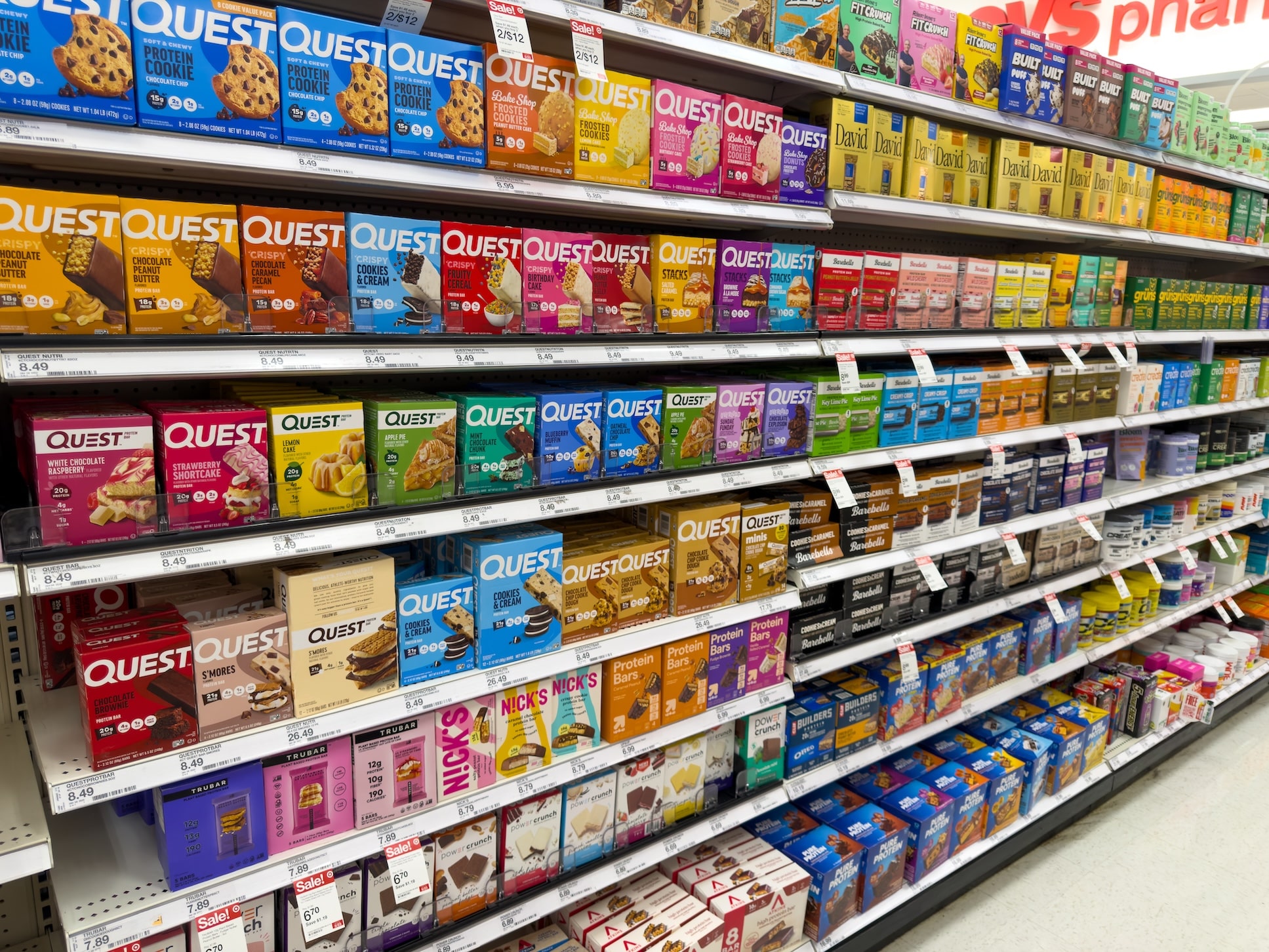
In October 2026, California Governor Gavin Newsom signed a bill that established the country’s first official voluntary certification program for non-ultraprocessed foods. If you had to read that sentence a few times to understand what that certification might mean, you aren’t alone. Defining what makes foods ultraprocessed and deciding how to regulate them has been a challenge for governments. And while California has made more headway than the federal government when it comes to devising a classification, the new law ultimately falls far short of actually regulating how food companies can sell or market these products.
In the last few years, ultraprocessed foods, or UPFs, have gotten a lot of attention from researchers, nutrition experts and public health professionals. Studies have increasingly tied high consumption of ultraprocessed foods to adverse health outcomes ranging far beyond the well-documented links to obesity and diabetes. Many of the foremost experts in nutrition and public health have declared that UPFs are a serious public health emergency, coming together to form education and advocacy groups like FedUp to warn the public and pressure governments to take action.
But despite the growing body of evidence documenting the harms of UPFs, defining them simply for the public — and for policymakers — has remained a sticking point. Although Secretary of Health and Human Services (HHS) Robert F. Kennedy Jr. announced that the UPF question would be a priority for the Food and Drug Administration (FDA), the agency has yet to release its definition more than a year after its promise to address the issue.
What are UPFs, really?
Most foods are, to some degree, processed from their raw, original state: Fruits are washed, cut and peeled; whole grains are ground and baked; and meats are fileted and cooked. But at what point do they become ultraprocessed? As we’ve explored before, the researchers who originally coined the term used what they called the Nova system to put foods and ingredients into four categories, with group-four foods being labeled “ultraprocessed.” The Nova system’s litmus test for ultraprocessed foods gauges whether or not they can be made using ingredients, tools and processes found in a typical home kitchen — but it doesn’t actually account for a food’s nutritional content. Even researchers who study UPFs have struggled to consistently categorize foods within the Nova groups, making the system somewhat subjective at best.
While it’s tempting to instead rely solely on more objective nutritional data, such as calorie counts and grams of added sugar, that’s also flawed: Most experts agree that it’s the excess of salt, sugar and fat that makes UPFs so damaging. Yet plenty of less-processed foods contain those, too. Some studies have also shown that people who consumed mostly UPFs that were “healthier” per their nutrition labels still saw higher rates of health problems than people who did not.

That might indicate that the problem lies with the individual additives, isolates and extracts that allow food scientists to manipulate the taste and texture of UPFs so deftly. However, looking at them as a category isn’t especially scientific when many individual additives and ingredients have been well studied and found to be generally safe.
All of these factors leave UPFs in a strange definitional limbo. It’s easy enough to identify what many of the worst offenders have in common, but there are enough exceptions to each of those simple rules to make them poor parameters for defining the foods and what makes them bad for us.
Getting to the heart of what defines a UPF might ultimately have more to do with the foods’ purpose than any particular quality. Carlos Monteiro, the lead researcher behind the Nova system, explained in a recent paper that the group’s intention was ultimately to categorize where food was coming from and why. Those group-four UPFs are engineered by food companies to maximize their craveability and shelf stability; the goal has always been to drive sales, usually at the expense of nutrition.
Why do we need to define UPFs?
Understanding that the problems with UPFs stem from their intentionally designed moreishness rather than any specific nutritional quality isn’t exactly easy to translate into health guidance. So while the kitchen litmus test might be enough to help steer the choices of more informed eaters, it’s a far cry from what most consumers would actually find useful. What’s needed is a definition of UPFs that means something legible about whether or not a product is healthy.
And for policymakers, any legal definition of a UPF also has to be consistent enough that companies and regulators can usually agree on what products qualify. As governments think about eventual labeling and regulatory structures, sufficiently disambiguating those definitions is critical to avoiding constant legal challenges or endless reviews and appeals for every product. It could make the difference between policy that gets implemented and policy that’s too burdensome and expensive to execute.
So an appropriate definition for UPFs would both clear the way for more effective communication about the health impacts of food, and make it possible to craft the effective regulations that public health experts say we desperately need.
Secretary Kennedy has touted his plans for mandatory front-of-package labeling with stoplight graphics, similar to those used in many other countries to indicate foods that are high in sugar, salt, fat or calories. But labeling schemes, along with other systems or restrictions based on nutrition criteria, have a potential weakness, which is that companies might just turn to reformulation, tweaking formulas just enough while still aiming to sell a craveable food that people can’t stop eating. That’s a long-established industry approach that brands have used to skirt restrictions or avoid front-of-package warning labels.
A carefully oriented definition for UPFs could recognize the industry’s ability to meet constantly evolving nutritional requirements and market demands without fundamentally changing the nature of its product. If such a definition became the basis of labeling laws or even restrictions and bans, it would be far harder for the food industry to reformulate its way into keeping sales strong.
State governments leading the way
A few state governments have already defined ultraprocessing for themselves, usually through bills that needed to define UPFs in order to regulate them in school lunches. Massachusetts, for one, essentially adopted the Nova criteria in its definition, identifying UPFs as “industrial formulations of food substances never or rarely used in kitchens.” Some states, like Arizona, simply identify UPFs based on whether or not they contain one of a handful of additives like potassium bromate or dyes like yellow 5, avoiding any further consideration about the other health aspects of the product. Others, like California and Pennsylvania, have adopted more nuanced approaches.
California’s definition of “UPFs of concern” involves a two-part test: First, UPFs have to contain an ingredient from the FDA’s Substances Added to Food database, essentially narrowing the list to items with Nova group-four ingredients like thickeners, colorings, emulsifiers or flavoring agents. The item also has to contain high amounts of saturated fat, sodium or added sugars, or contain a calorie-free sweetener; these criteria are an attempt to account for potentially “healthy” UPFs. Pennsylvania attempts to do this by excluding foods that meet the FDA’s requirements for health claims, itself a complicated bit of policy that we’ve examined in the past.
Each of these approaches is a good start, but each shows just how hard it can be to effectively define UPFs. Massachusetts’s definition encompasses the widest swath of foods, but it might leave too much room for ambiguity. Arizona’s focus on 11 specific chemicals (seven of which are food dyes) leaves a lot of UPFs out. Meanwhile, the attempts to incorporate health into the definitions from Pennsylvania and California also leaves room for industry maneuvering like reformulation.
Ultimately, it’s too early to assess whether these definitions are proving useful for policymakers given that most of the measures they were created for — particularly bans or limitations on UPFs in schools — are a few years off from implementation. California’s UPF ban in schools and its non-UPF certification are both supposed to roll out in 2029. That gives the food industry a long time to try to influence the state as it builds these programs, and it gives the companies plenty of time to find workarounds.
The federal government stalls on UPFs
For several months, the FDA had proclaimed it would be unveiling its own definition of UPFs at a press conference in August 2026. This would cap off a more than yearlong process that started with the announcement of a Request for Information (RFI) — essentially a public comment forum — in June of 2025. But while the agency did use that press conference to announce a minor change to the way food additives are registered, it didn’t produce the expected definition. Instead, Secretary Kennedy explained that the definition was finished, but had gone to the Office of Management and Budget (OMB) for approval.
There’s a notable disconnect between the administration’s rhetoric on ultraprocessed foods and its results, and the foot-dragging over an actual definition has become the most conspicuous example. Early on, UPFs were a fixture of Kennedy’s presidential campaign and of the Make America Healthy Again (MAHA) movement that supported him, and he pledged to make food a priority when he was later appointed as the head of HHS. The White House’s 2025 MAHA Report prominently featured UPFs as a driver of the country’s chronic disease epidemic, emphasizing them over politically thorny issues like pesticide exposure.
But those moves haven’t been followed by big policy changes. Kennedy has been quick to claim MAHA victories in state actions — like banning certain food dyes or additives — or voluntary moves by companies to remove certain ingredients. But other than comparatively minor updates like the phaseout of Red 40 or the tweaks to the GRAS process, actual progress hasn’t materialized.
That’s thanks in large part to the substantial disconnect between the MAHA movement and the administration’s pro-industry stance. And few industries have rallied to avoid regulation quite as successfully as Big Food.
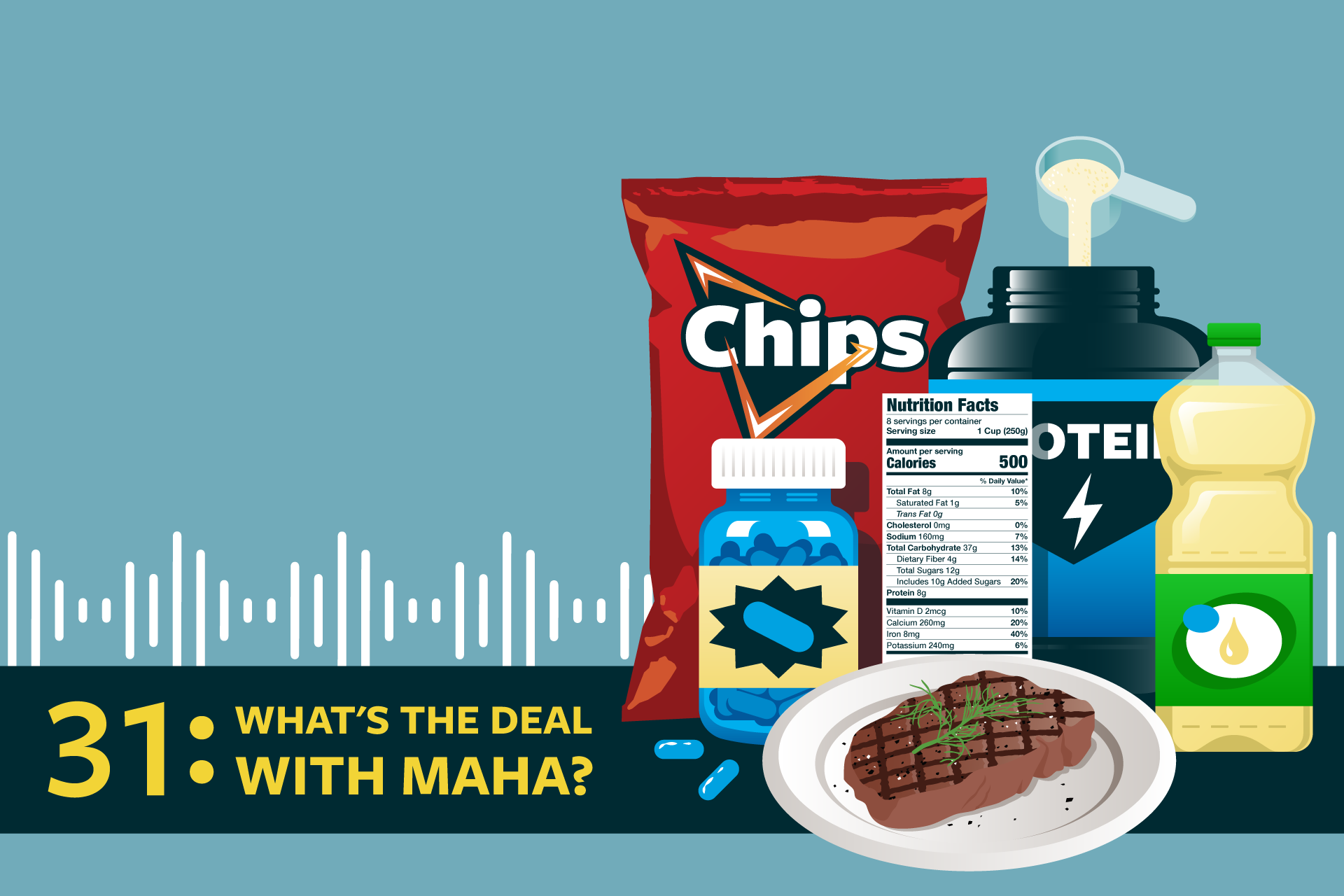
The lack of consensus on what ultraprocessed means is something the industry is eager to maintain, as the public’s confusion has proven to be a marketing goldmine. On the one hand, companies can claim that extremely refined products like whey protein isolate are minimally processed, despite being exactly what researchers would identify as Nova group-four foods. On the other hand, companies that sell UPFs can simply deny that the category exists or, as this obviously fallacious statement from a meat industry lobbying group does, claim that ultraprocessing is a totally useless term that puts sandwiches on par with a slice of cake.
As FoodFix recently reported, the OMB has held about two dozen meetings about the new definition, mostly with food industry groups. Those meetings — along with the news that the White House prevented RFK Jr. from petitioning food companies for evidence that their products are safe and healthy — demonstrate just how deeply embedded industry interests are. With that influence in mind, it’s unlikely that any forthcoming definition from the FDA will be particularly stringent or useful.
That’s why the researchers and policy experts behind a landmark series of papers on UPFs specifically highlighted that policies to improve public health and nutrition must ultimately focus on curbing the political power of the food industry. Without that broader effort, the only options that move forward — like California’s voluntary label for non-UPFs — might help some already informed people limit their UPF intake, but they won’t provide the general public with sufficiently clear and urgent warnings about the dangers of overconsuming UPFs.
Related Posts
 Public Health, The Industrial Food System
The ongoing PFAS problem
October 5, 2026
PFAS are once again making headlines as the Trump administration rolls back efforts to regulate and remediate these “forever chemicals.” Here’s what to know about PFAS, how they get into our food and what you can do about them.
 Public Health
Understanding food recalls: Why they happen and what you can do about them
September 24, 2026
Lately, it seems like there’s a new food recall in the news every day. Here’s what to know about why foods are recalled, how the recall process works and what to do if you have bought a recalled product.
 Food Policy & Economics, The Industrial Food System
Preserving farmland for farmers
September 8, 2026
As farmers struggle to afford arable land, a new bill seeks to ban corporate interests from buying the acreages under their feet.