


Can local food systems fill the growing gaps in healthy food access?
As food insecurity rates rise, an initiative in upstate New York is building a stronger regional food system that aims to help local farms thrive by providing essential infrastructure and getting more nutritious, locally grown food to food banks and schools.
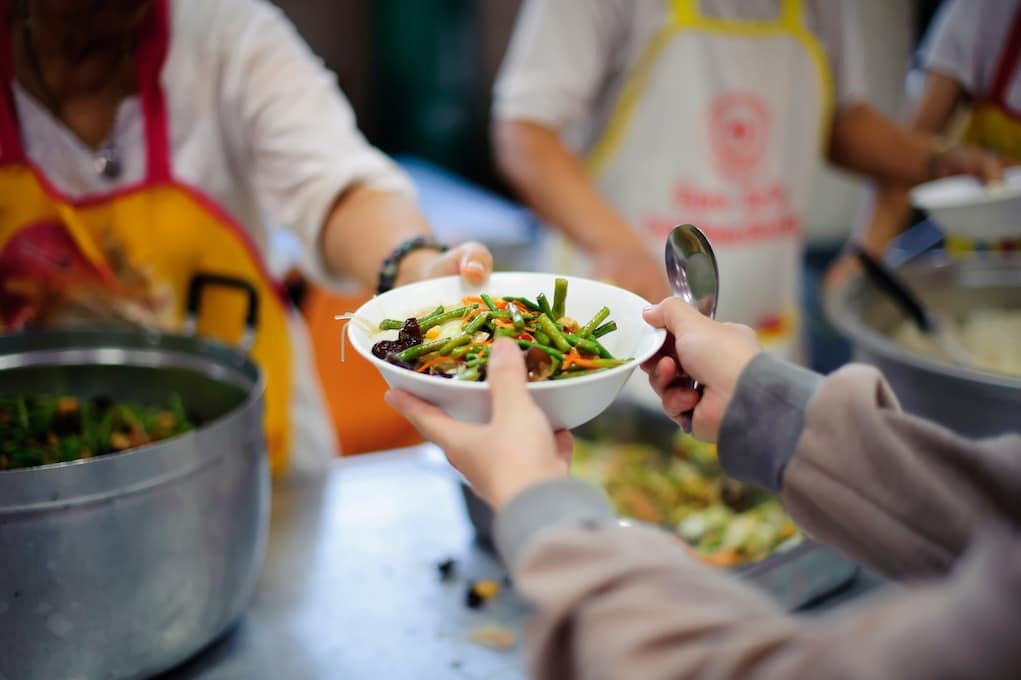
Thanks to eligibility changes and budget cuts, about 5 million fewer people are enrolled in the Supplemental Nutrition Assistance Program (SNAP) in 2026 than they were in 2025. In fact, participation has dropped to its lowest point in nearly two decades. Combined with other cuts to emergency nutrition assistance programs and rising food costs thanks to tariffs and war, that means food insecurity is now more prevalent than it was in the early days of the COVID-19 pandemic.
Those cuts also impact farmers. Food assistance programs like SNAP have long been a lifeline for small and midsize growers, while federally backed programs like farm-to-school have helped them find a market close to home.
With so many of these supports for local food systems suddenly off the table, it’s harder than ever for farmers to feed hungry people in their own communities. And while overstressed food pantries serve whatever they can get their hands on, high-quality locally produced food is an increasingly rare luxury. Grown with fewer or no chemical inputs or antibiotics, locally grown produce and livestock are harvested or slaughtered at their peak for best flavor and nutrients, which are preserved by a shorter journey to the table.
One organization in upstate New York is attempting to fill some of that gap, offering a model of how a better-developed food system could operate — one where farmers can sell produce to local institutions and businesses, creating jobs and keeping profits local rather than selling into a commodity system that extracts wealth and peddles poor-quality food back to people in return.
A potential strategy: Build local food systems
The termination of the USDA’s Local Food Purchase Cooperative Agreement’s (LFPA) stripped schools and food banks across the country of more than $1 billion in federal funding. This money would have enabled them to source nourishing food locally instead of purchasing processed food from industrial, albeit more affordable, sources.
Community Food Works (CFW), a nonprofit food processor and distributor in Kingston, in New York’s Hudson Valley, seeks to make local food sourcing easier. Launched last spring, it aims to kickstart a rejuvenation of the area’s food system by making nutritious regional agricultural products available to those unable to readily access them, namely schools and emergency food programs.
CFW buys grains, beans and produce at fair prices from New York State-certified or organic-practicing farmers to create flour, tortilla chips and sauces. It supplies those foods — along with bread and dinner rolls baked by sustainable bakery pioneer Bread Alone and Kingston Bread & Bar using CFW flour — to schools at the same price as industrially produced ones and furnishes them to food pantries free of charge.
Already CFW delivers to 35 emergency food programs regularly and 22 school districts in and within 90 minutes of Kingston.
“Families need greater nutrition,” says Peter Buffett (longtime Kingston resident and youngest son of legendary investor Warren Buffett), whose NoVo Foundation funds CFW. “The options just aren’t there because of how centralized everything’s [the food system] become.”
NoVo’s subsidization of production and distribution costs enables the low and no cost of its products. The effort is timely: In the mid-Hudson Valley where CFW is located, 11.9 percent of the population is food insecure according to the Regional Food Bank’s 2026 statistics, which use data from 2024. Forty-four percent may not qualify for SNAP benefits. And since that data was collected, the costs of other necessities like housing and healthcare have increased in many places, further imperiling people’s ability to feed their families. Mirroring reports around the country, these numbers are expected to rise as more federal cuts take effect.
As a unique initiative that brings together integral elements of the food system — production, processing, marketing, distribution and consumption — CFW hopes to offer a prototype for other communities.
“It’s complex, so I’m careful to say it.” says Buffett. “It would be wonderful if what we do here could be seen as an example of what might be done to revitalize a local food system somewhere else.”
Establishing the missing middle in the region’s food supply chain
An idea eight years in the making, CFW was sparked by a conversation between Buffett and Sharon Burns-Leader, co-owner of Bread Alone, about the region’s lack of agricultural processing operations. They wondered how to get more local food produced and eaten in the Hudson Valley, especially by those who don’t usually have access to it.
New York’s Hudson Valley boasts a long agricultural history; 2,280 farms dot the area. Yet those farmers have few options for transforming their fresh harvests or abundant crops into readily consumable and relatively shelf-stable products, like apples into applesauce or potatoes into frozen hash browns.
The discussion was prompted by Buffett’s ownership of Hudson Valley Farm Hub, which grows wheat, but had no nearby mill to turn it into flour. Baking bread seemed a natural first step: Most people eat it, it’s a staple of school cafeterias and emergency food programs, Burns-Leader and Bread Alone had the expertise and production capacity, and their prepared loaves could get locally grown, organic grain onto plates in a form kitchens could use immediately (instead of, say, a 50-pound bag of flour).
So Buffett built Milestone Mill, now part of CFW. With the goal of establishing the region’s missing processing capabilities, the enterprise has been broadening its operations to include vegetables and frozen foods.
The Mill grinds wheat and corn; plans are to expand to grain cleaning and processing of buckwheat, rye and other grains over time.
A vegetable processing facility, called The Cannery, began turning squash into purees and fruit into sauces this summer. The Kitchens is the enterprise’s tortilla and ready-made food arm. It will move to Kingston late next year once building renovations are complete.
CFW also handles logistics and complicated school bid paperwork that producers don’t have the time or ability to address. It’s difficult to run a mill at a regional scale, says Kyle Jaster, CFW’s executive director. “We think of ourselves as the pieces of infrastructure that don’t exist.”
Getting local, less-processed foods into schools
Twenty years ago, Christine Downs, the food service director at the Onteora Central School District in New York’s Hudson Valley, was unhappy with the processed food being served to her students. A chef trained at the Culinary Institute of America, Downs wanted to feed the kids healthier meals without ingredients like high fructose corn syrup. She contacted local farms in an effort to purchase items, but the order volume was too small to make it worthwhile for the growers.
Downs subsequently approached Burns-Leader, her former employer, about buying fresh bread, “some real food,” she says, for the schools. At the time, Bread Alone was situated just up the hill from central campus. But even with supplemental funds from the Board of Education, the bread was still far too expensive.
Last September, Downs finally began serving CFW’s tortilla chips and 100-percent whole wheat sandwich bread, which are higher in fiber, additive-free and far less processed than the commercial bread typically sold to schools. “To be able to do this for the kids,” she says, “… I’m just so thrilled we’re able to serve them something that I know is good for them.”
Beyond food security
Jordan Schmidt, food programs director at the Northeast Community Center (NECC) in Millerton, New York, recently received a phone call from a patron asking about the bread she had gotten from the center’s food pantry. “She was like, ‘Can you tell me more about the bread?’” recalls Schmidt. “‘It’s just so good.’”
NECC’s food pantry is a fresh-food access and free-choice model, says Schmidt, supplied by direct farm partnerships, organizations and food banks. It serves up to 250 households each week and 4,500 unduplicated individuals yearly. Schmidt estimates the numbers are up 20 percent over 2025 and believes the need could increase.
She’s grateful to consistently offer high-quality, nutritious items like CFW’s bread, flour, tomato sauce and beans to her culturally diverse clients. As the use of food rescue increases as a tool for preventing hunger and food waste, in a circumstance unique to food pantries, the food they receive to give to patrons can vary. “Consistency is actually very important,” says Schmidt, for those experiencing life instability.
“It feels essential but not easy,” she adds, to offer nourishing food because many patrons have different, challenging health conditions. “It’s actually the core of a functioning society to address this. The difference is that we’re talking about food quality or nutrition security, not just food security.”
Expanding agriculture in the Hudson Valley
CFW currently works with 25 area farms that prioritize land stewardship for better soil and product nutrition.
“Among the organic farmers here, there’s great hope and anticipation that this really grows into something long lasting,” says Jay Goldmark, farm general manager of Stone House Grain, which has grown wheat, beans and animal feed for locals since 1979 and is growing 100 acres of spring wheat for CFW. “A diverse marketplace is really good for a farm.”
There’s not much knowledge and expertise about small grain growing in the Northeast, says Breathe Deep Farm’s Chris Cashen, a vegetable farmer relatively new to grain growing. He appreciates CFW “educating farmers like me and helping us grow the right stuff for them.”
CFW and the Farm Hub collaborate on grain trials to expand knowledge of varieties that grow well in the region with climate change. That helps farmers diversify crops and find new markets without taking additional risks.
Sharing regional milling and food processing knowledge is also key, asserts Jaster. “To be successful, we can’t be the only game in town,” he says. “The resiliency piece means lots of organizations, businesses and individuals contributing efforts to the food system.”
Sustaining the model
Buffett views CFW as a startup, maintaining that philanthropy should function like venture capital. He doesn’t expect a monetary return, “but a social return, whatever that might mean.”
Buffett intends to develop CFW to a point that attracts current state or future federal government interest to see the value and construct their own models, like moving subsidies to a CFW-like endeavor tied to improving children’s health.
It’s highly unlikely, given the current administration, that the federal government will fund these kinds of projects. However, Buffett says he’s committed to developing the local food system because, especially in an economic downturn, people need to eat and infrastructure is necessary.
So for now, philanthropy offers a lifeline. Buffett brushes off the question of the model’s sustainability. “The ag system as it stands isn’t sustainable,” he says. “It’s being subsidized heavily in all sorts of ways,” referring to federal subsidies awarded to large producers.
“We’re subsidizing it, too, just on a different ledger,” he continues.
Related Posts
 Food Labeling, The Industrial Food System
5 things to know when buying chocolate
October 28, 2026
Choosing a chocolate bar involves more than just taste — how it is made matters, too. Behind popular brands are concerns about chocolate production, including environmental damage and human rights issues. Here’s what to know before buying chocolate.
 Public Health, The Industrial Food System
Are we getting any closer to defining and labeling ultraprocessed foods?
October 15, 2026
As concerns about ultraprocessed foods grow, defining and regulating them remains a challenge. While California has taken a step toward a clearer definition, meaningful federal policy has stalled.
 Public Health, The Industrial Food System
The ongoing PFAS problem
October 5, 2026
PFAS are once again making headlines as the Trump administration rolls back efforts to regulate and remediate these “forever chemicals.” Here’s what to know about PFAS, how they get into our food and what you can do about them.