
California’s new folic acid mandate for tortillas sparks controversy over fortified foods
When California implemented a new law on January 1, 2026, stating that tortillas and other foods made from corn masa must include a new ingredient, folic acid, few people expected the policy to make waves. After all, enriching wheat flour with folic acid — a stable, synthetic form of folate that helps prevent birth defects and neurological problems — has been commonplace since the 1990s. With those policies contributing to a steep decline in neural tube defects during pregnancy, the new mandate was designed to make sure that Latino babies, who still suffer from higher rates of those defects, weren’t left behind. But leading up to the law’s implementation, critics have come from many different corners, with wellness influencers claiming the new ingredients are toxic and traditional tortilleros calling out the law as “colonizing all over again” for Latino foodways.
Social media’s fortification wars
With ultraprocessed foods getting so much attention these days, it’s easy to understand why someone might look at a list of ingredients, see one they don’t recognize (like folic acid), and assume it’s just another food additive on par with emulsifiers, extracts and preservatives.

Diet and wellness influencers are quite happy to churn out content that milks that confusion, portraying added vitamins as inferior imitations of the real thing, usually paired with a plug for a detox protocol that just happens to be available in their online shop. More recently, with the Make America Healthy Again (MAHA) movement depicting its war on food additives as a good-vs.-evil battle for children’s health, that rhetoric has gotten more inflamed: According to them, synthetic vitamins aren’t just inferior, they’re literal poison. That language is usually accompanied by misconceptions about ingredients like folic acid being sprayed directly onto crops and blatantly false claims about potential harms, painting fortification as an effort by the government, Big Food and Big Pharma to keep people sick with low-quality food.
Those takes might veer too far into conspiracy theory to be credible, but given the food industry’s willingness to misrepresent products containing little but added sugars, fats and sodium as “healthy,” it’s easy to understand why people might suspect the food industry of using fortification as another kind of healthwashing.
That notion has even more heft when it crosses cultural borders: Critics’ complaint that the new law colonizes a Latino foodway revolves around the idea that companies have taken a traditional, nutritious food, stripped it of nutrients by processing it, then sold people an inferior version with synthetic vitamins. That’s a well-established grievance, one that motivated Mexico’s attempts to block imports of genetically modified corn for human consumption alongside health and environmental concerns.
Ultimately, California’s folic acid mandate sits at the center of a debate about the virtues and potential pitfalls of fortifying foods, one that pulls just as much from wellness influencer–driven misinformation about the possible harms of the added ingredients as it does from understandable skepticism about the industrially produced foods that have replaced so many traditional staples. When food companies first started adding essential nutrients to commonly consumed items more than a century ago, it was a lifesaving development that helped protect millions from preventable diseases. But with many people having (at least theoretically) better access to the whole, less-processed foods that ward against those deficiencies in the first place, is there still a benefit to fortification?
Why fortification?
The idea behind food fortification is simple: To use commonly consumed foods as a delivery vehicle for nutrients that may have been lost in processing or storage, or to supply nutrients that people might not otherwise find readily available. Those nutrients could be missing in people’s diets for several reasons, usually stemming from a lack of access to a variety of foods, itself due to poverty, seasonal variations in eating habits or even picky eating.
- Fortification
- The process of adding nutrients to a food that were not present in the original
- Enrichment
- The process of adding nutrients that were lost during processing
History of fortified foods
Doctors and scientists have long observed that certain diseases seemed to be caused by dietary deficiencies and could be cured by eating certain foods, as in the famous case of the British Navy giving sailors citrus to prevent scurvy. It wasn’t until the early 20th century that modern analytical chemistry techniques enabled scientists to identify the specific chemicals responsible for these deficiencies, and devise a method for getting them into everyone’s diets, regardless of the food they could access or afford.
The first intentional effort to fortify foods happened in the 1920s in Switzerland, where doctors realized high rates of goiter and other thyroid problems were the result of low iodine consumption. But rather than turning to expensive, hard-to-access foods that were rich in iodine, early experimenters tried adding the element to an inexpensive ingredient everyone was already using: salt. That early experiment was so successful that it was adopted across Switzerland by 1922 and had been taken up in the U.S. by 1924.
In the following decades, food companies, at the behest of medical organizations (and, during wartime, the federal government) started to fortify ingredients like salt and enrich white flour with essential vitamins and nutrients that were lost during milling. Rates of nutritional deficiencies that were previously widespread plummeted, with diseases like rickets and pellagra becoming virtually unknown within a few generations.
Food fortification regulation
These days, if you look at almost anything from a grocery store that has flour in it, the chances are pretty high that the flour is enriched. But despite being the norm, food fortification is largely voluntary in the U.S. outside of specific state laws like California’s. Instead of setting mandatory targets for fortifying certain foods, the FDA instead sets fortification targets through what it calls “standards of identity,” which set levels for the added nutrients needed in order to call a product enriched or fortified. In order for milk to be sold as “Vitamin D,” the most common kind of fortified milk, it must contain at least 400 International Units of Vitamin D per quart.
Foods that don’t have a standard of identity can be fortified, but these have to prove they’re meeting the FDA’s general guidelines for fortification: either replacing nutrients lost during processing, or proving that the food is an effective vehicle for a nutrient that the general population might be deficient in.
There are actually more rules about what shouldn’t be fortified than there are about what should. This is largely to prevent food companies from fortifying foods that are otherwise nutritionally empty — like candy, sodas or even alcohol — and marketing them as nutritious. There are also guidelines intended to prevent foods from being overfortified. Those are based both on the intake limits for certain nutrients, but also on potential consumption levels for certain products.
Ultimately, many companies choose to fortify their products or ingredients in line with the FDA’s guidelines simply because consumers see the added nutrients as beneficial, and because fortification is still encouraged by many medical and nutritional groups around the world.
Too much of a good thing?
There are some cases where the versions of a nutrient that are added to a food might also behave differently in our bodies than the natural versions found in unfortified foods. Folate and its synthetic version, folic acid, have fallen under considerable scrutiny in this arena, helping fuel the debate over California’s new mandate. Folate is difficult to add to foods in its natural form because it breaks down easily. So while people who eat ample sources of natural folate may be getting enough, many people aren’t, especially if their needs are higher because of pregnancy. Synthetic folic acid, which is much more stable, has to be processed by the liver before it can be used. Both are regarded as beneficial, although a sizable portion of the population — around 40 percent — has a mutation in the MTHFR gene that affects their ability to process folic acid. Some people with certain variants of this gene can experience low folate levels and buildup of folic acid.
Misinformation about the MTHFR gene is widespread, with numerous groups and support pages on social media encouraging people to avoid folic acid, dubiously linking its consumption among people with MTHFR variants to cancer, autism and other conditions. Doctors and researchers have repeatedly shown that folic acid is still safe and effective, even for people with these genetic variants.
While it is possible to overconsume nutrients and run into health problems, the levels the FDA recommends for fortification are designed to stay under the upper limits that might trigger them. For any given vitamin or mineral, the most likely cause of overexposure isn’t eating fortified foods: It’s taking supplements. Unlike food fortification, the supplement industry in the U.S. is largely exempt from regulations and oversight. And because supplement marketing tends to be dominated by a “more is better” approach, it’s easy to find multivitamins and other supplements that offer vitamins and minerals far in excess of the daily recommended dose. In combination with any nutritionally adequate diet — whether the vitamins and minerals come from whole foods, fortified foods or, most likely, both — supplements can be enough to push people over the edge.
Still, even when people are dramatically overconsuming vitamins and minerals, supplements tend to leave the body fairly quickly rather than sticking around and causing problems, the source of the adage that most multivitamins are just a way to have “expensive pee.”
Do we still need to fortify food?
Food fortification is, by design, a very broad-brush approach to public health and nutrition. It’s aimed at the most commonly consumed and affordable ingredients with the intention of delivering them to as many people as possible. It is perhaps more accurate to think of fortification as damage control for the many different factors that drive people to eat nutrient-poor diets: Even though modern food supply chains are far better at supplying a diverse range of fresh foods regardless of season and geography, eating those foods still requires time, effort and money that many people lack.
There’s also the matter of taste and preference. For people who dislike whole grains, for example, enriched white flour can provide the critical nutrients they’re missing by avoiding whole wheat. For kids (and the parents who feed them), fortified foods offer wiggle room: Foods that most kids will eat — like fortified milk or snacks and crackers made with enriched flour — provide essential nutrients for growth like iron, calcium and Vitamin D at a time when many kids are also intensely picky eaters.
But not all cultures have the same universally consumed foods. For people who eat mostly corn-based grain products, there are far fewer options that offer folic acid. Even though a standard of identity exists for fortified corn-based flours like cornmeal and masa, less than 10 percent of products opt to include it.
That means people who eat mostly corn over other grains — especially Latinos — aren’t getting the same reliable, constant exposure to folic acid through food. Couple that with low consumption of prenatal vitamins that would supply extra folic acid, and you get a predictable but tragic health outcome: More Latino children are born with neural tube defects than their counterparts from other ethnicities.
Folic acid exemplifies one of the strengths of food fortification. Folic acid is most critical in the first 26 days of pregnancy, a point so early that many people don’t even know they’re pregnant yet. Even if someone started taking a supplement when they learned they were pregnant, a folate deficiency in those earliest weeks could put their baby at risk for neural tube defects. Having folic acid in the food supply provides a safeguard, particularly in populations that have low healthcare access.
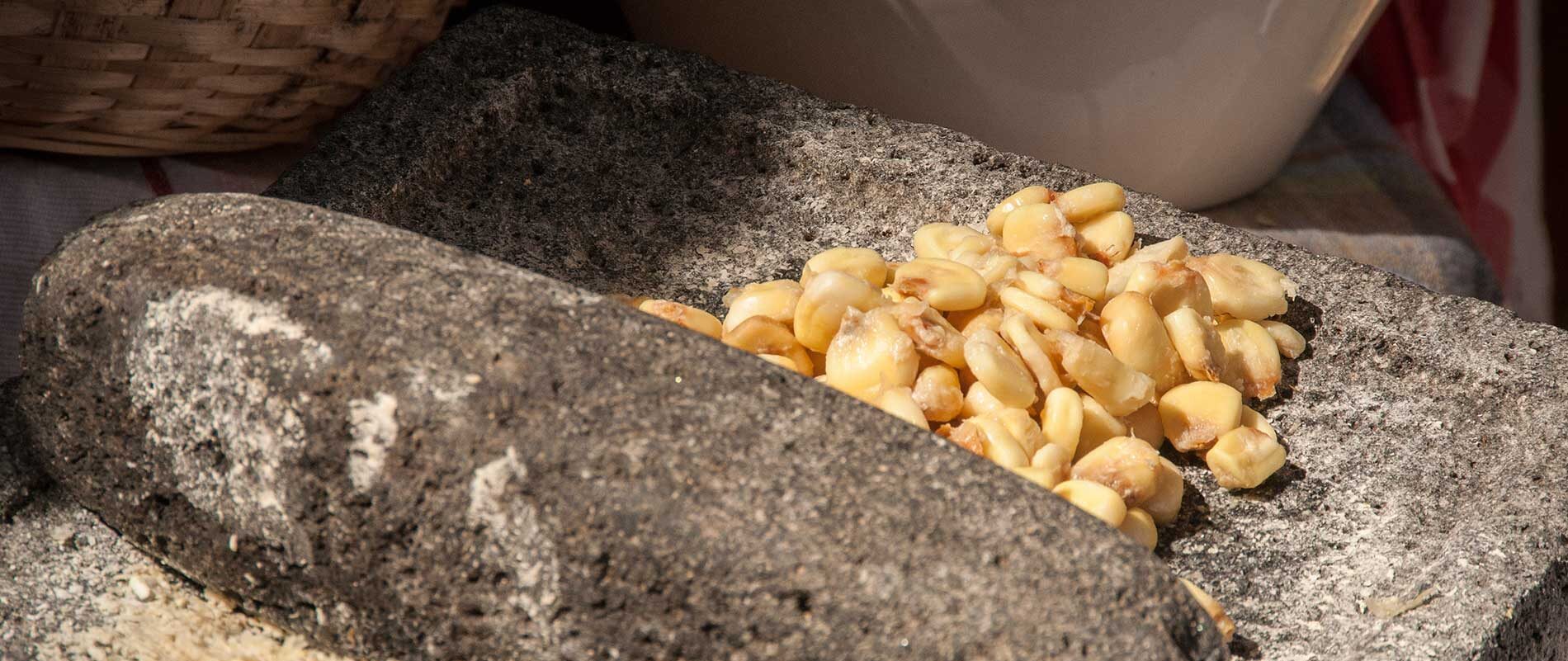
So what about the concern from some tortilleros and Latino chefs that the folic acid mandate is an attempt by food companies to “colonize” a traditional food? Given that traditional processing of cornmeal (a process called nixtamalization) helps make nutrients more bioavailable, some tortilla manufacturers say fortification shouldn’t be needed in the first place. But that process mainly impacts the availability of niacin, or Vitamin B3, not folate. Folate levels in unenriched cornmeal — regardless of how it is processed — aren’t especially high to begin with.
It’s worth looking to Mexico for guidance on how to think about enriching corn products. There, laws have required fortification of non-nixtamalized cornmeal products since 2008, but tortillas and other products made from nixtamalized corn are exempt. The same is actually true in California, where companies that make tortillas and other foods from 100 percent nixtamal don’t have to add any folic acid, both because of the nutrient-boosting effects of traditional processing and as a de facto recognition that people who are consuming artisanally produced tortillas are probably well-off enough to be getting folate from other foods. But considering that these tortillas are too expensive for most people to use daily, we can see the original logic of food fortification playing out in real time — improving the everyday option for those who can’t make other choices.
Get the latest food news from FoodPrint.
By subscribing to communications from FoodPrint, you are agreeing to receive emails from us. We promise not to email you too often or sell your information.
Top photo by JHVEPhoto/Adobe Stock.
More Reading
Plastics are everywhere in agriculture. Why researchers are worried.
January 22, 2026
Forget the dietary guidelines — Marion Nestle will help you figure out what to eat
January 12, 2026
What to make of the new dietary guidelines
January 9, 2026
MAHA wants to reform food, health and scientific systems — why is it ignoring nitrates?
December 18, 2025
Can legal challenges against ultraprocessed foods get us to take them seriously?
December 11, 2025
Can MAHA succeed at making America healthy again?
November 19, 2025
How urban orchards improve a community's access to fresh, healthy food
October 30, 2025
School meals are about to get a lot less local — and less healthy
October 22, 2025
The meat industry smeared the Planetary Health Diet. Now its creators are back with more evidence.
October 10, 2025