


How urban orchards improve a community’s access to fresh, healthy food
School gardens have enjoyed at least two distinct heydays in the United States. The first, in the years after World War I, saw some 75,000 school gardens pop up as a means to incorporate outdoor time and food-plant education into a child’s day. We’re still in the midst of the second, which surged in the mid-1990s when California launched an initiative called A Garden in Every School and chef Alice Waters kicked off her Edible Schoolyard Project. There are now almost 7,000 school gardens stretching across the U.S. by last formal count — this time around, also recognized as a valuable tool for increasing kids’ access to healthy foods.
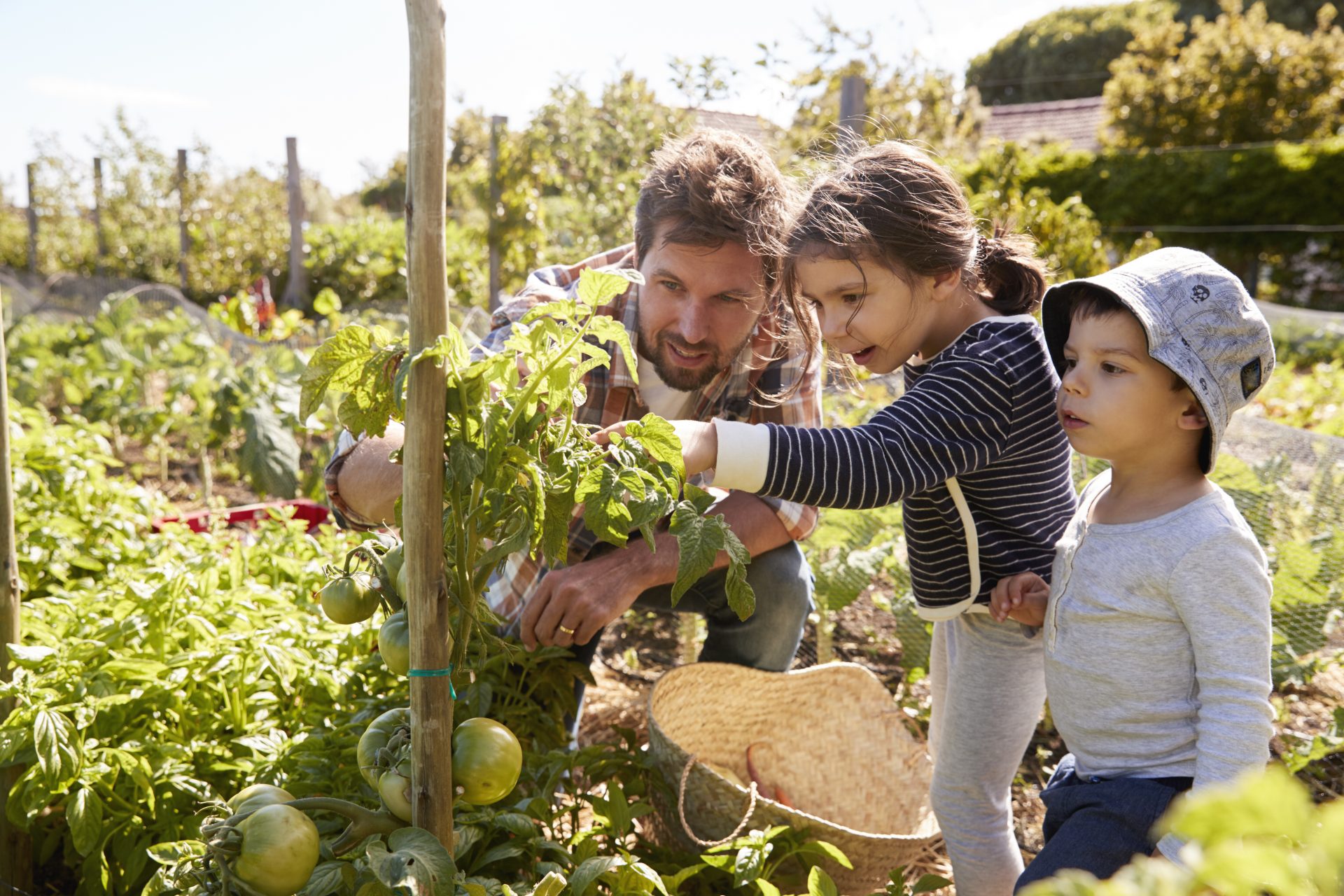
Largely left out of the school-food equation, though, have been tree fruits and nuts — an oversight that Maine-based ReTreeUS is working to overcome. Since its founding in 2009, the nonprofit has planted more than 100 orchards, ranging in size from 10 to 100 trees, in schoolyards in its home state as well as in Vermont, New Hampshire and Massachusetts. Orchards give children “easy access to the natural environment,” says founder Richard Hodges, granting them the ability to “watch trees grow over time, care for them and [see] those trees begin to fruit.” ReTreeUS is part of a much larger movement that aims not only to plant orchards in schools, but to place them widely across urban spaces — in vacant lots, community gardens, parks, and hospital and faith-based plots. They’re a potent way, says Ryan Watson, to “make community impact.”
Watson is national orchard operations and education manager for The Giving Grove, an organization begun in Kansas City, Missouri, in 2013 that’s partnered with programs like ReTreeUS to establish, to date, 680 orchards in 16 cities from Seattle, Washington, to Raleigh, North Carolina. These orchards provide nutritious food, as well as co-benefits like shade-giving tree canopy, to residents of under-resourced neighborhoods. As the federal government begins to cut back on programs that help low-income Americans afford groceries, and strips funding for school meals that provide fresh local food, “That makes the work that we do even more imperative for supporting people who otherwise might not have access,” Watson says.
No two Giving Grove affiliates are quite the same in how they create orchards for the people who would benefit from them — Watson compares them to fingerprints, each unique in its way. But Giving Grove does have a broad mission to serve communities in need and encourages its affiliates to share their harvests, whether that be Asian pears picked for cafeteria lunches, apples donated to food pantries or raspberries plucked by any hungry neighbor. Potential partners must have a dedicated space for their orchard — no street trees, which come with maintenance challenges — that has access to water and sun. They also must have at least two “stewards” to assist with planting, tackle necessary tree maintenance and oversee distribution of the harvest. In return, Giving Grove offers some matching funds, plus consultation, soil testing, access to nursery discounts, education about best practices for things like mulching and pruning, and a network of partners that together provide “lifetime support,” Watson says. “We don’t tell anyone what to do. We’re there to offer assistance and advice and insight.” That includes workshops on fermentation and other ways to extend a fruit harvest.
Apples and peaches are popular picks for a lot of would-be orchardists, even though they’re prone to disease and generally hard to take care of. Over time, though, Watson has noticed that affiliates often become interested in adding more native species to the mix — what he calls “right plant, right place” — like papaws in Pittsburgh (one orchard there has attracted now-rare zebra swallowtail butterflies with its papaw trees), muscadines in Georgia, berries in Washington State. Giving Grove also recommends planting understory fruit-bearing shrubs and vines that support pollinators and increase soil fertility, carbon sequestration and water retention. And as more and more affiliates start orchards near each other, they can take advantage of their proximity to get group discounts on trees, share planting materials and trade local growing knowledge.
Hodges at ReTreeUS says most of the schools he works with are interested in apples, peaches, pears and plums. He consults with them about what they want to plant and where, provides them with trees and shrubs he’s purchased then grown out in his own nursery — he’s recently lost two federal grants that support these efforts and is struggling to make up the difference — then works with students to put the trees in the ground. “My approach is really trying to make it like an outdoor classroom and building lessons around that,” Hodges says. When fruit and nuts are ready to eat, “Kids can pick on their way to school. Or there might be an organized harvest, where it goes into the cafeteria and any abundance goes to local food pantries. Everybody loves it.”
Food Well Alliance, an organization with a mission to support the building of community gardens and urban farms that promote food security around Atlanta, Georgia, has recently begun receiving matching funds and other grant opportunities from Giving Grove to expand the number of orchards in the city. “That looks like technical assistance for different challenges that come up,” says Kate Connor, Food Well Alliance’s executive director. It’s also delivering bulk compost and seedlings and volunteers and training. Preference is given to sites, including schools, that intend to share their harvests with those in need. “If you’re receiving trees and support from us, you [agree] that you’ll donate at least 50 percent out to the community,” Connor says. The organization encourages its partners to focus on apples, pears, plums, figs, hazelnuts and pecans, along with blueberries, blackberries and raspberries. (“Get a fig tree if you want to feel successful,” Connor says.) An annual tree sale supports the purchase of these and other orchard plants.
“I have had more people say that fruit trees were their entry into the world of eating locally, understanding local food, understanding community gardens, and that is something I never would have imagined."
“I have had more people say that fruit trees were their entry into the world of eating locally, understanding local food, understanding community gardens, and that is something I never would have imagined,” says Connor. “A church will come on saying, We don’t want to do a food pantry. We don’t want to keep a garden. But yeah, of course we could have a couple of trees.” In all cases, partnerships are critical to success. Food Well Alliance is working with the Atlanta Housing Authority to co-develop an affordable housing complex and community orchard/gardens that will break ground around the same time. ReTreeUS partners with a variety of agencies and organizations in Maine; it’s currently teaming up with the University of New Hampshire to develop 30 food forests — and lesson plans around them for grades K through 12.
To date, Food Well Alliance has planted about 150 orchards in Atlanta, although Connor admits it’s hard to keep tabs on how many are still up and running. “Some people get real ambitious and they want to have a huge project bearing a lot of fruit,” she says — an aspiration the organization has tried to temper by providing better up-front technical assistance and education, thanks in part to Giving Grove’s extensive and growing network of affiliate experts. Sometimes deer will munch down whole young trees, and sometimes a space will lose its lease.
“Inevitably we’re going to lose sites over time because in an urban environment, land is a commodity, and it’s expensive and there’s a need and desire to utilize that space,” says Giving Grove’s Watson. Sometimes, “if there’s construction that happens at a school, they have to remove the orchard but what we’ve taken from that are lessons to ask the right questions, to prevent things like that from happening. If you’re working with a school, do you have buy-in from the whole administration and not just one teacher in the building?”
Giving Grove–supported orchards have by now provided millions of servings of fruit and nuts to eaters young and old and every age in between. There’s no question this program has become “a means of public health intervention,” Watson says. “It provides critical infrastructure for climate resiliency and for hunger impacts, and they just make our cities more livable for people. We can’t do this work and not experience how profound and powerful it is.”
Get the latest food news from FoodPrint.
By subscribing to communications from FoodPrint, you are agreeing to receive emails from us. We promise not to email you too often or sell your information.
Top photo by Erik/Adobe Stock.
More Reading
Buying better beans: Look beyond the supermarket to find tasty, affordable dried legumes
September 15, 2026
10 ways to save money at the farmers market
July 31, 2026
How to spot a true farmers market
July 30, 2026
Tradwives, MAHA Moms and the impacts of "radical homemaking"
December 10, 2025
Food Freedom advocates cite the benefits of deregulation. Food safety is not one of them.
November 21, 2025
Beyond pecan pie: Growers look for new markets for this native nut
October 24, 2025
School meals are about to get a lot less local — and less healthy
October 22, 2025
Why you should seek out local whole-grain flour, and how to use it
October 15, 2025
From Ludacrisp to Cosmic Crisp: How new apples are bred
October 8, 2025