


From Ludacrisp to Cosmic Crisp: How new apples are bred
For 46 years, David Bedford has worked in the apple breeding program at the University of Minnesota (UMN), in one of the oldest and most venerable of such programs in the country. Of the 29 apple varieties UMN has developed and sent out to growers since 1907, sporting names like Prairie Spy and Redwell and Sweet 16, one has been a total game changer. “In apple breeding, we generally make incremental changes — we want a little bigger apple, we want a little sweeter,” Bedford says. “But every now and then, you have this paradigm shift, and that’s what it was with Honeycrisp. It wasn’t just a little crisper, it was a whole new world.”
Released in 1991, Honeycrisp, in fact, changed pretty much everything about what eaters were looking for in a tasty apple. With its thin skin and big, juice-filled cells, it has what’s been described as an “explosive” texture that had been previously unexperienced by apple cognoscenti. “It was a texture that didn’t exist before,” says Bedford. The apple has since been dogged by complaints that it isn’t quite as wonderful as it used to be. Still, that texture proved so popular that Honeycrisp has been used as a breeding “parent” in what Bedford unofficially estimates is 50 percent of new apple varieties that arrive on the market — including some you’re likely to encounter this autumn at farms stand or in supermarket produce aisles. To guide you as you sample your way through the season’s pomiferous bounty, here’s a look at some apples old and new, and a peek at some that are still to come.
Named varieties
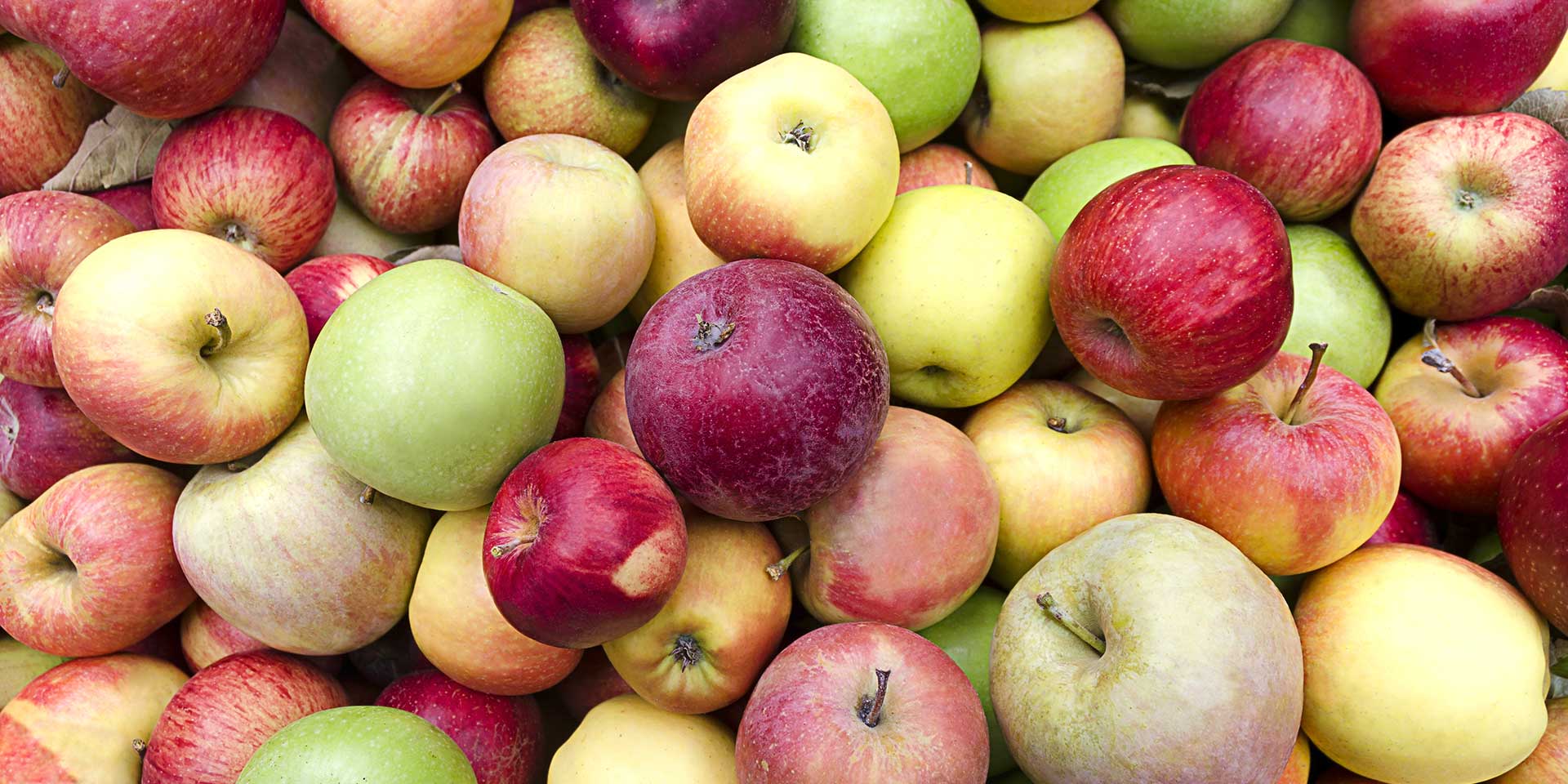
There are at least a couple thousand named apple varieties being grown in orchards across the country. Farmers who haul their apples to farmers markets or run U-pick operations are likely to have heirloom surprises and some old-fashioned commercial varieties, such as Macouns, that have fallen out of wider favor. Offerings tend to vary by region: Roxbury Russets in the Northeast, Arkansas Black in the South, Palouse in the Pacific Northwest. At one farmstand in New York’s Hudson Valley, patrons can select from an evolving selection of 70 varieties. These include “antique” apples like a hard brown russet called Ashmead’s Kernel, a Dutch cooking apple called Belle de Boskoop, and Pink Pearl, an old English variety with blush-colored flesh. The stand also sells “traditional” apples: Empire, Ida Red, Jonagold and Gala, many of which were parents to some of the “modern” apples we’ve become familiar with over the past couple of decades.
Modern named varieties are bred to be sold commercially — that is, they look and taste consistent and can stand up to being shipped and stored. You’ll find most of them at supermarkets both large and small, although they may turn up at U-pick farms and farm markets, too. That Hudson Valley farmstand carries a super-crunchy modern apple, first made available in 2018, called SnapDragon, a UMN creation named Zestar! and yes, even the (in)famous Honeycrisp.
Breeding is all
Any named apple came into being thanks to the time-honored practice of plant breeding. Unwanted traits like quick-browning flesh or susceptibility to a fungus called apple scab are suppressed, and desired traits like balanced flavor and juiciness are encouraged. Breeding a brand-new apple is an arduous process. It can take 10 or 20 years (sometimes more) to develop a variety and get it ready to be grown and sold. For a commercial apple called EverCrisp — released in 2014 by the Midwest Apple Improvement Association (MAIA) — pollen from Fuji apple flowers was used to cross-pollinate Honeycrisp flowers. Seedlings grown from the resulting fruits were tended by MAIA farmer members, who grew them for about five years till they started bearing apples that, in this case, were deemed worthy of pursuing commercially. But “98 percent of crosses are terrible, and you just discard them,” says MAIA President and CEO Bill Dodd.
“One of our goals has been to come up with varieties that ripen every week, so a pick-your-own operation could have one or two of our varieties every week."
EverCrisp does turn up in supermarkets, although MAIA’s apples were initially meant to give U-pick growers something to lure in patrons across prime apple-picking months. Says Dodd, “One of our goals has been to come up with varieties that ripen every week, so a pick-your-own operation could have one or two of our varieties every week,” from September till November. The organization is now putting more focus into breeding apples that give all sorts of consumers what Dodd calls “a better eating experience.” About 1,200 farms in 30 states from Washington to Massachusetts are growing MAIA apples, with names like Sweet Zinger, which is a cross between Goldrush and UMN’s Sweet 16; Red Zeppelin, yet another Honeycrisp hybrid; and Amarilla Soul, a yellow-skinned cultivar created from Honeycrisp and Fuji that will be available for sale in 2027. Ludacrisp, a Sweet 16 hybrid that MAIA released a few years back, piqued the interest of a buyer from a small regional supermarket chain. “He wanted as many as he could get but there aren’t that many trees planted yet,” says Dodd. It will take three or four years to get more trees planted and fruiting to meet demand, “but that’s a nicer problem to have.”
Public vs. private breeding
The University of Minnesota’s isn’t the only university breeding program that’s creating new apples to bring to market. The oldest of all belongs to Cornell University, which in 135 years has developed 69 apple cultivars. Some of these are venerable stalwarts: McIntosh, Cortland, Red Delicious. Land-grant universities like Cornell and UMN were founded with a mission to improve crops in their own regions, meaning that originally these apples were bred to meet disease and pest pressures in the Northeast and upper Midwest, respectively.
Over the years, however, some of their apples have been adapted to other regions (as well as organic systems) — and herein lies a clue as to the trouble with Honeycrisp. Well-suited to cold winters but also tricky to grow, UMN released the cultivar as an open variety, meaning, anyone can buy trees and grow them commercially. Many tried, even some who, Bedford says, “pick it too early. They can store it poorly; they can pick under-sized fruit — we have no control over that.” As a result, a lot of fruit showed up in grocery aisles that was mealy, dry and bland. Now, UMN trademarks its new apples and releases them as managed varieties, meaning “we license certain growers to grow them, so we control the quality.” New apples like Triumph and Kudos, which are just starting to drop into consumer shopping baskets, are meant to be grown by large-scale farms and marketed nationally. But UMN’s quality-control measure should ensure that the disappointments of Honeycrisp don’t recur.
Cornell releases its own trademarked apples. SnapDragon (a Honeycrisp hybrid featuring what its breeder calls a “monster crunch”) and RubyFrost (Braeburn x Autumn Crisp), both released in 2013, are available to licensed New York State farmers, so you’ll find them around the region. Otherwise, as a public breeder, Cornell usually makes its apples available to any grower that wants them. Some other apples to look out for from its program include Cordera (Honeycrisp x Liberty), Pink Luster (Honeycrisp x Gala), and Firecracker (a Golden Delicious hybrid), all from 2020.
There’s one other public apple breeding program in the country, at Washington State University (WSU). Growers in that state produce 60 percent of the apples we eat in the U.S., making it a hugely important region for the fruit. WSU’s first release, meant to meet the needs of Washington growers and the particular climatic conditions they face, was called Sunrise Magic. Their latest is Cosmic Crisp, a sturdy trademarked cross between Honeycrisp and Enterprise you’ll find in supermarkets across the country throughout the year. In a few years, keep an eye out for Sunflare (Honeycrisp x Cripps Pink), which is due to hit commercial markets in 2029 and is being touted as tart, crunchy and juicy.
With so many apples available and more to come, growers like Bedford worry that the marketplace has become oversaturated. “I’m not going to say too many choices, but we’ve got a lot of choices, and for a consumer who doesn’t live for apples every day, there’s more than they actually know about,” he says. That makes marketing arduous, and opportunities to release more varieties slim. On the plus side, however, it means a plethora of varieties for consumers to discover. Happy crunching!
Get the latest food news from FoodPrint.
By subscribing to communications from FoodPrint, you are agreeing to receive emails from us. We promise not to email you too often or sell your information.
Top photo by branex/Adobe Stock.
More Reading
Buying better beans: Look beyond the supermarket to find tasty, affordable dried legumes
September 15, 2026
10 ways to save money at the farmers market
July 31, 2026
How to spot a true farmers market
July 30, 2026
Tradwives, MAHA Moms and the impacts of "radical homemaking"
December 10, 2025
Food Freedom advocates cite the benefits of deregulation. Food safety is not one of them.
November 21, 2025
How urban orchards improve a community's access to fresh, healthy food
October 30, 2025
Beyond pecan pie: Growers look for new markets for this native nut
October 24, 2025
School meals are about to get a lot less local — and less healthy
October 22, 2025
Why you should seek out local whole-grain flour, and how to use it
October 15, 2025