


Why you should seek out local whole-grain flour, and how to use it
Do you know where your flour comes from? If you value local food, care about the way ingredients are grown and support people working to improve the food system, then the next time you buy a bag of flour, make it regionally sourced and (preferably) whole grain.
“I truly believe that using locally milled, freshly milled flour is just overall better for you,” says chef and owner Miles Odell of Odell’s Bagel and The Counter at Odell’s in Denver, Colorado. “To rely less on commercial [ingredients] that you have no idea where it comes from, it’s my philosophy with most things culinarily.”
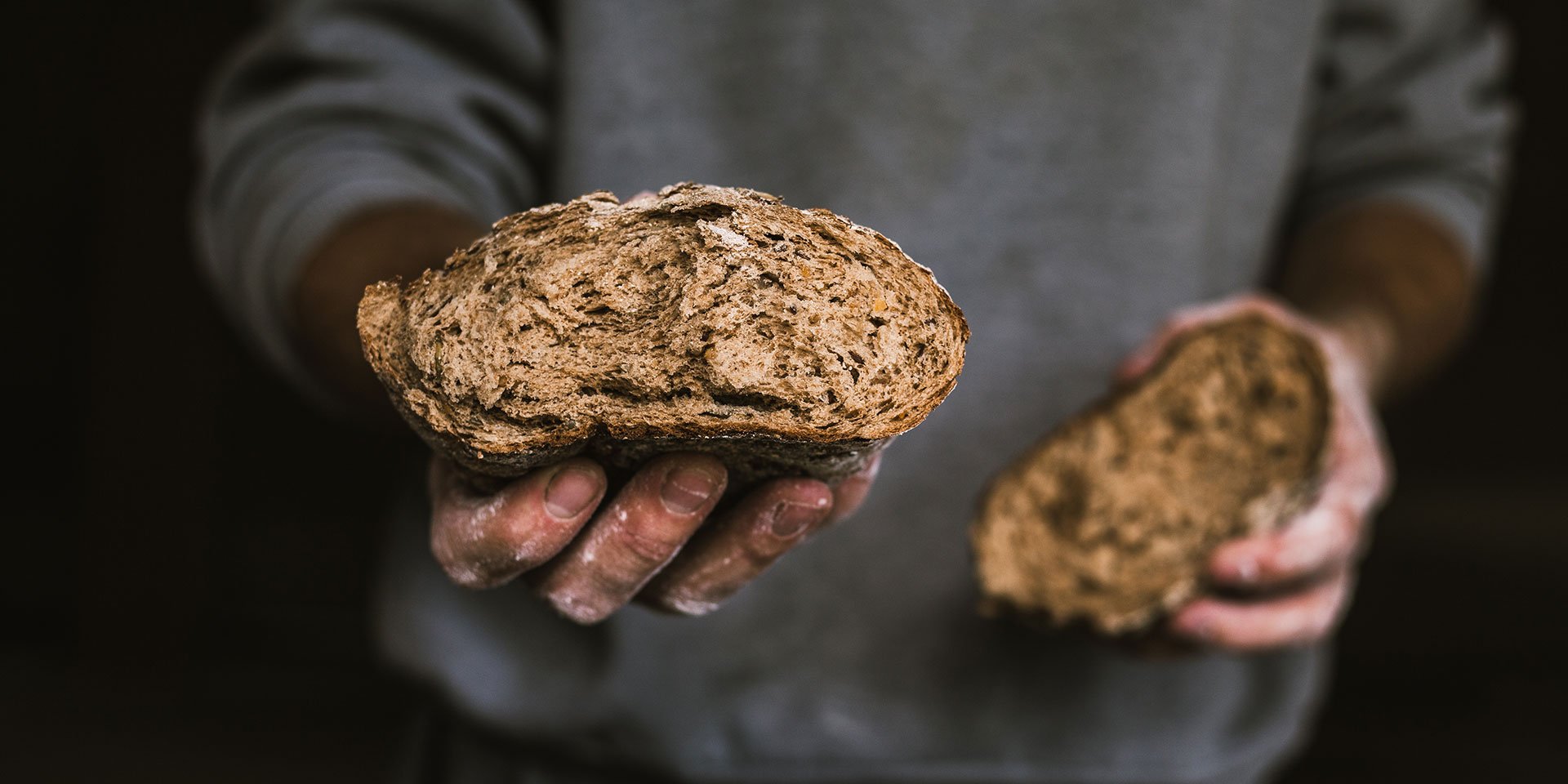
Because local flour exists in a world outside the commoditized, industrial food system, baking with it can lead to inconsistency. “If I’m buying Red Fife from Farmer A one year and I buy Red Fife from Farmer B the next year, those are gonna be fairly different wheats,” says Dawn Woodward, the baker behind Evelyn’s Wholegrain Bakery in Toronto, Ontario. Growing conditions, other aspects of terroir and milling quality all impact a flour’s performance.
Most flour that you buy from a grocery store, on the other hand, was created with function in mind. “It’s processed in a way that’s incredibly efficient and it made a lot of sense when it came to industrializing our food system,” says Jennifer Lapidus, founder of Carolina Ground, a flour mill in Hendersonville, North Carolina. Strip away the oily germ, take out anything that can go rancid, vertically integrate centralized production and rely on cheap fuel. “The whole thing is great for an industrialized system, but when it comes to the soul of it — having things that are flavorful and nutritious — we sort of forgot something in the mix,” she says.
Once you’ve got a bag of local flour, here are a few tips to help you work with it.
Set your expectations accordingly
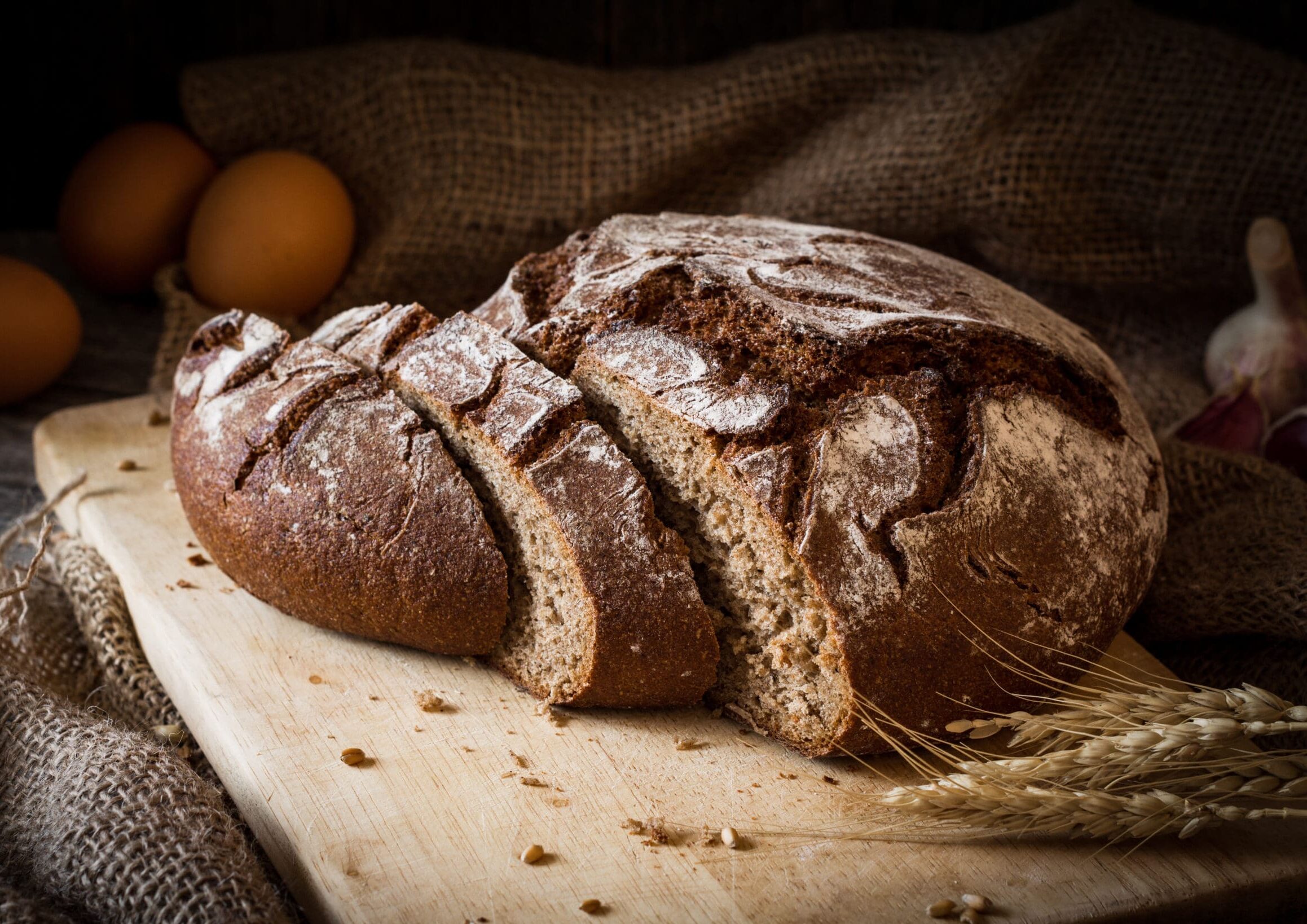
If you’re baking bread, forget about the perfect loaves you see in magazines, newsletters and on Instagram. “Something that I see amongst bakers that are afraid to move into [whole-grain baking] is they want it to look a certain way,” says Lapidus. People ask her what the best flour is for sourdough, but what they’re really asking is what flour will make a loaf with the perfect crumb. “We have to reeducate people on what a loaf of bread looks like, as opposed to what it’s morphed into,” says Shaun Thompson Duffy, cofounder of the Grain Shed Bakery and Brewery in Spokane, Washington.
- Whole grain
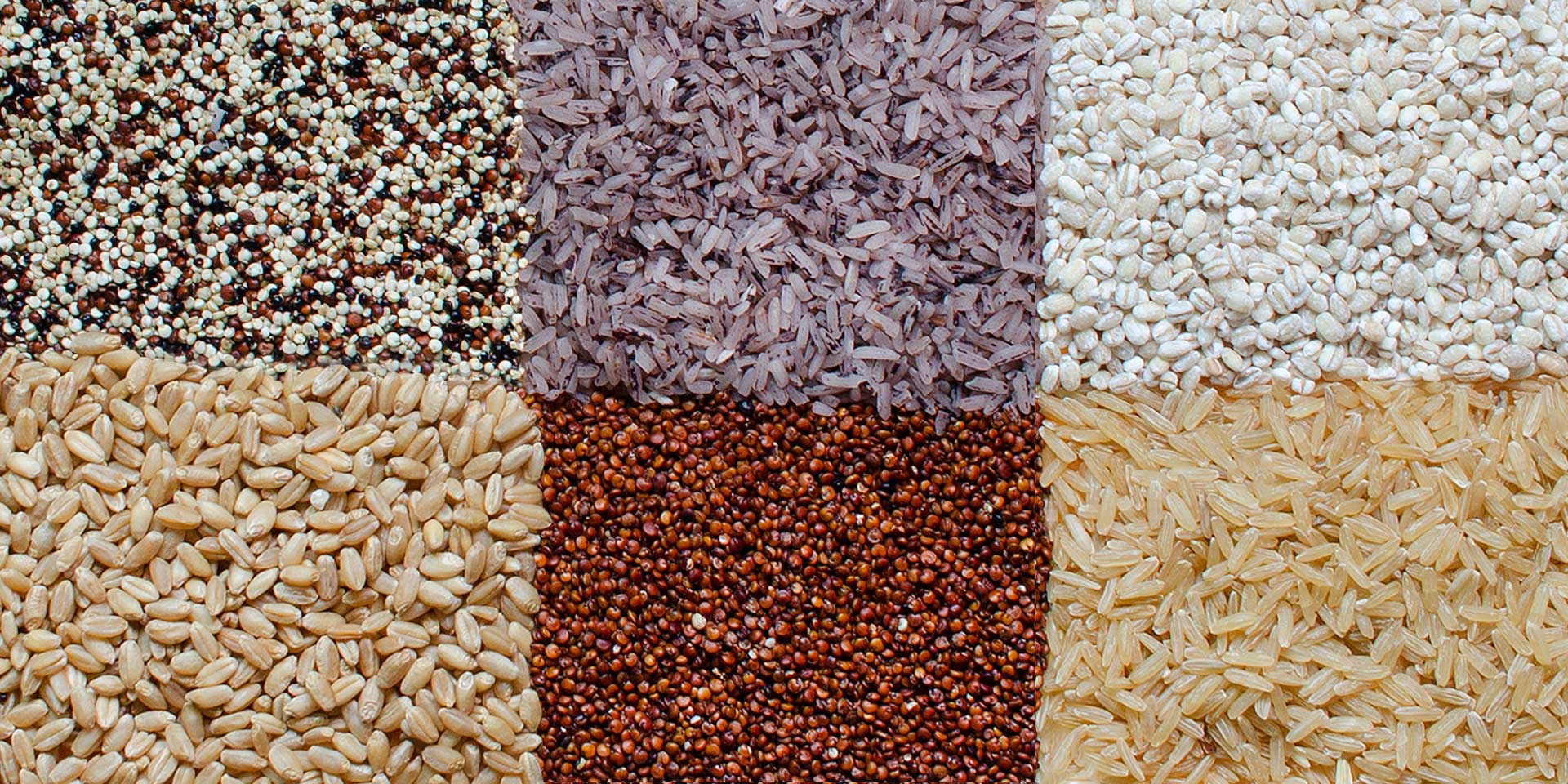
- A kernel of wheat — also called a wheat berry — comprises three main parts: bran (flavorful outer shell full of fiber, B vitamins, and minerals), endosperm (flavorless starchy interior containing carbohydrates, protein and iron) and germ (the embryo or inner core, with zinc, folate, magnesium and manganese, as well as flavor). Whole-grain flour contains all three components.
Normalize imperfection; dense and flat isn’t a failure if it tastes good. (If you’re unhappy with the texture of your loaf, you can always use it like you would stale bread, to thicken soup, make breadcrumbs, croutons and so on.) The more often you bake, the more you build on prior experiences; take your current technique and adjust for different results. “Give it a few more folds, cut back on hydration, change whatever percentage of starter or your fermentation — there’s a million variables to change,” says Woodward. “That’s also the beauty of bread.”
Start with the basics, but don’t stay there
“It’s like jazz, right? You gotta know the fundamentals before you start improvising,” says Thompson Duffy. Start with something you know, whether that’s a loaf of bread or chocolate chip cookies.
“Take your favorite recipe and what you’re comfortable with and convert that to a good, local, organic whole grain,” says Woodward. Her book, “Flour is Flavour,” intentionally focuses on recipes for the basics: crackers, breads, cookies, bars, cakes. Once you incorporate an ingredient as flavorful as whole-grain, local flour, that simple chocolate chip cookie becomes extraordinary.
If you’re new to baking in general, or you’re trying to convert a recipe and get into the nitty gritty details, it can be helpful to start slow. “My rule is we’re only changing one process or one thing by a very small percentage,” says Odell. “If you try to make a new recipe or adapt the recipes with two different things, it’s hard to really calculate or understand what went differently.”
But don’t stop there. Working with local whole grains is like learning a new language: You’re selling yourself short if you stay in the present tense. “Try 100 percent, lean into these things,” says Lapidus. “You’ll be so excited with the results.” Many mills also offer their own all-purpose, bread, or pastry flours: sifted blends made with both flavor and function in mind. Those in particular are excellent candidates for one-to-one substitutions.
Don’t get too caught up in specifics
Baking is precise to a point, but when you use whole, local grains, flexibility is key. “Maybe your cookie batter is gonna be a little bit stiffer than last time, or maybe your bread dough is gonna feel a little bit looser,” says Woodward. “You have to work within those parameters of not expecting such homogeneity, and find the joy in working with a grain as a local food.”
“Part of baking is just figuring out your way,” says Lapidus. She approaches baking with stone-ground flour as its own distinct style. “Every bake is a new bake for me. I’m gaining as a baker every time I bake.”
“It’s not that it’s harder, it’s just different,” says Woodward. If all you know is sourdough and you try to bake a rye bread, you might view its relative flatness or dense nature as a failure. “But if you grew up eating rye bread, then wheat bread is different,” she says. Embrace that difference and be open to change.
“In general, the harder the flour or the more protein is in it, the better for lower hydration doughs, [for example] bagels. And then if we’re going into batters and doughs or soft white bread, a softer wheat is usually better."
For certain baked goods, you will want to know certain characteristics about a flour, such as the protein amount. “In general, the harder the flour or the more protein is in it, the better for lower hydration doughs, [for example] bagels,” says Odell. “And then if we’re going into batters and doughs or soft white bread, a softer wheat is usually better,” he says.
But unless you have highly specific needs, you can let go of preconceived notions that you need a specific type of flour for a particular type of bake. “Get to know the flours on their own,” Lapidus urges.
Learn baker’s percentages
While you don’t need to lean on specifics all of the time, one particular tool will help you more thoroughly understand bread baking: baker’s percentage. “It’s really hard to understand changes if you’re not doing them proportionately and that’s what baker’s percentage enables you to do,” says Lapidus.
Baker’s percentage is “the percentage by weight of the ingredients in relation to the flour in the recipe,” writes Lapidus in her book, “Southern Ground.” It can be confusing, but the percentage of flour is 100 percent (even though a loaf of bread is not literally made of 100 percent flour). The percentages of the remaining ingredients are determined by their ratio to the flour. So for a dough made with 1,000 grams of flour, 800 grams of water is 80 percent of 1,000 grams, 200 grams of leaven is 20 percent, and 20 grams of salt is 2 percent. (Using the metric system makes things easier, too.)
“Chad Robertson [baker-owner of San Francisco’s beloved Tartine bakery] did a great service to all of us by just breaking it down into starting with 1,000 grams of flour,” says Lapidus. Andrew Janjigian also explains this thoroughly in his popular bread-focused newsletter, Wordloaf.
Get a digital scale
Digital kitchen scales are cheap and easy to find. Get one. “The weight of a cup of stone-ground flour is different from the weight of a roller-milled flour,” explains Lapidus. “The heaviest part of the wheat berry is that starchy endosperm, which is all that is extracted from a roller-milled product.” Conversion charts vary greatly, but let’s say 1 cup of store-bought, roller-milled, all-purpose flour weighs 125 grams, while 1 cup of a regionally sourced, whole-grain flour weighs 130 grams. If you measure by volume, making a cake with 2 cups of flour, then the all-purpose flour totals 250 grams, while the same volume of whole-grain flour totals 260 grams. In other words, you’d end up using more whole-grain than all-purpose flour, which would likely lead to a drier baked good unless you also adjusted the moisture.
- Extraction
- The amount of flour left after milling and sifting. For example, 100 percent extraction means that no sifting occurred; 100 percent of the grain that was milled became flour. Eighty-five percent extraction means 15 percent has been sifted out.
Some home bakers want to do things by feel, but, “If you really want to succeed in transitioning from something that you knew to something that is different, start with some basic foundational things like using a scale,” says Lapidus. “My experience has been that if I’m going by weight, it’s pretty much fine,” she adds.
Pay attention to moisture
Whole-grain flours absorb more moisture. (You may have heard them described as “thirsty.”) This is when starting with recipes that you know and learning to adapt comes into play: If the biscuit dough isn’t coming together, add a little more buttermilk. If the pancake batter is stiff, whisk in a little more milk. If the bread dough is dry, work in more water. Odell recommends starting with slightly less liquid, then working your way up; it’s always easier to add something that’s lacking than to take it away.
If you’re making bread, the process will inherently involve several hours of rest time. But most batters and doughs also benefit from a little snooze. For cookies and pastry, Lapidus makes the dough one day and bakes it the next. That extra time not only lets flour more fully absorb moisture, but it also develops flavor.
Lean into flour as flavor
While advice may vary slightly from baker to baker, there is one universal truth when working with whole-grain, locally sourced flour: flavor. “The flour in and of itself is a flavor-forward ingredient,” says Lapidus.
Rouge de Bordeaux, a hard red wheat originating from at least the 1300s in southwestern France, adds nuttiness and sweetness. Spelt adds similar notes, while Sonora, a soft white wheat cultivated by the Akimel O’odham in the Sonoran desert in the 1600s, lends a subtle buttery taste. Different rye varieties will give you hints of vanilla, spice or brown butter.
Thinking of the flour first for its flavor and then for its function ties it all together and ultimately serves you better. “Flavor first, and then volume and appearance second,” says Thompson Duffy.
For more resources, tap into your baking and milling community
“Whenever we sell people flour or grains, I’m like, let me know if you’re not satisfied with what you got, let me know what you’re looking for,” says Thompson Duffy, who gives out his email and phone number to customers so they can easily send pictures and he can help diagnose issues. Tap into your local network of bakers and millers; if they’re working with regional grains, chances are high that they’re passionate about teaching others to use them, too.
There are also so many recent and forthcoming books dedicated to ancient, heirloom, landrace and whole-grain baking. In addition to books by Woodward and Lapidus, try “Tartine Book No. 3: Modern Ancient Classic Whole” by Chad Robertson; “Mother Grains: Recipes for the Grain Revolution” by Roxana Jullapat; “The Rye Baker: Classic Breads from Europe and America” by Stanley Ginsburg; “Sourdough: Recipes for Rustic Fermented Breads, Sweets, Savories, and More” by Sarah Owens; and “The Miller’s Daughter: Unusual Flours & Heritage Grains: Stories and Recipes from Hayden Flour Mills” by Emma Zimmerman.
As for finding your flour source, thankfully, the movement to revive local grains is ever increasing. Check Janjigian’s newsletter for an extensive list of millers across North America. Many bakeries and restaurants that use local grains also sell bags of flour.
While it might seem like a small thing to buy local flour, that’s part of the point. “If you compare it to industrial agriculture and a mill that processes a million pounds of grain a day versus us, who do 2,000 to 3,000 pounds a day, then yeah, we look like not even a drop in the bucket,” says Lapidus. “But then you think: We brought in 450,000 pounds of grain this year. We’re impacting acreage and we’re impacting bakeries throughout the Southeast. We’re impacting the baker’s relationship with their customer. It all rolls out into these conversations, hosting workshops, and teaching people how to work with these grains.”
“Locally milled grains shouldn’t be a luxury,” adds Odell. “It should be a staple in every community for a more sustainable food system.”
Small deeds within a community make exponential impacts. “Change happens on the margins,” says Lapidus. “It doesn’t happen in the mainstream.”
Get the latest food news from FoodPrint.
By subscribing to communications from FoodPrint, you are agreeing to receive emails from us. We promise not to email you too often or sell your information.
More Reading
Buying better beans: Look beyond the supermarket to find tasty, affordable dried legumes
September 15, 2026
10 ways to save money at the farmers market
July 31, 2026
How to spot a true farmers market
July 30, 2026
Tradwives, MAHA Moms and the impacts of "radical homemaking"
December 10, 2025
Food Freedom advocates cite the benefits of deregulation. Food safety is not one of them.
November 21, 2025
How urban orchards improve a community's access to fresh, healthy food
October 30, 2025
Beyond pecan pie: Growers look for new markets for this native nut
October 24, 2025
School meals are about to get a lot less local — and less healthy
October 22, 2025
From Ludacrisp to Cosmic Crisp: How new apples are bred
October 8, 2025