
MAHA wants to reform food, health and scientific systems — why is it ignoring nitrates?
Every day, millions of Americans consume nitrates at levels higher than what the U.S. Environmental Protection Agency (EPA) deems safe, often through drinking water.
At quantities higher than 10 milligrams per liter (the maximum amount the federal government says is safe), the substance, made of nitrogen and oxygen, can cause cancer, miscarriages and blue baby syndrome, a life-threatening blood condition in infants.
While the effects can be deadly, regulating nitrates and their related compound nitrites in both water and food has proved extremely difficult for advocates, despite decades of federally backed research that shows the devastating human health consequences.
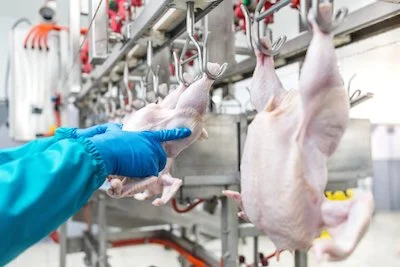
The Trump administration’s “Make America Healthy Again” (MAHA) campaign has stated that it wants to reform “food, health, and scientific systems” to address rising chronic disease rates among Americans. Food policy experts say addressing nitrate contamination fits squarely into this public health mission, but so far, MAHA has largely ignored the problem.
“The MAHA report … says nothing about controlling nitrate contamination,” said Tyler Lobdell, senior staff attorney at the nonprofit organization Food & Water Watch. “It entirely ignores this issue.”
Instead, the campaign has focused on ingredient issues in the U.S. diet, like petroleum-based food dyes and sugary beverages and candy. Advocates and policy experts say this “single ingredient” approach overlooks the systemic problems that are actually making the United States sicker.
No better example of this exists than the issue of nitrate contamination, which experts say cannot be solved without systemic change to the primary nitrate polluter: the agriculture industry.
Where it begins
In the dry grasslands of eastern Oregon, tens of thousands of cows are crammed into factories where their milk is used to make products like cheese and ice cream. The region hosts some of the largest dairy operations in the country, and with those operations comes a whole lot of animal waste (a 2020 Food & Water Watch analysis found that the nation’s 25,000 factory farms produce roughly 885 billion pounds of manure each year).
The manure from these factory farms is either liquified and stored in outdoor basins — what the industry calls “lagoons” — or dumped onto fields for it to slowly rot away. This manure contains high levels of nitrogen compounds, which soil bacteria convert into nitrate that can easily leach into soil, surface water and groundwater.
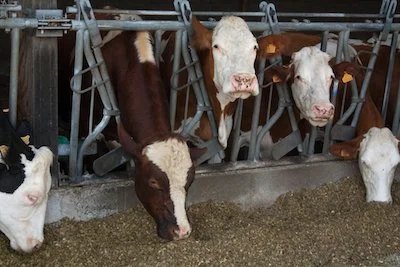
While there are some mitigation practices the industry implements, such as lining the lagoons with plastic, experts say the system is practically designed to pollute. That’s because the goal of factory farming is to make as much product as possible at the lowest cost per unit. This means animals are confined in cramped spaces on concentrated animal feedlots to maximize their economic value. And as the agriculture industry has become more consolidated — just four companies control 85 percent of the beef sector, for example — one of the only ways to be profitable as a farmer is to follow this business model.
But this model comes at a high cost to animal and human welfare. “In its current form, the [factory farm] system is incapable of functioning without saturating a local environment with pollution,” Lobdell said.
Manure isn’t the only agricultural source of nitrate. Many farmers use nitrogen fertilizer for their crops, which can help them produce higher yields. Nitrogen is one of three major nutrients plants need to be healthy, but its overapplication can lead to runoff that pollutes soil and local waterways with nitrate.
Just like on concentrated animal feedlots, farmers are incentivized to get as much out of their crops as possible, even if that means relying on fertilizers that end up in the local waterways people rely on for drinking water.
In eastern Oregon, nitrate levels have tested upwards of 50 milligrams per liter in private drinking water wells. That’s five times more than the maximum contaminant level deemed safe by the EPA at 10 milligrams per liter, which a growing body of scientists says is still too high for humans to safely consume. Long-term exposure to nitrates — which, when ingested, turn into N-nitroso compounds (NOC) in the body — can cause cancer and birth defects.
If nitrate is found in their well, wellowners usually have to pay to treat the water themselves by installing a reverse-osmosis or ion-exchange system that can cost upwards of $5,000. That’s because private wells serving fewer than 25 people are not protected by the Safe Drinking Water Act, which guarantees clean drinking water for Americans. About 15 percent of the U.S. population relies on private wells, with the majority residing in rural communities.
Nitrate contamination isn’t isolated to Oregon: High nitrate levels in drinking water have been found in agricultural communities in Washington, Minnesota, Iowa and beyond. Iowa, for example, where nitrates in drinking water is often higher than 10 milligrams per liter, now has the second-highest cancer rate in the country, behind Connecticut.
Nitrates have even hit municipal drinking water systems as large as those for Las Vegas and Los Angeles, which draw from watersheds whose headwaters begin near agricultural zones. In all of these places, regulating the polluters has been an uphill battle with few success stories.
For Anne Schechinger, an agricultural economist who works for the advocacy organization Environmental Working Group, nitrate contamination from fertilizer seems like a logical priority for the MAHA movement, which has voiced major concern over pesticide use.
“If you are worried about the health impacts of pesticides, you should be just as worried about the health impacts of nitrate because these are two products that are used on millions and millions of crop fields across the nation,” Schechinger said.
“If you are worried about the health impacts of pesticides, you should be just as worried about the health impacts of nitrate because these are two products that are used on millions and millions of crop fields across the nation.”
The 72-page MAHA report spotlights heavy metals, perfluoroalkyl or polyfluoroalkyl substances (PFAS), pesticides and phthalates, but has no mention of nitrates or nitrites, a related compound used as a preservative for processed meats such as bacon, hot dogs and deli meats. The World Health Organization recommends limiting or avoiding all consumption of processed meats with nitrites because of heightened cancer risks. One serving of processed meat per day is associated with an 8 percent higher risk of cancer death, according to a 2019 study of American diets published by the British Medical Journal.
The health risks of nitrites were top of mind for food entrepreneur Kimberlie Le when she founded Prime Roots, a company that makes plant-based alternatives to deli meat and bacon. To her, incorporating nitrites into MAHA’s campaign seems obvious.
“On the color front, I think they did a good job of advocating for natural color usage,” Le said, referring to the Trump administration’s efforts to ban synthetic dyes like Red No. 40. “That change is happening … but I think a comprehensive plan around nitrate reduction in our overall food system and waterways is prudent,” she said.
“No one wants to touch this”
Some food policy experts say that the Trump administration’s silence on nitrate contamination is just the latest example of an ongoing pattern of how agriculture is — or more often, is not — regulated by the federal government.
“Democrats don’t want to touch this as much as Republicans don’t want to touch this,” said Silvia Secchi, a professor in the School of Earth, Environment, and Sustainability at the University of Iowa. “Nobody wants to upset farmers.”
The consolidation of farms into just a few corporations has given the industry an enormous amount of lobbying power in Congress. It also has been allowed to operate largely unregulated in comparison to other industries, especially when it comes to water pollution.
The Clean Water Act of 1972 — the most significant law protecting the country’s lakes and streams — regulated point source pollution like pipes dumping sewage into water bodies. But it failed to implement strong enough regulations for nonpoint source pollution like runoff from farm fields. That’s allowed agriculture to become the largest polluter of water sources in the United States, according to Secchi.
“Democrats don't want to touch this as much as Republicans don't want to touch this. Nobody wants to upset farmers.”
“[Nitrate pollution] is a very good example of what happens when you let a problem fester,” Secchi said.
The problem may continue to fester based on the Trump administration’s current approach and its previous track record on nitrate. In 2019, the first Trump administration paused research at the EPA’s Office of Research and Development that was reevaluating the maximum contaminant level of 10 milligrams per liter for nitrates in water, a number based on now outdated research from the 1960s.
The Biden administration resumed this work in 2023, but less than two years later, the EPA eliminated the office that was conducting the research under the directive of President Trump.
Given the slow-moving progress at the federal level, some experts say dealing with nitrate contamination might be better suited for state governments, at least for now.
For example, in Minnesota, where nitrate pollution has been a major issue in the southeast part of the state, a law passed in 2015 requires farmers to build natural vegetation buffers near rivers and streams; the plants’ roots can uptake nitrogen, phosphorus and sediment that could pollute the water. Research from the state’s Soil and Water Conservation Districts estimates that as of late 2024, about 99 percent of land parcels adjacent to water bodies have implemented the buffers.
Minnesota also provides free well-test kits and a limited number of free reverse-osmosis systems for wellowners in southeast Minnesota whose wells contained nitrate levels higher than 10 milligrams per liter. Other states have implemented similar programs.
But without support from the federal government, advocates say it’s unlikely major progress can be made if counties and states have to continue taking on the cost of treating nitrate contamination themselves. The burden could be especially high for rural communities who have more nitrate exposure but less money to allocate to it.
With MAHA’s current focus on single-ingredient issues like food dyes and sugars rather than broader food system change, experts fear any momentum that has been created for nitrate contamination could fizzle out completely. “I think this type of approach is really trivializing systemic issues,” Secchi said.
“It’s debasing the national conversation and degrading the level of scientific literacy that gets conveyed to the public from the federal government.”
Get the latest news from FoodPrint.
By subscribing to communications from FoodPrint, you are agreeing to receive emails from us. We promise not to email you too often or sell your information.
Top photo by samopauser/Adobe Stock.
More Reading
California's new folic acid mandate for tortillas sparks controversy over fortified foods
February 27, 2026
Plastics are everywhere in agriculture. Why researchers are worried.
January 22, 2026
Forget the dietary guidelines — Marion Nestle will help you figure out what to eat
January 12, 2026
What to make of the new dietary guidelines
January 9, 2026
Can legal challenges against ultraprocessed foods get us to take them seriously?
December 11, 2025
Can MAHA succeed at making America healthy again?
November 19, 2025
How urban orchards improve a community's access to fresh, healthy food
October 30, 2025
School meals are about to get a lot less local — and less healthy
October 22, 2025
The meat industry smeared the Planetary Health Diet. Now its creators are back with more evidence.
October 10, 2025