
The FoodPrint guide to beans: Everything you need to know to buy, cook, eat and enjoy them
If pantry ingredients received superlatives like some high school students do, beans would wear many sashes, including most easygoing, most versatile, most affordable, and — without a doubt — most delicious. Beans are hearty and flavorful; they play well with so many different types of ingredients and seasonings; and they can shapeshift from toothsome to brothy to creamy and everything in between. “They can be the starch, they can be the protein, they can be both,” says James Beard Award–winning cookbook author Joe Yonan. “They can be the garnish. They can be the sauce. They can be the dip, the grain — they can be so many different things.” There’s so much beans can be and do: Why are they so often relegated to the bleachers at the school dance? In our efforts to answer that question for our podcast episode “Eat more beans,” we learned that some home cooks simply don’t know where to begin. They have questions: Must beans be soaked? Can they be salted? Are canned beans just as good as dried?
If you’ve got bean dreams but also some bean anxiety, we’ve got you covered.
The many benefits of beans

Lately people are wanting to eat more protein than ever before — the macronutrient is popping up in everything, everywhere, all at once. But protein doesn’t have to mean factory farmed meat, eggs and dairy, which are exceedingly harmful to animals, the environment and the people who live and work in the farms’ surrounding communities. Beans are also protein powerhouses — ones that actually give back.
“Could there be a plant more generous?” asks author Crescent Dragonwagon in her definitive cookbook on the subject, “Bean by Bean.” She notes that they’re the “single cultivated plant family that actually benefits the soil, enriching it rather than depleting it.”
Beans is How, a campaign that aims to double global bean consumption by 2028, supports this claim: “The humble bean not only nourishes our bodies but also plays a crucial role in nurturing the very foundation of our food system: the soil.” Beans, which the campaign dubs “Soil’s Superheroes,” also improve water quality, reduce the need for synthetic fertilizers and require less water than many other crops.
Beans offer much in the way of nutrition, too: Loads of protein, plus fiber, B vitamins, iron, potassium, magnesium, zinc and more. And then there’s their ubiquity, affordability and versatility. Beans are easy to come by, easy to keep and easy to procure on the cheap.
The basics
You have many, many options when it comes to beans: It’s estimated that there are about 400 cultivated varieties. Of those, you can choose canned beans, which are unparalleled for their dinner-in-a-flash capabilities, and dried beans, of which you’ll find more varieties but which also require a bit more coddling. People who love and cook with beans often — we affectionately call them “bean freaks” — sing the praises of both.
Cookbook author Gena Hamshaw notes in her book “A Grain A Green A Bean” that she takes the “slightly controversial position of almost always using canned beans, rather than dried” because she finds them more convenient. Joe Yonan, too, is a lover of canned beans, but he encourages us to give dried beans a try. Dried beans, and heirlooms in particular, offer a kaleidoscope of colors, textures and flavors and, he adds, they “cook up so much better.” It’s your kitchen and your call.
Canned beans
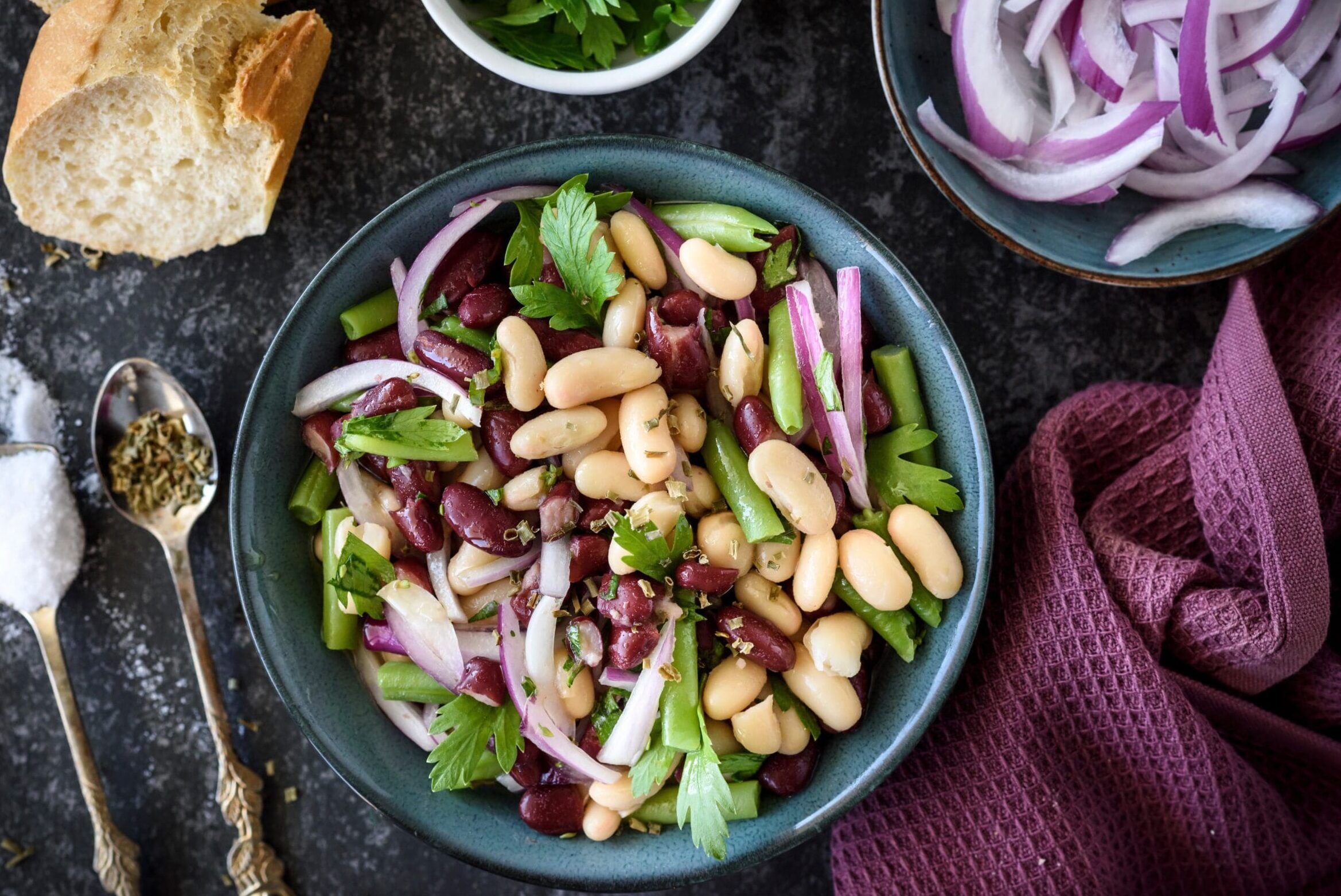
When it comes to canned, the varieties on offer typically include black, pinto, white (cannellini, navy or great northern), black-eyed peas, small red beans and red kidney beans (similar but not the same!). You’ll also find an array of prepared beans, whether refried, baked or in a range of flavors and/or sauces. Canned beans are extremely easy to work with because they’re already cooked, so all you need to do is drain, rinse and get cooking. (Note that if a recipe calls for dried beans, you can substitute canned, adding them when you would the parcooked or cooked dried beans.) For the best flavor, look for organic or heirloom options, though be aware that these may cost more than conventional.
Dried beans
These take longer to cook than canned, and therefore may not seem as handy when you need to get a meal on the table in a flash. But don’t forget the meal-prep flex of cooking up a big pot of beans on a Sunday and using them in a variety of dishes all week long. Plus, what dried beans lack in speed, they more than compensate for in flavor. Try to buy the freshest beans you can find, ideally within about a year of harvest (though technically they’re good for up to two years). Younger beans cook up more quickly and offer more flavor and tenderness than older beans do. Seek out heirloom and high-quality beans at farmers’ markets, specialty stores and online with brands like Rancho Gordo, Buttermilk Bean, Primary Beans, Zürsun Beans and Alma Gourmet.
- Beans and pulses
- Beans and their cousins — dried peas and lentils — are all pulses. Pulses are types of legumes, which the U.S. Department of Agriculture defines as a “plant that includes pods.” Technically pulses are the edible seeds found within the pods.
The great bean debates: The “right way” to soak, salt and cook
As with other beloved but divisive foods — think cornbread, barbecue, pizza, hot dogs — there are about as many opinions about bean best practices as there are types of beans. Some of these are so staunchly held and vociferously argued, they can put off newcomers. Here’s what’s what.
Is soaking necessary?
Some experts insist that dried beans must be soaked for at least 8 hours or overnight; others — including Rancho Gordo founder Steve Sando — say why bother. Joe Yonan describes soaking as “a bit of an insurance policy. So if you’re unsure of how old the beans are — which is an issue with bulk beans and with a lot of commercial beans — soaking just kind of resets the bar and allows them to behave as if they’re a little fresher than they otherwise were.”
For those who do soak, the goal is to hydrate the beans so that they cook thoroughly and evenly (and, some say, to improve their digestibility). A helpful guideline: The longer the soak, the shorter the cook. If your goal is complete bean hydration (as with a multi-hour or overnight soak), you can check by splitting one open. A fully hydrated bean will be the same color the whole way through.
For those short on time, there’s also the option of a quick-soak: Bring the beans and water to a boil for 2 to 3 minutes, then remove from the heat, cover and let soak for 1 hour. (Beans destined for a pressure cooker, as well as smaller beans like navy beans, don’t require soaking.)
But again, if you simply don’t have time or inclination to soak, you can skip the process — noting that you’ll probably have to make up some of that time on the cooking end.
On using soaking liquid
Some bean heads insist that cooking beans in their soaking liquid is bad news and causes gas; others, that it’s perfectly fine. As with most things that happen in the privacy of your kitchen, you get to decide. Heirloom bean purveyor Rancho Gordo puts it this way: “You have been told before to change the water and rinse the beans. The thinking now is that vitamins and flavor can leach out of the beans into the soaking water you are throwing down the sink. There is conflicting scientific evidence that changing the water cuts down on the gas. If you want to, do it. If it seems unnecessary, don’t.”
To salt or not to salt
As with soaking, strong opinions abound about when to add salt or acid to beans. Crescent Dragonwagon stands firmly against doing either before the beans are fully cooked, noting “Never — except in the case of black soybeans and large limas — should you add salt to beans until they are tender. The same goes for any acidic ingredient (vinegar, lemon juice, even tomatoes).” She charges salting and acidifiying with toughening beans’ outer skins — one of the toughest parts of a dried legume to begin with. But the data obsessives at America’s Test Kitchen take a different approach, going so far as to suggest brining the beans during the soak, then rinsing and cooking them in fresh water.
Our take: Try it one way and see how you like it. If you don’t like it, try it a different way next time!
How to cook dried beans
- Decide which type of beans to use and measure them out (a rough gauge: 1 cup dried yields about 3 cups cooked). Pick through to remove any tiny pebbles, bits of straw, shriveled or discolored beans, and then rinse in cold water (some people rinse several times).
- Soak the beans (if you wish) in cold water at room temperature for 4 to 8 hours or even overnight, adding more water if necessary to keep the beans submerged.
- Transfer the beans to a heavy pot like a Dutch oven, draining the soaking liquid first if you wish (see above), then adding cold water to cover by at least 3 inches. Add the aromatics of your choice: celery, bay leaf, cilantro, thyme or other herbs; alliums like onion and garlic; spices such as cumin, coriander, cinnamon, chiles and/or ginger, turmeric or kombu (the latter three are said to aid in digestion). Adding a Parmesan rind or hunk of bacon, ham hock or sausage can contribute depth of flavor, as can substituting stock for some of the water. (Again, skip acidic ingredients at this stage.)
- Bring the contents of the pot to a hard, rolling boil for 10 to 15 minutes, then reduce to a gentle simmer — after the initial boil, avoid raucous bubbling to prevent the beans from splitting.
- Cook, stirring occasionally and adding more liquid if necessary. Timing will depend on the variety, from around 1 hour to roughly 3 to 4 hours for unsoaked chickpeas or lima beans; follow the directions on the packaging, if present, and check regularly for doneness. When fully cooked, the beans will be creamy and soft inside (but not mushy) and fully intact outside, though the skins may start to curl and wrinkle. Check several beans to account for variations in doneness.
Once cooked, the beans can be used immediately. To store, let them cool in their cooking liquid and store together for 4 to 5 days in the refrigerator or up to 6 months in the freezer.
Other cooking methods
One of these may be more suitable on any given day depending on the type and age of the beans, the amount of time before you wish to serve them, and how hands off you want to be.
Pressure cooking and/or Instant Pot cooking is the fastest way to cook dried beans (it will generally cut down the cook time by 50 to 75 percent), but some purists dislike these methods because you can’t check the beans’ progress while they cook (and you can’t uncook an overcooked bean!).
Slow-cooking is convenient for its set-it-and-forget-it promise, and can be useful for large batches. You may have heard that red kidney beans should not be slow-cooked, and that is true: They contain high levels of lectins, proteins that can cause food poisoning when consumed raw. Lectins are destroyed by a high-heat cooking process and the low-and-slow simmer of this method does not reach temperatures high enough to eliminate them — the beans need to boil at 212F for at least 10 minutes in order to do the trick. But many people swear by slow-cooking other types of beans.
Either way, don’t let the specter of lectins scare you off beans altogether — properly cooked beans are perfectly safe; indeed, as Joe Yonan reminds us, “nobody eats a bean raw.”
For more in-depth instructions on each cooking method, plus tips on adjustments for different types of beans, check out Rancho Gordo’s helpful guide.
How to cook canned beans
Canned beans are already cooked — in fact, they’ve been pressure-cooked inside the can — so they should be uniformly tender. Once they’ve been rinsed, they can be used in any bean recipe, or you can cook them to impart more flavor or just to heat them up.
- Drain the beans and rinse them under cold water, then drain again.
- Heat a glug of good-quality olive oil in a large heavy pot, such as a Dutch oven, over medium-low heat. Add aromatics (see above) and saute until softened and fragrant, then add the beans.
- Turn the heat up as needed to bring the beans to a simmer, and add any salt, spices and herbs you wish (choose flavorings with the final use in mind). Let simmer until any liquid has reduced slightly, coating the beans, about 10 minutes.
Use immediately, or let the beans cool and store in an airtight container, 3 to 4 days in the refrigerator or 1 to 2 months in the freezer.
Common bean varieties at a glance
Each type of bean contributes its own special something to a dish, whether in terms of flavor, texture or both. Many can be used interchangeably. When subbing one type for another, keep in mind color, thickness of the skin and texture of the bean (is it firm like a chickpea, creamy like a navy bean, or thicker-skinned like a red kidney bean?). Here are some basic guidelines on how to handle an assortment of beans and show them off to greatest effect.
Garbanzo beans (chickpeas)
Texture/Flavor: Firm, nutty, slightly meaty
Best uses: Hummus, curries (like Trinidadian doubles), salads, roasted snacks, soups, veggie burgers
Swap with: White beans for milder flavor, or tepary beans for nutty depth
Quick tip: Technically speaking, garbanzo beans/chickpeas are categorized as dried peas. Like other large pulses, they benefit from a long soak time, ideally overnight.
White beans (cannellini, great northern, navy, butter/lima)
Texture/Flavor: Mild, creamy, generally soft; excellent for absorbing flavors
Best uses: Casseroles/bakes, soups and purees, greens and beans, hummus and creamy dips, dense bean salads, beans on toast, tuna and white bean salad
Swap with: Can be used interchangeably for the most part, with the caveat that navy beans are smaller and sometimes quicker cooking than the others
Quick tip: Smaller beans like navy can be quick-soaked (see above).
Tepary beans
Texture/flavor: Firm, dense, nutty, slightly earthy; available in brown, black and white varieties
Best uses: Stews and frijoles, chili, grain bowls, nachos, dense bean salads, three sisters dishes
Swap with: Chickpeas, pinto beans, small red beans
Quick tip: Tepary beans are a staple food of Indigenous peoples in the Southwest. They can be difficult to find unless ordering from specialty sites such as Ramona Farms, but very much worth the search.
Small red beans (adzuki beans, pink beans)
Texture/flavor: Smooth, thin skin; mild flavor
Best uses: Soups, chilis, Louisiana-style red beans and rice, Puerto Rican yellow rice and beans
Swap with: Red kidney beans (though these have thicker skins)
Red kidney beans
Texture/flavor: Firm, robust, sturdy skins; holds its shape in long cooking
Best uses: Chilis, stews, Jamaican rice and peas, casseroles, dense bean salads
Swap with: Small red beans, pink beans, cannellini beans
Quick tip: Dried red kidney beans should be soaked for at least 5 hours, then drained, rinsed and boiled in fresh water for 30 minutes before simmering in order to break down the lectins (specifically phytohemagglutinin).
Pinto beans
Texture/flavor: Creamy, mild, slightly nutty
Best uses: Brothy beans, Colombian frijoles, Mexican refritos (refried beans)
Swap with: Tepary beans, black-eyed peas, small red beans, pink beans
Black beans
Texture/flavor: Soft, dense, earthy and slightly sweet
Best uses: Soups, tacos, bean burgers, grain bowls, salads, nachos
Swap with: Small red beans or tepary beans for slightly different textures
Quick tip: Black beans and black turtle beans can be used interchangeably, but the former tend to be softer and thinner skinned, while the latter tend to hold their shape more.
Gigante beans
Texture/flavor: Soft and creamy
Best uses: Brothy beans, purees, pizza beans, marinated beans, salads
Swap with: Butter beans, lima beans (which are less creamy), cranberry/borlotti beans
Cranberry/borlotti beans
Texture/flavor: Thin-skinned, dense, rich
Best uses: Stews (like this and this), mole, salads (simple and less simple)
Swap with: Cannellini beans, tepary beans, pinto beans
Mung beans
Texture/flavor: Soft, ranging from mild to nutty and sweet, readily soak up flavors
Best uses: Dips, dals and curries, salads, stews (including the classic Filipino Friday night dish, ginisang munggo) and desserts
Swap with: Adzuki beans, navy beans, black-eyed peas, lentils
Quick tip: Mung beans are often sprouted for use in salads, soups, stir-fries and spring rolls. When sprouted, they have a firm texture and refreshingly crisp bite.
Black-eyed peas
Texture/flavor: Tender, earthy, slightly nutty
Best uses: Curries, stews, soups, Hoppin’ John, salads (like cowboy caviar)
Swap with: Black beans, mung beans, pinto beans, chickpeas (in salads)
Get the latest food news from FoodPrint.
By subscribing to communications from FoodPrint, you are agreeing to receive emails from us. We promise not to email you too often or sell your information.
Top photo by vladk213/Adobe Stock.
More Reading
How to host a sustainable dinner party
December 16, 2025
Tradwives, MAHA Moms and the impacts of "radical homemaking"
December 10, 2025
Your guide to buying and preparing a heritage turkey or pastured turkey this Thanksgiving
November 18, 2025
How Miyoko Schinner upped the game for vegan dairy
November 7, 2025
30+ things to do with a can of beans
November 4, 2025
In a beefy moment, beans?
November 4, 2025
Waste not, want not with “Ferment,” a new cookbook by Kenji Morimoto
October 1, 2025
For these cocoa farmers, sustainability and the price of beans are linked
September 17, 2025
You haven’t had wasabi until you’ve had it fresh — and local
September 11, 2025