
More than food: Making seafood more sustainable by using 100% of the fish
From her vantage on the second floor of the Iceland Ocean Cluster house in Reykjavik, right above the fish auction, Alexandra Leeper can look out her window and watch vessels enter the port with the day’s catch. When they arrive, more than 70 different companies await, sprawled across the building’s length — seafood processors, biotech startups, food and beverage purveyors, pharmaceutical innovators and entrepreneurs. They stand ready to make the most of each fish landed from the North Atlantic.
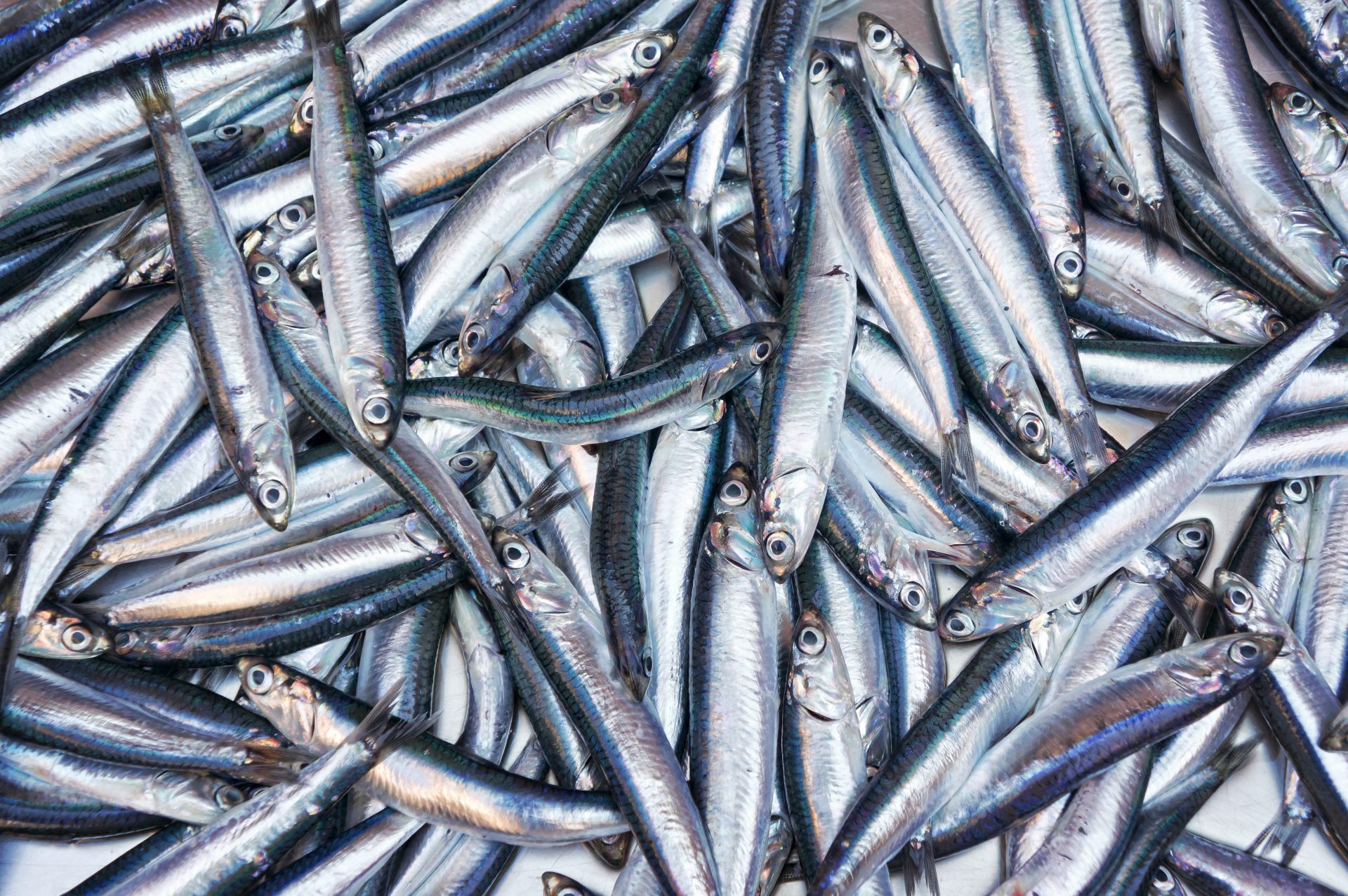
The aquamarine waterfront hub is the outgrowth of Iceland’s decades-long pursuit of a more sustainable blue economy. It’s also a manifestation of the truth that defines Leeper’s work as the ocean cluster’s CEO: “There is a moral obligation to use everything that we capture,” she says.
When Iceland first installed the quota system that governs its Atlantic cod fishery in 1983, it did so with a sense of urgency. The fishery was just two years removed from a record haul of 508,000 tons, but the catch had already fallen by nearly a quarter. For a country that relied on fishing for roughly three-quarters of its foreign exports — and on cod for more than half of that sum — the threat couldn’t be ignored. The next year, the fisheries minister declared, the cod harvest would be limited to 266,000 tons, the lowest total since 1947. It was a dire warning to fishermen and processors about the future of the resource.
Today, the island nation’s cod quota has fallen even further to just over 220,000 tons. A sense of optimism permeates the industry nonetheless, thanks to an opportunistic ethos born out of that precarious moment. The sudden decline of the cod harvest instigated a resourceful quest to maximize each fish. Iceland would focus on value rather than volume. Decades later, that evolution has led to 100% Fish, a principle adopted by a burgeoning global movement that aims to utilize oft-discarded pieces of fish to restore the strength of local seafood economies.
Value over volume
Whole-fish utilization wasn’t, in and of itself, a new idea when Iceland embarked on its journey. Small-scale fishing communities spent centuries eating everything they caught for nutritional sustenance. But the industrialized seafood system developed wasteful habits on the way to feeding the world, often leaving behind as much as half of a fish in service of its fillets. Inspired by the possibility that industrial efficiency could right its own wrongs, Thor Sigfusson created the Iceland Ocean Cluster in 2011 and opened its home in the Reykjavik harbor in 2012. He later published a book titled “100% Fish” that promotes a circular fish economy.
The ocean cluster made possible the collaboration that Leeper says is now essential to build economic resilience into fisheries. Marine biologists and biochemists share a roof with fishermen, seafood processors, product designers and entrepreneurs. Together, they contemplate how to maximize the ocean’s catch, working side by side to develop more sustainable — and profitable — practices.
“There is a moral obligation to use everything that we capture.”
The Iceland cluster has built on the seafood industry’s response to the cod decline of the 1980s, which led to pressing cod livers for their nutritional oil and drying cod heads for cooking. With a concentration on collaboration, those early ideas have developed into an expansive effort to use every last bit of the fish — head, skin, bones, guts and all. The result, Leeper says, is an industry that can turn a fish whose fillets might be worth $12 to $15 into one whose full offerings can be tapped for far greater economic returns. She and her colleagues claim the fully realized value of each cod would approach $5,000, although they acknowledge that’s not necessarily practicable.
Still, their work has reinvigorated Iceland’s blue economy by extending its reach into industries with little historical connection to the sea. Fish skins, for example, are turned into leather for sustainable fashion, or into skin grafts and other wound care products by Kerecis, an Icelandic company recently purchased for $1.3 billion. Collagen is extracted for a growing supplements market and pumped into Collab, a top-selling energy drink in Iceland. Cod enzymes are used by local companies in facial serums and skincare products.
As other regions around the world face down the same fears about declining fish stocks that spurred Iceland into action, the cluster model is catching on in like-minded seafood communities from Oregon, Alaska and the Great Lakes in North America to Namibia, Korea and Queensland, Australia.
Waste not, want not
As she discusses the urgency of maximizing each fish’s value, Leeper points to a World Economic Forum report that found 26.2 million tons of aquatic food were lost or wasted in 2021, accounting for nearly one-sixth of global production. Much of that loss happens at the processing stage, where parts without purpose are discarded, often into landfills where their decay produces greenhouse gases. Instead, the ocean cluster puts them to profitable use.
“[Fishing] takes time. It takes energy. It takes money,” Leeper says. “These are important resources that we shouldn’t waste. There is always a way to create value instead of waste.”
With Iceland’s own cluster delivering on Sigfusson’s vision, Leeper and her colleagues are now working to share what they’ve learned while developing a playbook that can guide others in their own pursuit of whole-fish utilization.
26.2 million
tons of aquatic food were lost or wasted in 2021.
In North America, the distributed fisheries of the Great Lakes, spread across the Midwest and Canada, might seem like a far cry from Reykjavik’s centralized processing hub. But the two have more in common than one might think, says John Schmidt, who leads the 100% Great Lakes Fish Initiative at the Conference of Great Lakes St. Lawrence Governors and Premiers. The whitefish found throughout the region is genetically quite similar to Atlantic cod, as is the experience of fishermen tangling with an uncertain future, Schmidt says: “Stocks are declining. You’re reliant on a historical fishing industry. How can we make more with less?”
The answer, Schmidt and his colleagues have found, is to apply the same “waste not, want not” philosophy that’s been brewing in Iceland for decades. More than half of the 35 million pounds of fish landed in the Great Lakes between 2019 and 2024 was wasted in the form of unused parts, according to the initiative.
Today, more than 40 companies representing 90 percent of the Great Lakes’ commercial catch have signed the 100% Fish pledge, committing to avoid landfilling. Much of that once-wasted material is now being repurposed for lower-value products like animal feed and fertilizer, but the nascent project is developing higher-value uses, ranging from fish leather and pet treats to collagen and protein hydrolysates used in nutritional supplements.
A scientific analysis of key Great Lakes species, including walleye, perch, whitefish and lake trout, offered partners a sense of the possibilities for each fish — the type of insight that leads someone like Schmidt to talk about the potential of swim bladders, a fish organ that supports buoyancy. (The collagen in the bladders of some fish can be used to produce isinglass, a form of gelatin.) The next step, he hopes, is a facility to produce fish meal and fish oil, commodities that could serve as “an engine that pulls the rest of this forward in our region.” Done right, full-fish utilization in the Great Lakes could unlock more than $35 million of annual economic benefits, according to the initiative.
In Oregon, where Dungeness crab is the most valuable fishery and Pacific whiting the largest by volume, Kristen Penner has watched small coastal communities and fishing families struggle to adapt to changes in the ocean and the economy. As a commercial fisherman, she was “absolutely riveted” when she saw Sigfusson speak about 100% Fish at a seafood workshop. Met with the possibility that fish parts she was paying to dispose of could instead bring more value to seafood businesses, the response was clear: “Let’s drop everything and focus on that,” she says. Penner is now regional value chain coordinator for the Oregon Ocean Cluster, which has brought together a seafood economy spanning 14 small ports to explore the potential for innovation.
“Fishermen want future generations to be able to work on the water and provide good, nutrient-dense food for their communities. They don’t want to waste the resource. The idea that there are better ways — that there are actually really amazing and incredible additional products that can come out of this exceptional resource we have here, this natural capital — is profound,” Penner says.
The Oregon Ocean Cluster can’t yet match Iceland’s history and scale, but it shares its predecessor’s vision. At Local Ocean Seafood, a Newport-based restaurant and fish market whose owner, Laura Anderson, is the cluster’s industry adviser, fish skins are made into dog treats and heads are frozen for a seafood stock that will soon be ready for retail. Darlene Khalafi, who leads Local Ocean’s 100% Fish program, says those edible products alone use nearly half of what’s typically wasted in a fillet-only operation; plant food and fertilizer made from bones and other scraps can push the project even further.
The simplest solution
As the 100% Fish movement takes root in industrial settings, the message of whole-fish utilization is also ringing out in other ways. After all, it doesn’t take high-tech machinery and business innovation to simply eat more of each fish that’s caught. As Leeper says, waste-free cooking maximizes the nutritional value of a landed fish. “If that was the pattern the world over, we probably wouldn’t have to fish on such large industrial scales,” she says.
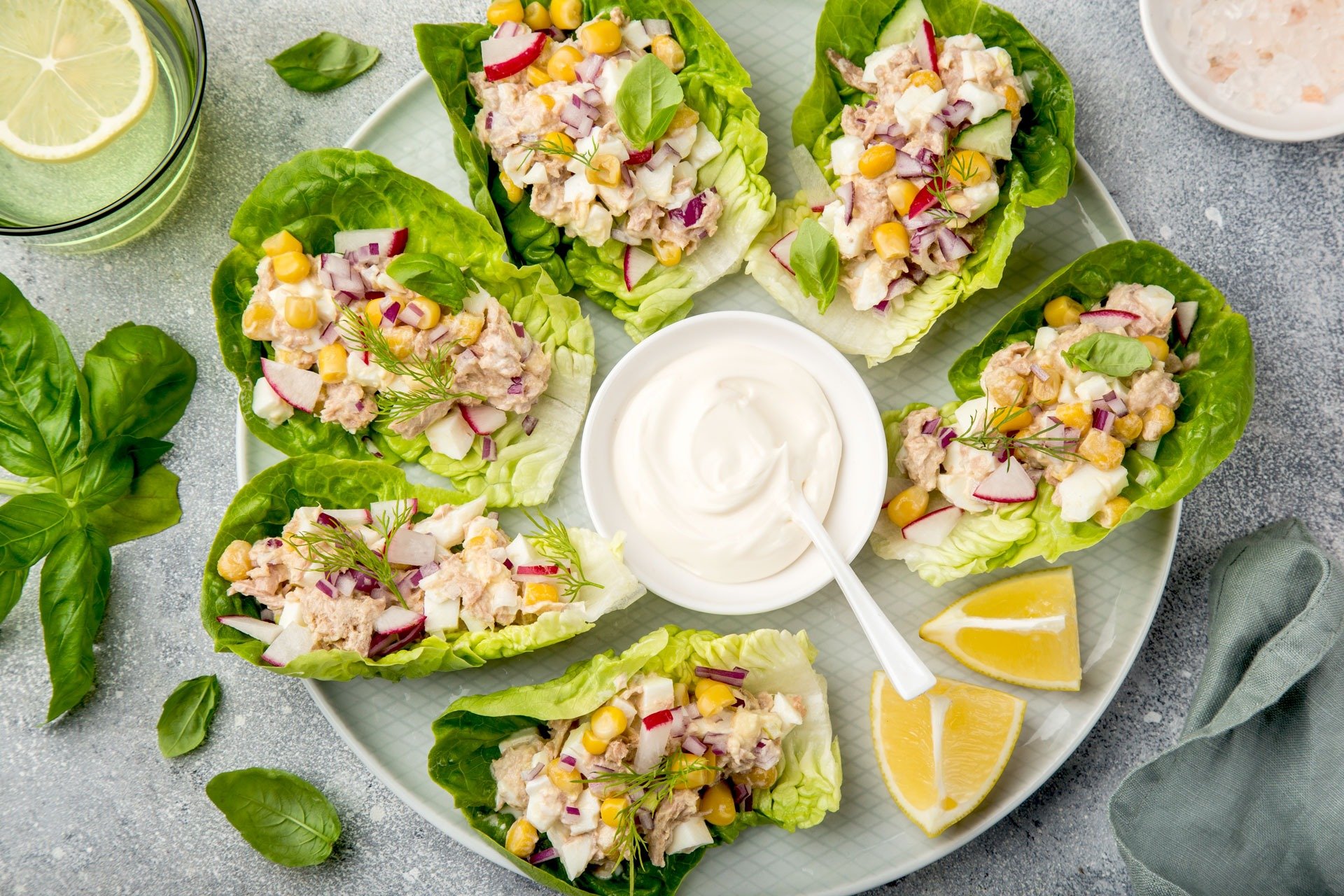
Michael Nelson has followed that lead at GW Fins, the New Orleans, Louisiana, restaurant where he is executive chef. Whenever he has the chance to teach his fellow chefs something about fish, he deploys sleight of hand. He begins with the promise of a lesson in fish butchery, then pulls out a chicken. He places it on the cutting board, then proceeds to fillet it, just as one might snapper or salmon. He cuts off the breasts, flips it over to remove the skin, then grabs everything that remains in one big handful and slams it into a trash can. “Why would you do that?” the confused observers often say, lamenting all that waste. “Well,” he says, “this is exactly how we treat fish.”
Nelson’s restaurant buys only whole fish. He’s honed a menu that utilizes as much of each one as possible. Fish skins become cracklins, collars become “fin wings,” and all manner of off cuts are turned into charcuterie, giving people “the opportunity to taste parts of the fish that get left behind,” he says. It’s all part of the push to harness the ocean’s potential.
“There’s a million fantastic arguments about seafood sustainability and what needs to get done,” Nelson says. “But the most obvious and simple one is to eat more of what we already have.”
Get the latest food news from FoodPrint.
By subscribing to communications from FoodPrint, you are agreeing to receive emails from us. We promise not to email you too often or sell your information.
More Reading
The MARA Act would open our oceans to the harms of factory farming
March 18, 2026
Reimagining wild fisheries with the whole ecosystem in mind
February 13, 2026
Salmon hatcheries: unsuccessful conservation, insufficient regulation, and poor animal welfare
September 16, 2025
Why farmed seafood deserves an ethical debate
September 8, 2025
Think you’re eating local seafood? Beware of 'local-washing'
May 21, 2025
When bycatch is on the menu
December 12, 2024
The quest for more sustainable caviar
July 3, 2024
Celebrating the Black history of oysters with chef Jasmine Norton
June 21, 2024
Oyster farming is the good kind aquaculture
April 2, 2024