


Ticks, cyclospora, screwworm: Farmworkers are at risk
Farmworkers face daily exposure to parasites, pathogens, pesticides and other hazards, yet their health is often overlooked in broader public-health conversations — even as climate change intensifies these risks.
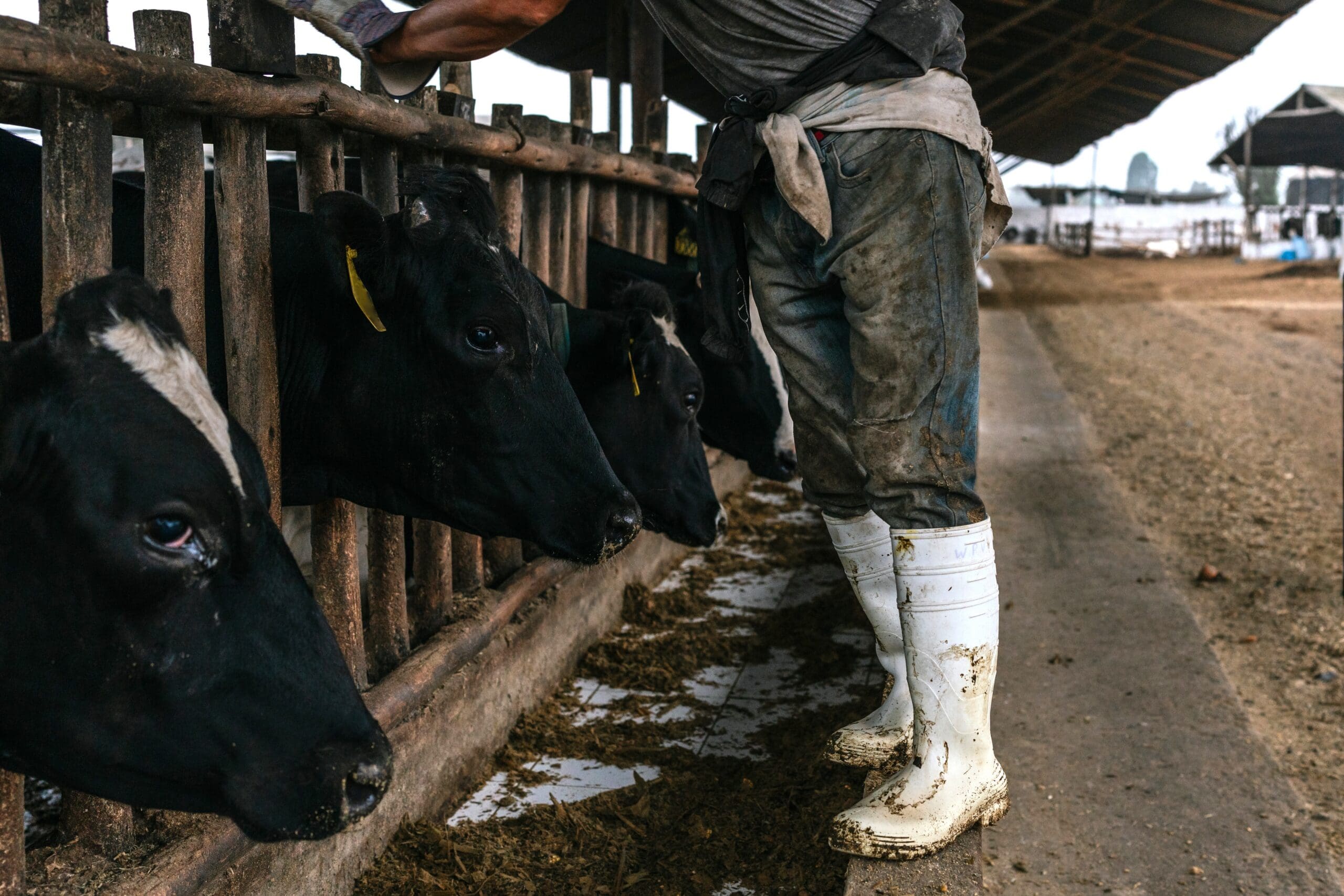
When New World screwworm, a parasite that leaves horrifying wounds on cattle, animals and sometimes humans, reentered the United States this year, people panicked. Were they at risk? Were their pets safe? What about the meat they might buy at the grocery store? But amid that flurry of concern, they were likely missing who is actually the most at risk: farmworkers.
Sadly, that oversight is not unusual: The people who work hard to put food on our tables are exposed to a lot more risks when it comes to illness and disease than you might assume. Farmworkers work with dangerous, heavy equipment and animals, and also bear the burden of long-term exposure to pesticides, extreme heat and other hazards. But despite bearing all those risks while having heightened exposure to parasites and pathogens, farmworkers are often an afterthought when it comes to the mostly eater-focused discussions about the food system and public health.
Decades of labor policy have kept farmworkers separate from the basic safety guarantees afforded to other workers. This is on top of reduced access to healthcare, thanks to barriers like low pay, isolation and fear of deportation. But ironically, it’s exactly that framing of farmworkers’ issues — as somehow lesser than or separate from other labor or health concerns — that has helped some of these illnesses become more serious concerns both on and off the farm. Ultimately, worker health in the food system is always public health, and neglecting to include workers in monitoring and protection programs endangers everyone. And with the risks of many of those hazards, such as insects, tick-borne illnesses and intestinal parasites, all increasing in response to climate change, that neglect is becoming riskier and more unconscionable every season.
The front lines of emerging threats
New World screwworm, or NWS, is the larvae of a fly that lays its eggs on open wounds or in the mouth, eyes or other body openings of mammals. After hatching, the larvae burrow their way into muscle, then work their way back out in a corkscrew pattern. It’s a horrifying disease that can devastate cattle and other livestock, leaving them vulnerable to infection and sometimes even killing them. For decades, the U.S. government has pursued an unusual but effective strategy for containing NWS outside of U.S. borders: Since the flies reproduce only once, raising and releasing millions of sterile flies over the Darien Gap, the narrow strip of land linking Central and South America, has limited the flies’ ability to move north.
But in recent years, that biological firewall has faltered. Climate change has made it easier for fly populations to boom, and migration of people and animals north through the Darien Gap has helped bring active cases out of the containment zone. Meanwhile, cuts at the U.S. Department of Agriculture (USDA), which produces the sterile flies and tracks cases, has allowed the outbreak to spread quickly northwards. In June, NWS was detected in Texas cattle, and since then, dogs, goats and sheep have also been infected. While no human cases have been reported yet in the U.S., more than 2,500 have been reported in Mexico and Central America, with several fatalities.
The risk of infection for people is largely determined by proximity to livestock. Naturally, that means ranch hands and other people who work closely with cattle and other animals are at special risk, according to reporting from the Guardian.
Most workers are used to wearing clothing that’s somewhat protective against insect bites and stings, since biting flies are par for the course on ranches and feedlots. That provides some protection against screwworm, but even the tiniest of wounds — including those as small as a tick bite — are enough to provide exposure. Experts stress that it’s important to treat and cover any wounds quickly, but given that day-to-day work on a ranch involves all kinds of small scratches, scrapes and snags, stopping to take every wound seriously simply isn’t an option for busy workers.
Workers who live on farms are at special risk: While on the clock, workers are likely to be wearing somewhat protective clothing or at least notice a fly landing on their skin; sleeping workers might not. Open doors and holes in screens, which are commonplace in the poorly maintained, badly ventilated housing that is standard for workers’ quarters, provide an easy entry for screwworms and other insects.
For now, official U.S. case counts in cattle, sheep and other animals have dropped to almost none since the first cases emerged in June. But with the plan that would bolster production of sterile flies and restore the biological barrier against NWS still far from completion, the USDA and state-level agencies are still treating cases reactively. Even in that approach, workers seem to be an afterthought: The USDA’s official response page offers resources directed at livestock producers, vets, travelers, pet owners and even “the general public” — everyone, it seems, except for the workers most likely to encounter the flies.
Tick-borne illnesses
The recurrence of NWS is a first since the 1960s, but farmworkers face another threat that has been around for some time: ticks. Outdoor workers have always had to contend with the occasional tick, but populations have recently exploded across the U.S. thanks to a combination of warmer winters, record-breaking deer populations and a decline in natural predators. Tick-borne diseases, specifically Lyme disease and alpha-gal syndrome, have exploded with them.
Lyme disease, a bacterial infection, can cause fevers, aches and joint problems, as well as longer-term neurological and cardiovascular problems. Civil Eats recently reported that many farmers and workers say they’ve been infected with Lyme multiple times, with lingering symptoms that continue even after treatment. Some of these make it difficult to work for weeks. When the working season is short, like it is in the Northeast, where tick-borne diseases are spreading the most rapidly, that means workers might miss out on a big chunk of their income for the year.
Then there’s the emergence of alpha-gal syndrome, a poorly understood condition that can result in a serious allergy to a protein in red meat and dairy. People get the condition after being bitten by the lone star tick, a species that was originally limited to the South, but has expanded rapidly into the Northeast and Midwest with warming winters.
Most people can cut their risk for these conditions simply by minimizing the amount of time they spend in outdoor environments where ticks are common. But that isn’t an option for workers, who have to rely on protective clothing, insect repellent and careful checks every time they come in from the outdoors.
Despite the rising danger presented by tick-borne illnesses, workers are largely left to shoulder the burden of protection themselves. While resources for employers suggest encouraging workers to use insect repellent or protective clothing, there’s no obligation for employers to provide these tools themselves. That leaves ticks in the same league as extreme heat, wildfire smoke and other serious environmental hazards, all of which present immense risks but for which there are no mandated protections.
Two systems, one point of failure
The summer’s other big food-system story was the multistate cyclospora outbreak that affected lettuce and other foods. Here, the recurrent pattern of refusing to treat farmworkers as deserving of dignity or medical care not only hurt the workers themselves, but may have contributed to a far wider public health crisis that was only detected when U.S. consumers started getting sick.
Cyclosporiasis is a parasitic infection causing explosive diarrhea and other symptoms. It is spread mainly through fecal contamination of irrigation and processing water. On crops that retain water in their leaves and fruits, such as lettuce, herbs and berries, it can multiply quickly in the hot weather that’s becoming more prevalent every year. This summer’s outbreak, which left more than 15,000 sick, was the largest in U.S. history. Its exact source remains unknown, though epidemiologists have traced many of the cases to lettuce grown by Taylor Farms in Mexico.
But how did a fecal parasite end up in irrigation water in the first place? Unlike many foodborne illnesses that originate from livestock manure, cyclospora can only be transmitted through fecal contamination. Almost immediately, people on social media speculated the problem might be the result of farmworkers not washing their hands.
For some people who espoused that origin story, it was just an extension of racist assumptions about farmworkers. But the reality is that on-farm sanitation is something that farmworkers, advocates and public health experts have cited as a concern for years. And the renewed attention to Taylor Farms brought forth an old complaint from the Teamsters union that California workers were denied bathroom breaks, a common problem across the industry. Many farmworkers lack adequate access to bathroom and handwashing facilities, making potential contamination more likely in the field. As a recent analysis from the Institute for Agriculture and Trade Policy pointed out, farmworkers who are paid a meager “piece rate” for how much they harvest may rush through or avoid taking breaks, even when those breaks are technically allowed.
These factors mean that even if fecal cross contamination stems from the field, it isn’t a product of farmworkers’ behavior, but rather of an industry that treats them as less than human and neglects to invest in basic infrastructure that would allow them to work with dignity.
We have built two separate monitoring systems — one for food safety, one for farmworker health — to track what is functionally a single point of failure.
Whether or not this outbreak even stemmed from workers at all is up for debate: The scale of the outbreak suggests that the problem likely came from improperly treated wastewater reentering the water supply. But regardless of the source, farmworkers were blamed and stigmatized for the outbreak. As a farmworker health specialist noted in a recent interview with Grist, this is particularly unfair given that it is the workers in the fields — those who are in closest contact with the pathogen — who also have the least access to medical care or sick leave to deal with an infection. The result is a public health monitoring system that failed to pick up on sick workers — likely among the first affected by the outbreak because of their proximity — until after the outbreak had expanded dramatically.
“We have built two separate monitoring systems — one for food safety, one for farmworker health — to track what is functionally a single point of failure,” pointed out Dr. Tyler B. Evans, a public health specialist in an op-ed for USA Today.
This isn’t the first time that workers in the food system have borne the brunt of a public health crisis in a way that not only endangered them and their families, but also made them the target of scrutiny and scorn. During the early days of the COVID-19 pandemic, meatpacking plants that should have closed to protect workers stayed open by executive order from the White House. Many plants subsequently became hotspots for infection, with workers getting sick and cases spreading quickly through their communities. That sort of demand, in which workers ignore risks so as to maintain an illusion of normalcy for consumers, nearly always backfires, risking everyone’s health in the process.
Related Posts
 GMOs & Pesticides, The Industrial Food System
Greenhushing: Climate silence doesn’t mean inaction
August 19, 2026
Has the food sector abandoned their sustainability commitments? We examine the rise of greenhushing and why the silence may not mean companies have given up.
 GMOs & Pesticides, The Industrial Food System
Where has all the soy milk gone?
August 6, 2026
Soy misconceptions have lingered for decades, partially shaped by growing anxiety over ultraprocessed foods. But what is the real impact of soy on our health and the planet?
 The Industrial Food System
The many uses of soybeans
August 3, 2026
Despite common misconceptions, not all soybeans are the same. Learn how they're grown and how they're used, from animal feed and biodiesel to tofu and soy milk.