


Where has all the soy milk gone?
Soy misconceptions have lingered for decades, partially shaped by growing anxiety over ultraprocessed foods. But what is the real impact of soy on our health and the planet?
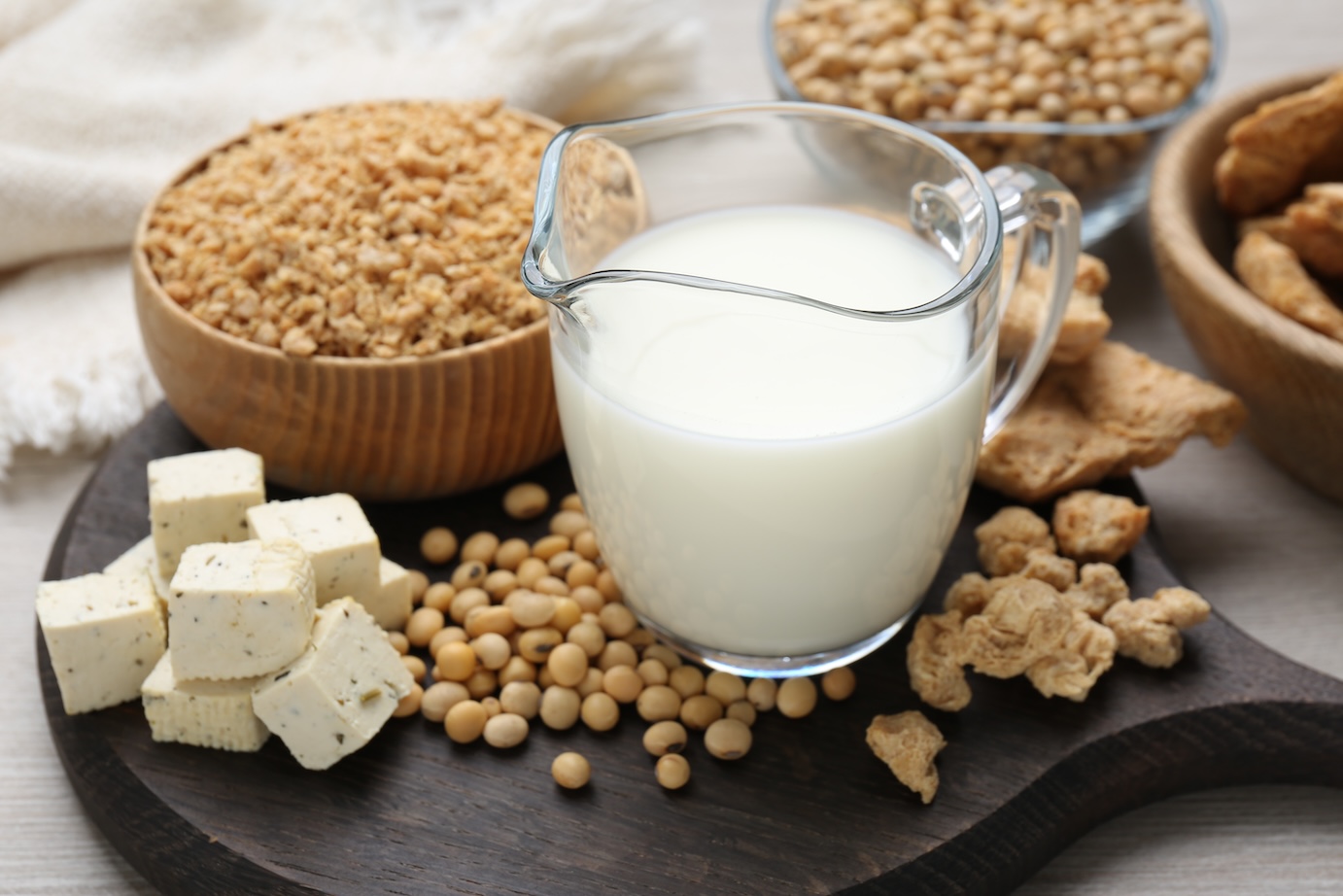
“All alternative milk roads lead back to soy milk … soy milk really is supreme … justice for soy milk,” declared TikTok user @wila-xo in a reel this past June. She’s not the only social media user noticing (and despairing) that many coffee shops have taken soy milk off their menus — and calling for its return.
There are all kinds of reasons for soy getting left behind: Oat milk, especially in frothable barista blends, has become more popular as the go-to dairy free option. There are also newer kids on the block, like pea-based blends. And then there’s the bad PR.


Soy milk, and soy products more generally, seem to have been thrown out with the proverbial bathwater, often getting lumped in with ultraprocessed foods (UPFs), accused of killing the planet, or labeled as chemical-laden hormone disruptors that aren’t fit for human consumption. But none of this is a fair assessment for the soybean, which, in the right hands, can be one of the healthiest and most sustainable foods we can eat.
The environmental case for eating soy
We grow a lot of soy in this country, about 240 billion pounds annually. That “commodity” soy is mainly used to feed animals. Some of it does end up in food for humans, but usually as processed ingredients like soy lecithin. The soybeans that become edamame, soy milk, tofu and other soy-based foods, however, are mostly grown from specialty beans: food-grade offerings grown specifically for food manufacturers.
That’s good news on the sustainability front. Industrially produced soy has a bad environmental reputation, and that’s somewhat deserved. Most commodity beans are engineered to be resistant to herbicides, contributing to overspraying and the evolution of herbicide-resistant superweeds. And the explosive growth in demand for soybeans worldwide has tragic consequences for rainforests and other critical habitat that’s being plowed under to boost production.
But it isn’t soy-based food that’s making that demand swell. That’s coming from the soybean’s main uses: Our meat-centric diets and biofuels.
As people around the world eat more animal protein — especially beef — the demand for soy rises with it. That’s not great for the planet because, while U.S. soy production isn’t exactly a model of environmental stewardship, a lot of that extra production is coming from Brazil, where rainforests and other biodiverse, carbon-storing landscapes are getting plowed up for soybeans. All that stored carbon gets released into the air in the process, ultimately undermining some of the logic behind the other driver of booming soy demand: biodiesel. But while most biofuel policies are at least ostensibly aimed at lowering greenhouse gas emissions, the data points to them doing exactly the opposite; a recent analysis of the U.S.’s lofty biodiesel targets found that the country doesn’t produce enough soybeans to meet the goal, necessitating imports and, therefore, fueling deforestation abroad. Given the Trump administration’s unwillingness to admit climate change is real, its announcement of new biodiesel targets made clear that the policy change was intended to expand the market for soy growers.
If these interchangeable uses for soybeans are driving demand, doesn’t any increase in demand for food also add on to that? Not exactly.
As a recent Vox article put it, soybeans are a miraculously efficient technology for turning sunlight and water into protein. That advantage is totally lost when we go through the process of feeding those beans to animals, which turn them into meat very inefficiently in comparison. When people eat soy themselves, they aren’t just cutting their meat consumption and lowering soy demand in the process — those soybeans also go a lot further as human food than they would as meat, so more demand for soy-based foods actually results in less demand for soybeans overall.
Soy in our diets
Eating soy instead of meat is also very good for you, though social media might lead you to believe otherwise. Soy gets blamed for all kinds of health issues: hormone imbalances, gut problems and fertility issues. The notions culminate in the derogatory “soyboy,” slang for a “feminized” man who eschews meat and dairy in favor of plants.
Sentient Media recently unpacked the loaded history of the term, which, perhaps unsurprisingly, has a lot more to do with anti-Asian racism than it does with the actual nutritional properties of soy and its impact on hormones. Soybeans, like a lot of other plant foods, contain compounds called phytoestrogens, which have similar chemical structures to the human hormone estrogen. Some phytoestrogens can fit into the body’s estrogen receptors, but there’s a catch: The phytoestrogens in soy, isoflavones, aren’t equal in potency to the estrogen produced by the body, nor are they absorbed from our diets in ways that allow them to actually mimic or replace estrogen in a meaningful way.
That means that most of the claims we hear about soy consumption — especially as it relates to sexual health and hormone balance — are either patently false or would only matter if you were consuming so much soy that you were barely eating anything else. As Sentient laid out, studies have shown no evidence that even high levels of soy consumption can cause breast development in men, sexual dysfunction or low libido. There’s also no evidence that soy consumption increases the risk of breast cancer in women or men, nor does it interfere with the energy- and metabolism-regulating roles of the thyroid gland.
If anything, the facts tilt in favor of consuming more soy products and isoflavones for their anti-inflammatory properties. There’s also some evidence that isoflavones could help reduce the risk of certain cancers and reduce the risk of cancer recurrence in people who have had breast cancer, though more research is needed to confirm these effects.
While researchers are still trying to isolate the specific effects of isoflavones and other compounds in soy, the evidence is resoundingly clear that adopting a plant-centric diet is hugely beneficial for health.
And for vegetarians, vegans or even plant-focused omnivores, soy is a pretty great addition to the diet for one particular reason: It’s what nutritionists call a complete protein, meaning it contains every essential amino acid that your body needs to maintain and build new tissues. That’s a distinction that is otherwise held by animal products, since most other plant foods are missing at least one amino acid. While it isn’t hard to get all of your essential aminos in — some of the most basic combinations of plant foods, like beans and rice, constitute complete proteins — soy makes it easy for anyone to get them all covered in one go.
Soy and processed foods
If the good-for-you soy foods are, in fact, good for you, then why is there so much persistent negativity about soy? A lot of that stems from the role that soy plays in unhealthy UPFs. As mentioned earlier, the soybeans that become foods like tofu and soy milk come mostly from a separate supply chain. And while it’s true that most of the commodity soy grown in the U.S. doesn’t actually become food, portions of it do. The soy-refining process — which crushes soybeans into a protein-rich meal for animals and separates out the oil — generates a lot of byproducts that are useful in food. A few, like the chemically purified oil that’s usually just sold as vegetable oil, make it into our kitchens as ingredients, but most are used by the food industry.
It’s these refined ingredients, such as soy lecithin, soy protein isolate and hydrolyzed soy proteins, that help make UPFs ultraprocessed: You don’t find them in a standard kitchen, and they allow food manufacturers to easily manipulate the texture, flavor and storage life of everything from sliced bread, cookies and chips to protein powders and granola bars. While the science is still evolving on exactly what about these foods is bad for us — and it’s increasingly clear that high consumption of UPFs is associated with a wide array of serious health risks — the evidence points mainly to the fact that they’re engineered for overconsumption.
Soy-based ingredients show a lot of versatility, and that’s made them an integral part of the UPF industry. But that role doesn’t signal much about soy itself except for its low cost and ubiquity: Chemists can and have made ultraprocessed foods from a bevy of cheap and available ingredients, and many of them show about the same health impacts. In fact, some of the most maligned ingredients — like the soybean oil that gets lumped in with other seed oils — can show benefits over fats like butter or beef tallow provided it’s being used to prepare healthy food.
Ultimately, blaming soy for problems that come from UPFs is little more than guilt by association. Whether it’s milk, tofu, tempeh or just plain old edamame, there are so many less-processed soy options to choose from, all with great nutritional profiles and health benefits. It’s time to cast aside the unscientific rumors about soy and seed oils and embrace soy for the powerhouse it can be.
Related Posts
 Public Health, The Industrial Food System
Are we getting any closer to defining and labeling ultraprocessed foods?
October 15, 2026
As concerns about ultraprocessed foods grow, defining and regulating them remains a challenge. While California has taken a step toward a clearer definition, meaningful federal policy has stalled.
 Public Health, The Industrial Food System
The ongoing PFAS problem
October 5, 2026
PFAS are once again making headlines as the Trump administration rolls back efforts to regulate and remediate these “forever chemicals.” Here’s what to know about PFAS, how they get into our food and what you can do about them.
 Food Policy & Economics, The Industrial Food System
Preserving farmland for farmers
September 8, 2026
As farmers struggle to afford arable land, a new bill seeks to ban corporate interests from buying the acreages under their feet.