


The many uses of soybeans
Despite common misconceptions, not all soybeans are the same. Learn how they’re grown and how they’re used, from animal feed and biodiesel to tofu and soy milk.
Back in the spring of 2025, the Trump White House reinitiated its 2018 trade war with China. This time around it slapped a 20 percent, then a 54 percent, then a 104 percent, then a 145 percent tariff on all Chinese goods. China, which as recently as 2022 purchased more than half of America’s soybean exports, eventually decided to boycott them altogether. This led to much online insistence that producers should just sell their now-homeless crop to U.S. makers of plant-based foods. “Looks like true patriots need to start eating tofu and enjoying edamame,” wrote one poster on Reddit.
There are a multitude of reasons why this did not, and could not, happen. For starters, sales of soy- and other plant-based foods have remained pretty stagnant in the U.S. over the years, hovering at around 1 percent of all food and beverage sales. That means there’s not currently much of a domestic market for a bigger supply of soy — let alone 19 million metric tons’ worth, which is about how much Chinese buyers turned their backs on. More crucially, however, the soybeans raised to make soy sauce and tempeh are generally not the same soybeans raised to make livestock feed or biodiesel. (Although they are often the same beans that wind up in ultraprocessed foods as ingredients like soy flour, soy fiber, soy protein and L-glutamic acid.) “That’s a common misconception, that all soybeans are the same,” says Jonathan LaPorte, a farm business management educator at Michigan State University (MSU) Extension. To clear up some of the confusion about this leguminous plant, here’s a closer look at soybeans — where they’re grown, for what purpose, and how and when they make an appearance on your dinner plate.
Commodity soybeans
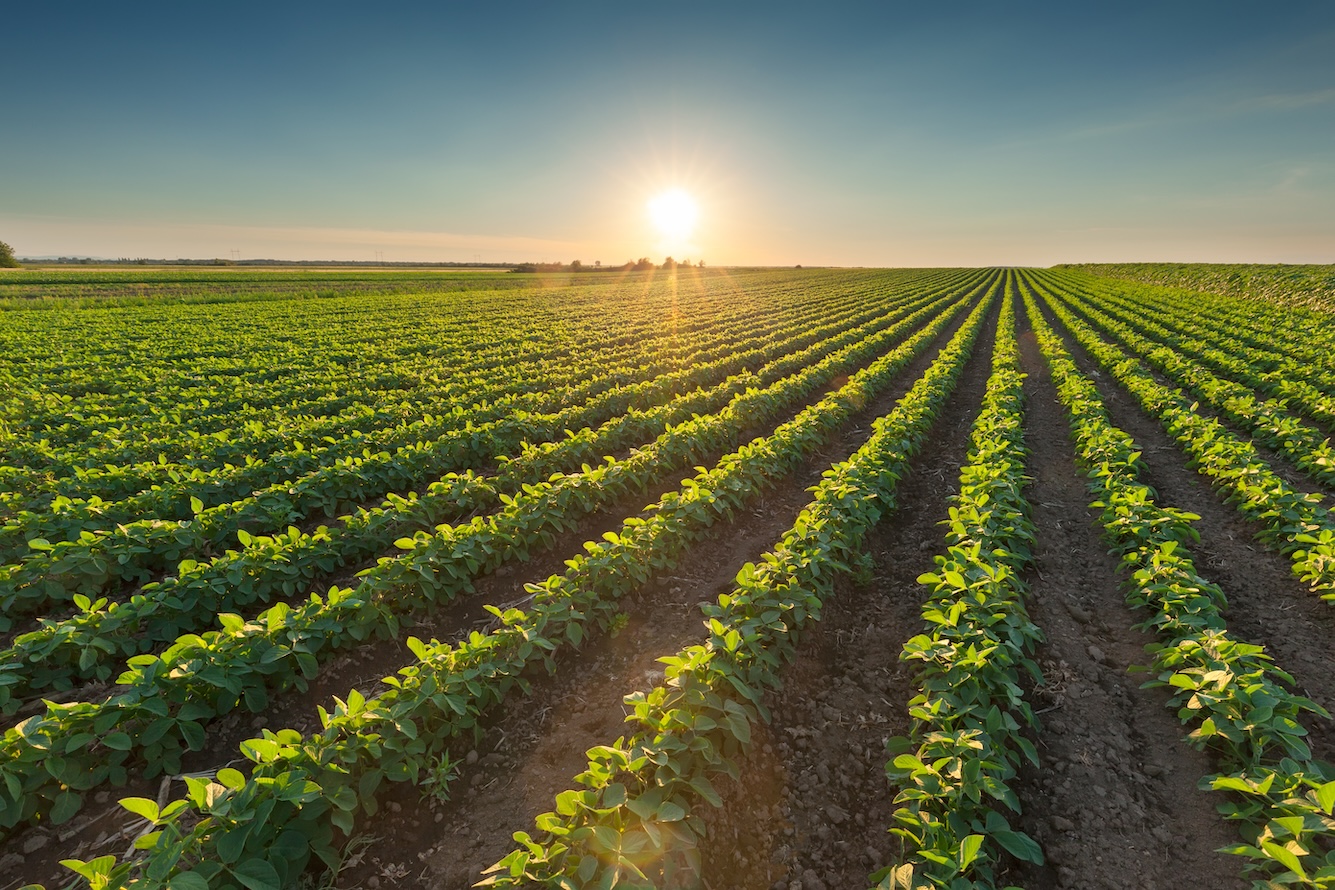
Seventy-seven percent of soybeans grown globally are destined to feed aquaculture fish and livestock — the 37 pounds of poultry, 33 pounds of pork and 20 pounds of beef each person eats per year (except in the U.S., where annually we eat 119 pounds of poultry, 50 pounds of pork and 59 pounds of beef). In 2023, American farmers planted almost 84 million acres of soybeans, usually in rotation with corn. That means that corn is grown in a field first, followed by soy; in some cases, farmers have a long enough growing season to “double-crop” and rotate these within a few months of each other. Illinois and Iowa are the top soy-growing states, although you can find tidy rows of leafy bean plants rippling across landscapes from North Dakota to New Jersey.
77%
of soybeans grown globally are destined to feed aquaculture fish and livestock.
According to Eric Anderson, a soybean educator at MSU and LaPorte’s colleague, soybeans are a high-protein crop originally grown in the U.S. not for their bean-containing pods but for their greenery, which was intended as forage for dairy cattle. But in the mid- to late 1900s, “They somewhere along the way decided, hey, I think we could probably do some more things with this, and they started growing it for grain,” Anderson says. Commodity soybean farmers mostly grow varieties that have been genetically modified to tolerate being sprayed with herbicides like glyphosate and dicamba. Alternatively, they might grow non-GMO high-oleic (more oily) varieties for dairy and chicken producers who want to market their milk and meat as non-genetically modified. High-oleic beans (both GMO and non-GMO) are also used for cooking oils — vegetable oil, for example, tends to be mostly or all soybean oil — since “Traditional soybeans don’t have as high of an oil content,” LaPorte says.
After harvesting in September and October, farmers bring their soybeans to a grain elevator. This is a hub that sells and transports their crop into the global marketplace — which as of this writing includes China again. The elevator might also store beans, at a cost to the farmer, until increased demand yields a higher price for them. Soybeans may be processed here or elsewhere: cleaned, dehulled and crushed through giant sets of rollers into meal.
Meal, which accounts for about 80 percent of a crushed bean, according to Darren Moody, senior director of market development for the United Soybean Board, is actually considered a byproduct. Some 97 percent of it is sold to livestock feed companies; 3 percent goes to industrial food companies like Cargill, for which it’s further refined into things like soy lecithin and soy protein isolate to be added to power bars and baked goods. Producers of high-oleic soybeans for the dairy market might first send their beans to be roasted before grinding, since this has been shown to boost the fat content in milk.
But the primary product of crushing is actually oil, which is extracted from the meal with a solvent like hexane — the root of MAHA’s concerns about so-called seed oils — although this mostly becomes biodiesel. It’s also made into industrial products like plastics, adhesives and artificial turf.
Soybeans intended for human food
While ingredients derived from commodity soybeans do end up in a lot of food products, soybeans grown expressly to become human food are considered “specialty” beans. They may be non-GMO, and less often, organic, both of which will be clearly marked on food packaging. Demand for specialty beans is comparatively “super small, and most of that is for East Asian markets — Korea, Japan,” says Anderson. There are varietals that are intended specifically to become edamame or sprouts or tofu or natto or miso. These human food-grade beans are grown under contract, meaning farmers plant and harvest them for specific food manufacturers, who pay a premium for beans with higher protein content, for example, raised with few or no chemical inputs.
Shevach Lambert is president of Surata Soyfoods, a 50-year-old tofu and tempeh company in Eugene, Oregon, that sells to natural food stores, restaurants and universities across Oregon, Washington and Northern California. Lambert used to source organic beans from a broker in Illinois but has since switched to a contract with a farm in Canada where “Organic standards are more rigorous and better enforced than in the U.S.,” he says. His main concern: pollen drifting from commodity soybean farms onto organic plots, because U.S. standards “allow fields to be in too-close proximity.”
Only a few types of soybeans available on the market have the right protein-to-oil ratio for making tofu and tempeh. “We’re generally looking for a bean that’s at least 45 to 48 percent protein,” Lambert says. To make tofu, whole beans are soaked, rinsed, milled, cooked and strained to get soy milk. (Industrial-scale tofu producers make soy milk from defatted soy meal instead, which has less fiber and less protein.) As with dairy milk and cottage cheese, a coagulant is added to the milk to make curds, which are then ladled into forming boxes, then pressed and cut. To make tempeh, beans are soaked, split, cooked and inoculated with a culture to ferment them; that culture grows overnight to bind the beans into firm cakes.
Soybeans and the environment
Manufacturers of soy-based products tout the bean’s sustainability, and it certainly can be grown that way (see: non-GMO and organic). However, there are environmental and health costs associated with raising some 4 billion bushels of mostly industrial soybeans every year. Fertilizer runoff from growing soy in rotation with corn — a common practice — contributes to nitrate pollution of drinking water, according to Environmental Working Group; that pollution is linked to certain cancers and blue baby syndrome. Depending on how beans are grown, their production can contribute to greenhouse gas emissions and soil erosion. A 2022 PNAS research paper also found that growing crops for biofuels led to “sizeable increases” in nitrate leaching, phosphorous runoff and soil erosion, with emissions from land conversion to meet a growing demand “enough to fully negate or even reverse any [greenhouse gas] advantages of the fuel relative to gasoline,” the authors wrote.
Still, when it comes to how we eat, whole foods made from soybeans have a significantly smaller ecological footprint than meat from methane-producing animals fed on commodity soy. Whole soy foods’ nutritional value can also be significantly higher than processed and ultraprocessed industrial foods that contain soy-derived products. As Marina Bolotnikova wrote in Vox, “America should have greater ambitions for the soybean, treating it not just as slop for the world’s abused livestock but as a technological treasure with the potential to reshape global diets for the better.”
Key takeaways
- Soybeans are a high-protein crop originally grown in the U.S. as forage for dairy cattle. Soy is now largely grown as a commodity crop, which is crushed into meal (for animal feed and some food additives) and, to a greater extent, oil. This oil mostly becomes biodiesel but it’s also made into industrial products.
- Soybeans intended for human consumption are considered a specialty crop, most of which is exported to East Asia, where it becomes food products such as tofu, edamame and miso.
- While soybeans are often touted for their sustainability (especially true when they are non-GMO and organic), there are environmental and health costs associated with industrial soy, including nitrate pollution of drinking water, greenhouse gas emissions and soil erosion. Still, whole foods made from human-grade soybeans have a significantly smaller ecological footprint than meat from methane-producing animals fed on commodity soy.
Related Posts
 Public Health, The Industrial Food System
Are we getting any closer to defining and labeling ultraprocessed foods?
October 15, 2026
As concerns about ultraprocessed foods grow, defining and regulating them remains a challenge. While California has taken a step toward a clearer definition, meaningful federal policy has stalled.
 Public Health, The Industrial Food System
The ongoing PFAS problem
October 5, 2026
PFAS are once again making headlines as the Trump administration rolls back efforts to regulate and remediate these “forever chemicals.” Here’s what to know about PFAS, how they get into our food and what you can do about them.
 Food Policy & Economics, The Industrial Food System
Preserving farmland for farmers
September 8, 2026
As farmers struggle to afford arable land, a new bill seeks to ban corporate interests from buying the acreages under their feet.