


Why isn’t local fish staying local?
Privatization of dock space, lack of processing infrastructure and scant funding pose significant barriers to making more local fish available to surrounding communities.
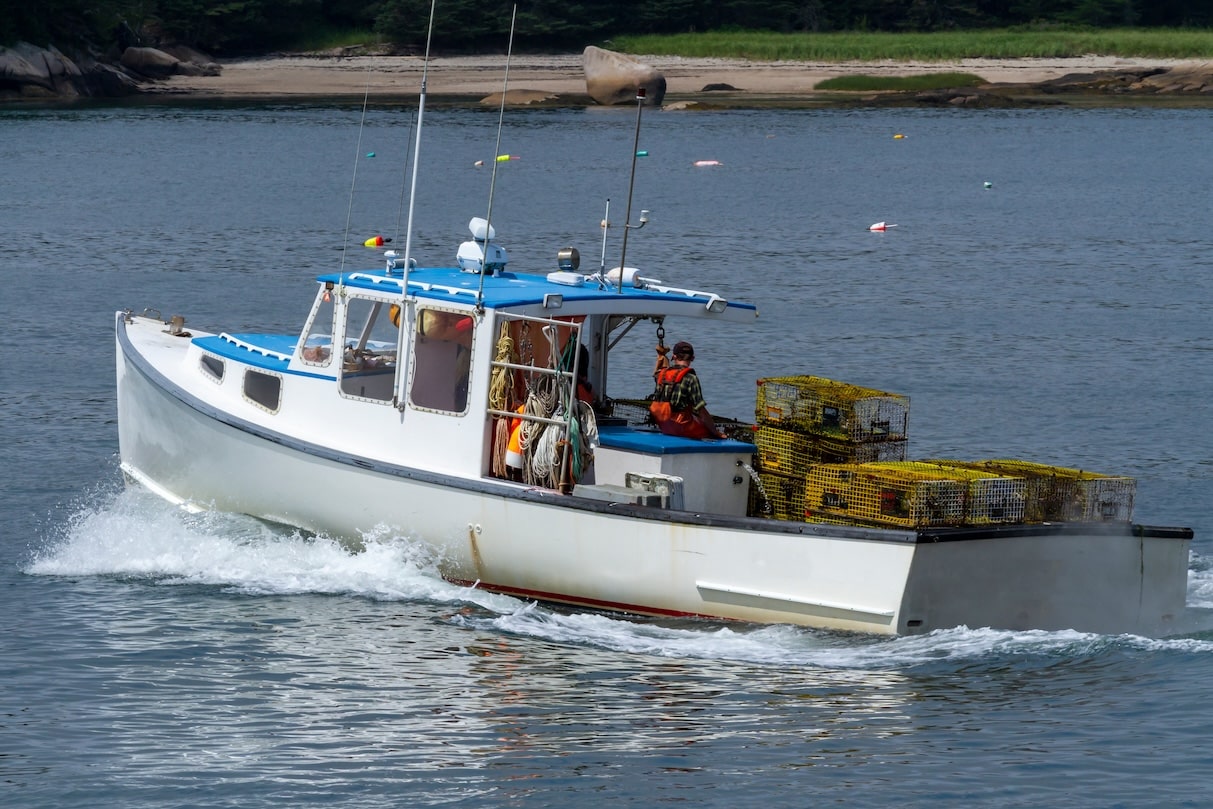
“Local” is a complicated word when it’s applied to the origins of our food. There’s no set definition, meaning a local apple can come from a farm just 5 or 50 miles upstate from where it’s sold, or 500 miles across state lines. Nevertheless, 54 percent of Americans say that having consistently available local food is important to them, according to a 2025 survey conducted by a food industry-funded organization, partly as a means of decreasing their environmental impact. Many Americans could add seafood to the long list of foods produced near to them — U.S. fishermen catch something like 8 billion pounds of wild fish every year. But the majority of fish for human consumption is either exported, or shipped off for processing to countries like China, where portioning and packaging are cheaper, before returning here to be sold. All told, we import 6.4 billion pounds of seafood like farmed shrimp, even though we have our own high-quality, financially struggling wild shrimp fishery in the Gulf of Mexico.

These ironies are not lost on U.S. fishermen, some of whom have spent years trying to figure out how to get the fish and shellfish they land from coast to coast into the hands of their community members. But “It’s a broken system,” says Caitlin Townsend, a third-generation commercial fisherwoman and community organizer with the Cape Cod Commercial Fishermen’s Alliance. “You’re competing against so many different things.” There has been progress: The 15-year-old Local Catch Network has 2,500 members, including fishermen and aquaculturists, and it has helped them figure out how to sell via CSF boxes (like a CSA, only for fish), off the boat, online, by the side of the road, or straight to fish stores and restaurants. What’s largely missing from the fisherman-to-consumer equation, though, is infrastructure.
Logistical challenges to local seafood
In Rhode Island, a state with 40 miles of coastline and 71 million pounds of fish landed commercially in 2024, Jason Jarvis has spent the last four years trailering his 19-foot fishing boat, every single time he takes it out of the water. This is how he describes the slog of it: “We fish all day, and then we have to wait, depending on how many boats are at the boat ramp. You haul your boat out, and then you bring your boat home, unhook it from the truck, put your catch from the boat and the coolers into your truck. Now you’ve got to drive a 42-mile roundtrip to offload your fish.” That’s because there’s no longer any rental space available for him to dock his boat, and no shoreside facility where he can sell his catch and have it processed. In his state and others, working waterfronts are being gentrified and privatized to make way for wealthy homeowners and what Jarvis calls “dockominiums” for recreational boat owners. “It’s a water and land grab,” he says.
In Louisiana, it’s the oil and gas industry that’s buying up dock space, forcing shrimper Justin Solet to travel four hours before he sets out to buy ice, then four hours once he returns from fishing to unload his catch. In Massachusetts, development, as well as flooding from sea-level rise, is restricting commercial fishing access to docks and ramps. Additionally, large-scale processing companies (the majority) “have gotten really comfortable with having these overseas outlets for seafood,” Townsend says. They’re also “really comfortable with importing seafood from elsewhere to fill the market instead of using our local products.” The result is an American public that’s often unwittingly supporting this status quo without understanding how it weakens the domestic seafood market. Says Townsend, “I love when my community eats our local seafood. But even if they’re just eating American seafood, that is 10 times better — that affects the supply and demand as a whole. That affects fishermen as a whole.”
I love when my community eats our local seafood. But even if they’re just eating American seafood, that is 10 times better — that affects the supply and demand as a whole. That affects fishermen as a whole.
Obstacles to selling locally caught fish directly to local people also abound. In Massachusetts, oystermen cannot sell direct to consumer; permits are needed to sell whole fish and live lobster and crab off the boat at the docks — there’s a similar law in Rhode Island but “Nobody around here even knows what to do with a whole fish,” Jarvis says. Everyone agrees that the number of permits needed to catch, process and sell are numerous and expensive, throwing up another barrier to local access.
On the West Coast, an additional hurdle comes from the long distances between fishing docks and urban centers. In Newport, Oregon, for example, there’s a public hoist that’s maintained by the port that any small fisherman can rent, says Laura Anderson, co-founder of nonprofit Central Coast Food Web. “We also have a private business that offers unloading services across their dock, which is wonderful because they have labor and handle all the logistics, and that’s how most fish gets off the boat.” But while she says there are opportunities for independent buyers, not just the dominant massive purchaser and exporter Pacific Seafood, to buy from fishermen, that’s not without complications. “We are two and a half hours from our major urban center, Portland,” she says. “So short of a fisherman catching their fish, processing their fish, loading it up in their truck, driving all day to take it to market and back, quickly you see that is not something that can happen.”
Seeking solutions on land
Despite collaborating with food-hub managers, farmers, fishermen and chefs, Anderson has so far been unable to solve that distribution gap. But she has managed to provide some critical infrastructure in starting the Yaquina Lab. This is a food hub/processor with 10 current members who can rent the space and its forklift, vacuum-packing machine, blast freezer and cold storage to get their product ready for market.
Fisherman Brett Montague uses the Lab to get the king salmon, albacore tuna, rockfish, lingcod and halibut he catches prepped to sell direct through a website hosted by Yaquina Lab, as well as his own, which earns him a little more money than selling to larger-volume seafood buyers because it cuts out the middleman. It also lets him keep fishing while the season is active: He can freeze his catch onboard, then stash it in the Lab’s cold storage while “I get back out and keep fishing and fishing and fishing,” he says. When the season ends in October, “I’m able to come up here, thaw my whole fish, process, package, portion, label.”
What happens next — getting his catch to more than 100 individual and restaurant customers in the Portland, Bend and Eugene areas — is the tricky part. That necessitates purchasing a refrigerator truck, an undertaking too costly for one fisherman alone. Townsend on Cape Cod has applied for a Massachusetts Food Security Infrastructure Grant to buy such a truck, partly so she can deliver fish to underserved communities, partly so she can access higher-paying markets for her lobster in Boston and New Bedford. Montague is hoping to get a fishermen’s cooperative off the ground that would share these kinds of expenses. But that requires “fishermen wanting to do it,” he says, and they’re not all up to the extra labor.
Back in Rhode Island, Jarvis is in the process of setting up a cooperative through which to process and sell striped bass, porgy, black sea bass, bluefish, weakfish, crabs, quahogs and farmed oysters from members, following the CSF model. The cooperative will function as a dealer and to hold the 13 or more licenses and permits necessary for sales and processing, so individual fishermen don’t have to. Jarvis’s hometown of Westerly owns a marina that it has been renovating; if all goes to plan, they’ll hold 15 dock spaces for commercial fishermen, who will then be a short distance to the processing facility Jarvis is building. “Literally they could pull into the dock, take the fish off their boat, come over to our truck to get a ride to our facility,” Jarvis says. In the absence of robust federal monies, some states offer infrastructure grants to support these sorts of locally focused projects.
Anderson says that to be successful, cooperatives such as the one Jarvis envisions have to offer competitive salaries. “You can’t just pay people $20 an hour and expect to get quality work,” she says. That’s just the beginning of what’s needed, though. Fishermen regularly tell Townsend that their number one wish is “having a higher ex-vessel price,” she says. Meaning, getting more for their catch: Lobstermen in 2026 are actually paid less for their catch than they were in 1996.
Despite the challenges to getting local seafood supply chains up and running, Montague thinks the effort is worth it. He’s hooked, he says, on “seeing the smile on people’s faces. I love getting the notes of thanks in my text messages and my emails, with people saying, “Oh my God, I tried your fish. How do I get it?”
Related Posts
 Seafood & Aquaculture
A new study finds human disease that originates in farmed shrimp
May 28, 2026
New research shows a link between a virus prevalent in farmed shrimp and a chronic infection that can lead to blindness in people.
 Seafood & Aquaculture
This fish sauce company is tackling modern environmental issues with an ancient recipe
April 30, 2026
A Maine-based company revives the ancient practice of fermenting fish into garum, reducing waste while preserving flavor.
 Seafood & Aquaculture
The MARA Act would open our oceans to the harms of factory farming
March 18, 2026
The MARA Act could fast-track offshore fish farming and faces widespread opposition from fishermen, scientists and environmental advocates.