


Food sovereignty is the right of people to make their own decisions about the food that they eat and how that food is produced. It is a crucial concept that links farmers to the communities that they feed and puts control of the food system back in the hands of people rather than large corporations.
One of the most widely used definitions of food sovereignty comes from Nyéléni, the world’s first international summit focused on the subject, organized in Mali in 2007. The summit’s declaration defined food sovereignty as “the right of peoples to healthy and culturally appropriate food produced through ecologically sound and sustainable methods, and their right to define their own food and agriculture systems.”1
This ideal flies in the face of so much of the corporatized industrial food system that dominates in the wealthy countries sometimes referred to as the Global North: Land is stripped bare to farm massive amounts of commodity crops like corn and soy, farmers cannot save their own seeds, animals are abused in factory farms and people have few options for affordable, healthy food. Thanks to free-trade agreements that proliferated in the 1990s, the products of this unsustainable overproduction have flooded global markets, forcing farmers across the less developed countries that make up the Global South to adopt industrial agriculture themselves to compete — or leave farming altogether. Both choices ultimately foster dependence on international agribusinesses, hindering efforts of communities around the world to build food systems that sustainably meet their needs.
The basics of food sovereignty
Food sovereignty exists as a contrasting concept to food security. The latter focuses on ensuring that people have access to a stable food supply, but it lacks several important environmental and social dimensions.
International development efforts in the 20th century that focused solely on food security often did so at the expense of farmers and local economies. The efforts were intended to address widespread world hunger by improving access to nutritious food, but also introduced agrochemicals, patented seeds and other technologies that drove the consolidation of farms and made farmers dependent on international agribusinesses.2 The expansion of industrial agriculture across much of the world — often referred to as the Green Revolution — has helped to feed billions of people, but it has also displaced people from their homes and livelihoods, polluted air and water, threatened biodiversity and made food systems more reliant on agrochemicals and fossil fuels. Ironically, these factors have stunted local food systems; displaced traditional crops, foods and diet patterns; and ultimately contributed to ongoing food insecurity across the world.
Food sovereignty is an essential frameshift for developing food systems that are equitable and self-sustaining. By focusing on people’s rights rather than merely their access to food, the food sovereignty movement promotes systems that not only produce enough to eat, but that do so while preserving the environment, elevating traditional food cultures and building wealth and social power within local economies.
While many grassroots organizations have their own definitions of food sovereignty, most focus on six basic principles. According to these six pillars, the food sovereignty approach:
1. Focuses on food for people (as opposed to corporations)
- Affirms people have a right to food that is affordable and culturally appropriate
- Thinks about food as a right rather than a commodity to be sold for profit
2. Embraces traditional knowledge of food and agriculture while advancing new research
- Looks to the traditional foodways of Indigenous people as a foundation of the food system rather than an outdated vestige
- Embraces new research that centers the needs of people rather than corporate profits
3. Works with — rather than against — nature
- Rejects farming systems like industrial agriculture that pollute air and water and degrade soil
- Promotes biodiversity both on and off the farm
4. Values and uplifts farmers and other food providers
- Seeks fair wages for farmworkers and fair compensation for farmers in both local and international markets
- Affirms that farmers and other people deserve to have well-funded communities with infrastructure that meets their needs
- Promotes education and economic opportunities for women, recognizing that women perform an enormous amount of unpaid labor in most food systems
5. Builds local food systems
- Pursues trade policies that encourage fair trade internationally rather than the continued exploitation of the Global South through colonialism, imperialism or harmful free-trade agreements
- Creates opportunities for farmers to sell their food to their own communities
6. Puts control of food systems in the hands of people
- Helps ensure people can access a wide variety of affordable and healthy foods
- Enables people to make and enforce laws about how food can be produced
- Minimizes the influence of international agribusinesses on local and national governments and refocuses food policy decisions on farmers and community members3
Indigenous groups have also added a seventh pillar: recognizing that food is sacred.4
Taken all together, these approaches represent a big departure from our current food system, which treats food as a commodity to be produced as cheaply as possible and sold for maximum profit.
The history of food sovereignty
Throughout history, self-governing groups of people have always had food sovereignty, allowing them to build food systems that meet their nutritional and cultural needs. That has laid the foundation for the enormous variety of global cuisines today, as well as the biodiversity we see in agriculture and the myriad cultures that exist around the world, including those focused heavily on foraging and hunting, those that raise livestock nomadically and those that depend on agriculture.
But as people around the world — especially Indigenous people and people in the Global South — have been dispossessed from their land, stripped of rights and left in poverty thanks to colonialism, imperialism and, later, capitalism, many people have lost control of their own foodways. This has left them dependent on an international food system over which they have little influence.
Movements seeking to restore the power and independence of colonized and oppressed people have always seen food as a pillar of that independence, from the push for Black people in the United States to own farmland after the abolition of slavery to the modern Land Back movement led by Indigenous people worldwide.5
The term “food sovereignty” was coined by La Via Campesina (Spanish for “The Peasant Way”), an international organization representing smallholder farms, farmworkers and other poor and rural people. In the early 1990s, a combination of widening global markets, exploitative trade agreements and the expansion of international agribusinesses was making life untenable for small farmers around the globe. Rather than feeding into local economies and being protected by governments trying to nurture robust local food systems, small farmers were suddenly trading with the entire global market, finding themselves unable to compete with an international industrialized food system. At the same time, the global market was also failing to supply enough food to many poor and rural communities around the world. In recognition of this problem, representatives gathered under the banner of La Via Campesina to remind the world that smallholder farms were still the main suppliers of the global food system, and that they should have a seat at the table in food policy decisions at every level.6 In 1996, at the World Food Conference in Rome, the organization coined the term “food sovereignty” to describe their ideals.7
In subsequent meetings, the term gained momentum, especially among groups representing Indigenous people who felt similarly disenfranchised by the global food system. La Via Campesina, Friends of the Earth, ROPPA (a West African peasant farmer organization) and other groups organized the aforementioned 2007 Nyéléni summit.8 Delegates, who were mostly small farmers, farmworkers, fishermen, pastoralists and other rural people, crafted the Nyéléni declaration. This created the aforementioned definition of food sovereignty that affirmed the human right to healthy, culturally appropriate and sustainably produced food, as well as the right of people to create and control their own food systems. The declaration stipulated that farmers and other food producers — not politicians or international corporations — should craft food policy.9
Today, the concept of food sovereignty has been widely embraced around the globe. Organizations of farmers and other food producers exist in every region of the world, focusing on a range of food sovereignty–related critical initiatives, including policy advocacy in support of agroecology and sustainable agriculture, helping farmers preserve traditional seeds and agricultural knowledge, and restoring Indigenous peoples’ lands. Much of this work is led by Black, Indigenous and people of color, as well as people in the Global South, whose communities have experienced the greatest losses of food sovereignty thanks to historical and ongoing racism, colonialism and capitalism.10
Food sovereignty and people
Around the world, people are suffering from different forms of malnutrition. While traditional food security most often focuses on hunger, food sovereignty expands this definition to look at health overall, recognizing that many people may be consuming enough calories, but still don’t have access to food that meets their nutritional needs. In many countries and communities, so-called food deserts — areas where high-quality, affordable food is scarce — are common in lower-income areas, largely thanks to underinvestment in grocery stores, food hubs and other infrastructure. Because that underinvestment is a systemic, intentional choice, especially in communities of color, it is also termed “food apartheid.” It is just one factor in a host of other kinds of discrimination that make being healthy even more difficult for people who are already disadvantaged.11
Thanks to market forces that push farmers toward growing cash crops for sale outside of the community, even agricultural communities that grow food may not be able to supply food that meets their needs. While some may make enough money from the sale of cash crops to buy outside food, volatile and exploitative international markets for goods like coffee, chocolate or grains mean that smallholder farmers and their families often go hungry when prices are poor.
Communities that have been dispossessed from their lands or have seen their traditional food systems dismantled by outside forces usually can’t maintain the culturally appropriate diets that kept them healthy when they had greater food sovereignty. Worldwide, researchers have cataloged how diets rich in whole foods are being replaced with ultraprocessed ones, and how this transition ties closely with the expansion of multinational food companies and the growth of industrialized food systems reliant on crops like genetically modified corn and soy. Latin America, Africa and South Asia, the fastest growing markets for these foods, are also the areas where traditional diets are most quickly being erased.12
In the U.S., Indigenous people have a life expectancy that is a full seven years shorter than their white counterparts. This is thanks in part to poor food access; while government programs do provide some foods to Indigenous people, these are dominated by poor-quality items that were purchased by the government to prop up demand for commodity crops and keep prices high for farmers.13
In affirming the right of people not only to adequate amounts of food, but also to culturally appropriate food options, food sovereignty centers the needs of people in discussions of food and health rather than focusing on what kind of food is most available. As people gain more control over their food systems, they gain access to their traditional foods. In turn, this allows for intergenerational sharing of skills and knowledge through cooking and sharing meals, which helps cement a sense of identity that strengthens individuals, families and communities. Restoring traditional foodways and healthy, culturally appropriate diets also reduces the burden of diet-related diseases, such as diabetes and heart disease, which leave communities impoverished and sick.14 When communities have access to land and resources that allow them to grow their own food, they can also grow medicinal plants and herbs, restoring traditional medicine and wellness practices that were often discouraged or even banned under colonization.15
Of course, the nutritional value of food is only one angle of the food system’s impacts on human health: Industrial agriculture, especially industrial livestock production, causes environmental degradation that directly impacts public health. This includes contamination of air and water supplies, the proliferation of dangerous pathogens like bird flu and antibiotic-resistant bacteria, and even the exacerbation of natural disasters, drought and extreme heat due to climate change. While these problems impact everyone, they do the most harm to poor communities, both because those communities lack the resources to mitigate these issues and also because of environmental racism (the tendency of factory farms, chemical producers and other polluters to treat communities of color as dumping grounds).
Food sovereignty and the environment
From farming to ranching, fishing to aquaculture, all food production depends on the environment. For communities to realize food sovereignty, farmers must have access to clean, abundant water and workable, fertile soil: Reclaiming water rights and land access is essential to this endeavor. In the U.S., tribal governments and other Indigenous groups have worked hard to gain access to their traditional water resources, often fighting the federal government for their fair share of water or pushing for the removal of dams that impede fishing efforts.1617 Meanwhile, the Land Back movement has focused on returning workable ancestral lands that can support Indigenous foodways back to the people who first tended them.18
But land and water access is only part of the equation. In order for food systems to be resilient and long-lasting, they must maintain the quality of the environment around them, neither harming soil and water nor contributing to climate change. This puts efforts to build food sovereignty at odds with almost all of conventional industrial agriculture.
Food sovereignty and agroecology
Growing food in a way that is restorative rather than extractive is one of the principles closely linking food sovereignty to agroecology. In a 2015 follow-up to the 2007 Nyéléni declaration, signatories defined agroecology as “a way of producing food, a way of life, a science and a movement to transform food systems towards ecological, social, gender, economic, racial and intergenerational justice,” making the adoption of holistic agroecological practices one of the main vehicles communities use to establish food sovereignty.19
These approaches seek to integrate food production with nature and minimize the negative impacts of agriculture on the environment, both on the farm and far from it. By preserving air and water quality, enhancing the fertility of soil without relying heavily on chemical inputs, and promoting biodiversity, agroecological approaches ensure that farmers still have good land to work and that communities can enjoy an intact environment free from pesticides, pollution and other ill effects of industrial agriculture.20
Agroecology isn’t one-size-fits-all, and while there are many practices common on agroecological farms, biodiverse and productive agroecosystems require a location-specific approach. In addition to embracing local crop varieties bred specifically for the conditions in a particular area, agroecology practitioners embrace Indigenous and traditional farming practices so that they can work with local weather and pest cycles. Because this requires careful attention and deep knowledge of both technique and location, genuine agroecology is fundamentally reliant on farmers and difficult for corporations to co-opt: Agroecology cannot come merely from packaging and selling lower-impact crops or adopting particular farming methods.21
Seed sovereignty and biodiversity
The agroecological approach also encourages farmers to break free from exploitative relationships with international agribusiness giants. Companies like Bayer, Syngenta, BASF and others have taken control of the market for seeds, upending a millennia-long history of farmers keeping (and sharing) their own seeds — diverse lineages adapted to their environment of origin — and instead going so far as to prosecute farmers who intentionally kept their patented seeds from year to year. Although there are some advantages to buying commercially produced seeds (like predictability and high yields under the right conditions), this loss of seed ownership, or sovereignty, has made farmers around the world dependent on big agribusiness for annual purchases of seeds and other inputs. These varieties are often not adapted to the regions where they are sold, and require heavy applications of fertilizers and pesticides to thrive.
For some crops, these seeds are commonly genetically modified to be tolerant of herbicides. The seed and herbicides are frequently sold together as bundled products, adding to the overall costs for the farmer. The upfront costs associated with buying these products mean that farmers need higher and higher yields to make ends meet, locking them into a cycle of debt and dependency that food sovereignty pioneer and activist Vandana Shiva has termed “seed slavery.”22
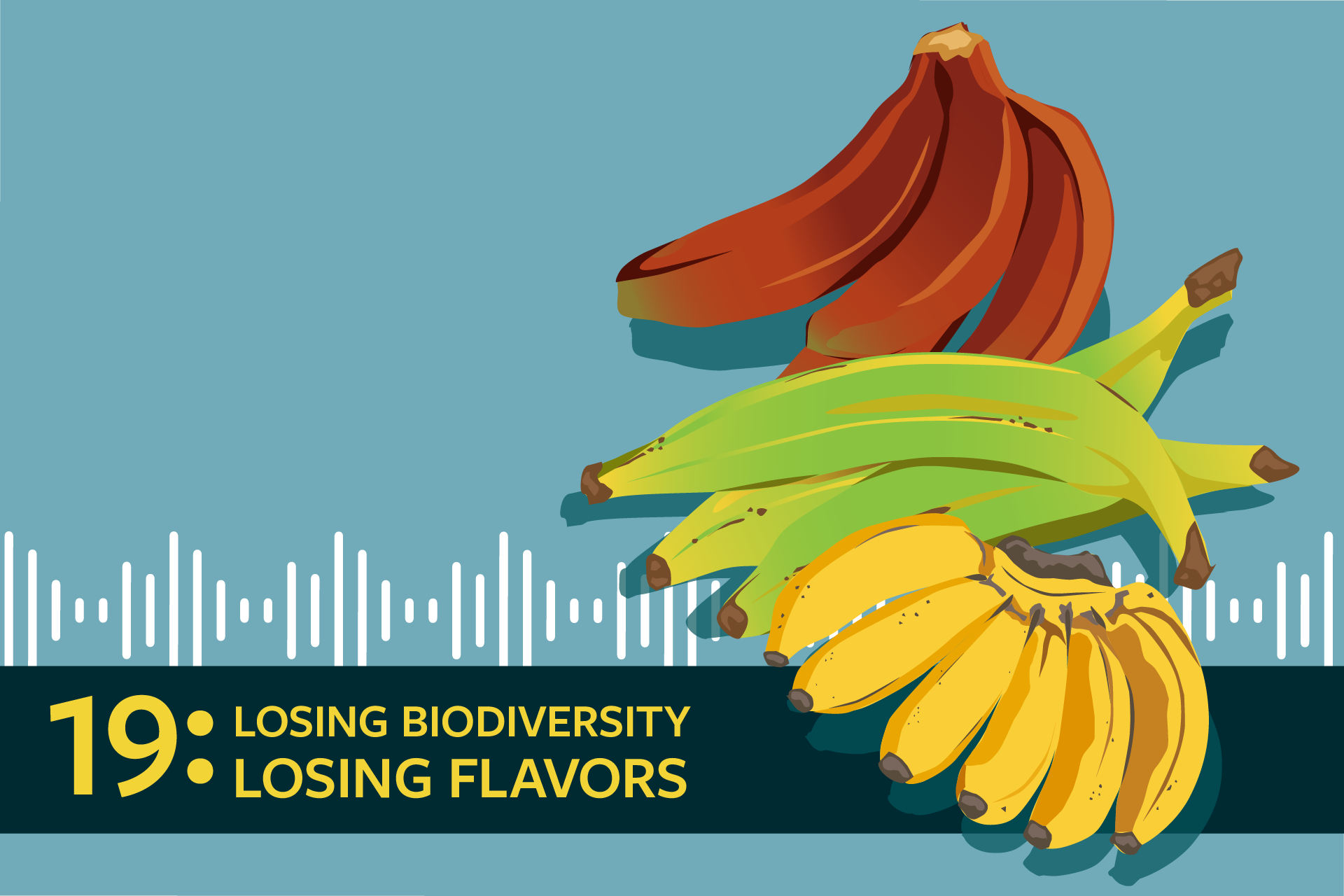
This shift toward integration with global agribusiness had several drivers, including international development efforts to alleviate hunger and boost productivity, as well as free-trade agreements that brought farmers around the world into direct competition with a global market. That has had devastating consequences for biodiversity: Researchers estimate that the world has lost more than 75 percent of crop biodiversity since 1900.23
Farmers who save purchased seeds, or use those seeds to breed new varieties of their own, risk running afoul of patents held by seed companies. Laws in the U.S. and abroad have repeatedly upheld the notion that genes can be owned as intellectual property. However, this same principle rarely applies in reverse: Indigenous people who have carefully preserved unique crops or livestock are almost never compensated when agribusinesses or governments get a hold of those varieties and incorporate them into commercial breeding programs.
Food sovereignty in action
While the ideals of food sovereignty are easy enough to understand, it can be difficult to put them into practice in a meaningful way. Because food sovereignty is a bottom-up concept, many efforts naturally focus on building the framework from a grassroots level. However, these efforts can be helped or hindered by higher-level policy choices.
Food sovereignty for communities
Many food sovereignty efforts start at the community level with projects that help build local food networks and encourage people to grow their own food. This can look very different from place to place, depending on how reliant communities already are on the industrial food system.
In many areas of the world, such as South Asia and sub-Saharan Africa, small farms still supply most of the food consumed by their families and communities. In these settings, food sovereignty work revolves around strengthening people’s access and choice in farming practices, as well as ensuring they have access to fair markets and good prices for the food they grow. These efforts aim to balance traditional foodways with new technology that supports farmers’ autonomy rather than making them more reliant on international agribusinesses for seeds and chemical inputs. Community-run seed banks and seed-sharing programs are a common feature of these initiatives: They allow farmers to save and share tried-and-tested heirloom varieties rather than relying on commercial seed.24 Groups like the Alliance for Food Sovereignty in Africa and the Indian Seed Sovereignty Alliance work to connect farmers to each other to share native seed varieties and to lobby against policies that prevent farmers from saving or sharing seeds.2526
In regions where people get most of their food from the industrial food system, sovereignty-building efforts often look very different. In the U.S., many community-based organizations seek to build food sovereignty by connecting people to the food that they eat and giving them more knowledge and control over what they purchase. Organizations are often centered around community gardens and urban farms, which not only give people the space to grow some food for themselves, but also serve as a valuable educational space for people to learn about agriculture, nutrition, cooking and more. These opportunities are especially critical for people who may not otherwise have access to land, or who want to grow foods that they can’t buy, like culturally specific produce. The U.S. Food Sovereignty Alliance has highlighted and supported many of these organizations through their annual Food Sovereignty Prize. Winners of the U.S. awards have worked on issues ranging from farmworker justice, community-maintained irrigation systems, saving urban farms from developers, and more.27
Some organizations like the Black Farmer Fund work to put farmland into the hands of Black farmers and others who may not be able to afford it themselves or who have a hard time accessing loans, allowing them to feed their communities directly and build wealth and local control over the food system.28 Others provide technical and financial assistance for farmers and others looking to build out infrastructure to support local food systems, from processing facilities for crops to mobile markets and outreach programs that bring food to new communities.29
Indigenous people and food sovereignty
Indigenous people steward about half of land on earth, safeguarding an astonishing amount of the world’s biodiversity while providing food and other resources for an estimated 1.6 billion people.30 When allowed to flourish, Indigenous food systems have managed to be productive while maintaining and even enhancing the environment around them. In the U.S., Indigenous peoples had their lands stolen and degraded by colonizers, and many groups were forcibly relocated to areas far from their homes and traditional foodways. But even with many tribal nations confined to small, remote areas that have limited access to water and other infrastructure, Indigenous groups in the U.S. have fought to reclaim their food sovereignty.
Indigenous tribes and allies may operate funds or trusts that aim to repurchase stolen or illegally seized land and return them to tribal ownership and use them for farming or habitat restoration.31 Similarly, seed savers are working to revive and rematriate native plants to their people and lands of origin, and reintroduce culinary uses for those plants into people’s foodways.32 Politically, Indigenous advocates have organized efforts like the Native Farm Bill Coalition to push for federal funding for critical infrastructure to improve food access in the most remote and underserved areas.33 Ultimately, food sovereignty for Indigenous people relies on strong tribal sovereignty, and this includes work to ensure that tribal rights — particularly those to hunt, fish and forage — are respected by the federal and local governments.
Governments and food sovereignty
In general, governments around the world have been eager partners with large corporations in the rush to industrialize the food system. This is thanks in part to Western-led development efforts that push countries to maximize productivity in sectors like agriculture; it also stems from the lobbying efforts of international agribusiness giants, who endeavor to create laws that are favorable to their expansion. However, as grassroots organizers and international advocacy organizations like La Via Campesina have pushed food sovereignty conversations into the mainstream, some governments have begun to support food sovereignty work.
Several countries, including Ecuador, Brazil, the Dominican Republic and Indonesia, have passed laws or constitutional amendments affirming the rights of people and communities to healthy, affordable and sustainable food that meets their cultural needs.34 Bolivia’s constitution goes the furthest in affirming the pivotal role of Indigenous communities in preserving the food system, limiting the power of multinationals to introduce genetically modified seeds, and promoting the economic well-being and empowerment of rural and agricultural communities.35
Even without national laws that affirm rights to food, many governments are involved in promoting food sovereignty work by providing funding that strengthens small producers and builds local food economies. While the U.S. Department of Agriculture does not describe this work in terms of food sovereignty, it delivers grants through programs like the Local Food Promotion Program or the Patrick Leahy Farm to School Program, which fund food hubs and connect local farmers to buyers like schools, hospitals and government offices; these are an invaluable source of support for building up local food networks and building community food sovereignty.3637 Local governments often commission food policy councils — teams of experts, farmers and community members who make recommendations for policy decisions and act as mediators between policymakers and the communities they serve.38
Government trade policies can also be a way to promote food sovereignty at a national level. In recognition of the central role that indigenous corn varieties play in both traditional diets and Mexican culture, the Mexican government attempted to impose a ban on industrially grown genetically modified corn from the U.S. in 2023. While that ban was ultimately struck down by a trade dispute panel after extensive lobbying by U.S.-based agribusinesses, the Mexican government later instituted a constitutional ban on growing genetically modified corn in the country in order to protect farmers, eaters and the country’s cultural heritage.39
When governments propose policies that could hamper food sovereignty, farmers and other food producers often lead the way in protesting them, delaying the laws’ implementation and forcing change. For example, in 2020, the Indian government announced reforms that would strip price protections for farmers and make it easier for international agrochemical giants to do business in the country, making it harder for smallholder farmers — who make up 70 percent of India’s population — to earn a living. In protest, farmers around the country used farm equipment to block roads and highways and marched on New Delhi.40 Ultimately, the movement prevented the implementation of most of the reforms. 41 Similar protest movements have emerged in Argentina and Europe in response to trade agreements that undercut farmers.42
Food sovereignty and international development
Intergovernmental organizations like the United Nations (U.N.) have also adopted declarations that support food sovereignty, though not all efforts have been ratified. One of the most significant successes was the U.N. Declaration on the Rights of Peasants and Other People Working in Rural Areas in 2018, which was adopted after a long push from La Via Campesina and other organizations. It builds on the earlier standards established by the U.N. Declaration of the Rights of Indigenous People (UNDRIP), which was adopted in 2004:43
States shall ensure that peasants and other
people working in rural areas enjoy physical and economic
access at all times to sufficient and adequate food that
is produced and consumed sustainably and equitably,
respecting their cultures, preserving access to food for
future generations, and that ensures a physically and
mentally fulfilling and dignified life for them, individually
and/or collectively, responding to their needs.
The declaration contains provisions that address many dimensions of food sovereignty as it applies to communities across the world, including seed saving, the right of all people to a clean environment, labor rights for smallholder farmers and workers, the importance of cultural knowledge and more.44
While the declaration was formally adopted by the United Nations, several countries in the Global North, including the U.S. and the U.K., voted against the declaration; many more, such as France, Ireland and Canada, abstained.45 Without engagement from the world’s largest economies, especially those where global agribusinesses are headquartered, analysts say the UNDRIP is essentially unenforceable. Ultimately, while food sovereignty can be supported by national and international policy, it must be built like the resilient farms that it relies on: from the ground up.
Supporting food sovereignty
Because food sovereignty can be implemented at individual, community, national and international levels, there are many ways to get involved with the work.
- Begin growing your own food, or support your local community garden or farm to help expand food access for yourself and others around you.
- Find a local food policy council, learn about the food access issues faced by people in your community and help advocate for community-led solutions.
- Support local farmers whenever you can.
- Donate to food sovereignty organizations that are active in your community.
- Support a seed-saving organization such as Native Seeds Search or the Seed Saver’s Exchange and help keep traditional varieties of food crops alive in your own garden.
Previous page photo by Martin Stock Studio/Adobe Stock.
Hide References
- “DECLARATION of NYÉLÉNI”. Nyéléni International Movement for Food Sovereignty. 27 February 2007, https://nyeleni.org/IMG/pdf/DeclNyeleni-en.pdf.
- Wittman, Hannah. “Food Sovereignty: An Inclusive Model for Feeding the World and Cooling the Planet.” One Earth, vol. 6, no. 5, Elsevier BV, May 2023, pp. 474–78, https://doi.org/10.1016/j.oneear.2023.04.011.
- Ibid
- Food Secure Canada. “What Is Food Sovereignty.” Food Secure Canada, 14 Aug. 2013, https://www2.foodsecurecanada.org/who-we-are/what-food-sovereignty.
- Nelson, Kate. “The Land Back Movement Is Also About Foodways.” Civil Eats, 12 Feb. 2024, https://civileats.com/2024/02/12/the-land-back-movement-is-also-about-foodways/.
- Desmarais, Annette, and Paul Nicholson. La via Campesina: An Historical and Political Analysis. https://viacampesina.org/en/wp-content/uploads/sites/2/2013/05/EN-10.pdf.
- “OUR History.” U.S. Food Sovereignty Alliance. https://usfoodsovereigntyalliance.org/wp-content/uploads/2018/08/1017-WH-USFSA_Guide_EMAIL_V2.compressed.pdf.
- “About Nyéléni.” Nyéléni Global Forum, 5 Sept. 2024, https://nyeleniglobalforum.org/about/.
- “DECLARATION of NYÉLÉNI”. Nyéléni International Movement for Food Sovereignty. 27 February 2007, https://nyeleni.org/IMG/pdf/DeclNyeleni-en.pdf.
- Flatt, Jason. “28 Indigenous Food Systems Organizations.” Food Tank, 6 Aug. 2020, https://foodtank.com/news/2020/08/28-organizations-promoting-indigenous-food-sovereignty/.
- Walker, Jo. “‘Food Desert’ Vs. ‘Food Apartheid’: Which Term Best Describes Disparities in Food Access?” University of Michigan School for Environment and Sustainability , 29 Nov. 2023, https://seas.umich.edu/news/food-desert-vs-food-apartheid-which-term-best-describes-disparities-food-access.
- Baker, Phillip, et al. “Ultra‐Processed Foods and the Nutrition Transition: Global, Regional and National Trends, Food Systems Transformations and Political Economy Drivers.” Obesity Reviews, vol. 21, no. 12, Aug. 2020, https://doi.org/https://doi.org/10.1111/obr.13126.
- Jernigan, Valarie Blue Bird, et al. “Food Sovereignty and Health: A Conceptual Framework to Advance Research and Practice.” Health Promotion Practice, vol. 24, no. 6, SAGE Publications, Oct. 2023, pp. 1070–74, https://doi.org/10.1177/15248399231190367.
- Ibid.
- Calderon Farfan, Juan Camilo, et al. “Food Sovereignty and Autonomy for Indigenous Health as Resistance to Food Globalization: Scoping Review.” Global Food Security, vol. 37, Elsevier BV, June 2023, p. 100682, https://doi.org/10.1016/j.gfs.2023.100682.
- Roedel, Kaleb. “A Look at the Water Agreements the Government Is Making With Native American Tribes.” NPR, 13 June 2023, https://www.npr.org/2023/06/13/1182001359/a-look-at-the-water-agreements-the-government-is-making-with-native-american-tri.
- “Restoring First Foods by Removing Dams.” YES! Magazine, https://www.yesmagazine.org/social-justice/2023/02/17/klamath-dam-removal-first-foods. Accessed 13 Nov. 2026.
- Nelson, Kate. “The Land Back Movement Is Also About Foodways.” Civil Eats, 12 Feb. 2024, https://civileats.com/2024/02/12/the-land-back-movement-is-also-about-foodways/.
- “Declaration of the International Forum for Agroecology.” International Forum for Agroecology, Nyéléni 2015 – International Planning Committee for Food Sovereignty (IPC). 27 Feb. 2015, https://www.foodsovereignty.org/forum-agroecology-nyeleni-2015-2/.
- “Agroecology for Food Sovereignty – Friends of the Earth.” Friends of the Earth International, 9 Jan. 2023, https://www.foei.org/what-we-do/food-sovereignty/agroecology-for-food-sovereignty/.
- “Declaration of the International Forum for Agroecology.” International Forum for Agroecology, Nyéléni 2015 – International Planning Committee for Food Sovereignty (IPC). 27 Feb. 2015, https://www.foodsovereignty.org/forum-agroecology-nyeleni-2015-2/.
- Confino, Jo. “Vandana Shiva: Corporate Monopoly of Seeds Must End.” The Guardian, 8 Oct. 2012, https://www.theguardian.com/sustainable-business/vandana-shiva-corporate-monopoly-seeds.
- “What Is Agrobiodiversity?” United Nations Food and Agriculture Organization, https://www.fao.org/4/y5609e/y5609e02.htm.
- “Our Roots.” Global Seed Savers, https://globalseedsavers.org/about/.
- “Our Work | AFSA Campaigns for Agroecology in Africa.” AFSA, 17 Jan. 2026, https://afsafrica.org/our-work/.
- Manch, Bharat Beej Swaraj. “Seed Sovereignty Declaration” Indian Seed Sovereignty Alliance, https://seedswaraj.org/2023/08/23/seed-sovereignty-declaration/. Accessed 13 Nov. 2026.
- “Food Sovereignty Prize.” U.S. Food Sovereignty Alliance, 2025, https://usfoodsovereigntyalliance.org/food-sovereignty-prize/.
- “Black Farmer Fund.” Black Farmer Fund, https://blackfarmerfund.org/. Accessed 13 Nov. 2026.
- “Food Sovereignty Prize.” U.S. Food Sovereignty Alliance, 2025, https://usfoodsovereigntyalliance.org/food-sovereignty-prize/.
- Reytar, Katie, et al. “Protecting Biodiversity Hinges on Securing Indigenous and Community Land Rights.” World Resources Institute, 2024, https://www.wri.org/insights/indigenous-and-local-community-land-rights-protect-biodiversity.
- Droz , PennElys. “Let’s Get the Land Back: A Toolkit to Restore Our Relations.” NDN Collective, Nov. 2023, https://ndncollective.sfo3.digitaloceanspaces.com/wp-content/uploads/2024/11/22000716/Lets-Get-the-Land-Back-A-Toolkit-to-Restore-our-Relations-by-PennElys-Droz.pdf.
- “Rematriation.” Native-Seeds-Search, https://www.nativeseeds.org/pages/rematriation. Accessed 13 Nov. 2026.
- Oxendine, Chez. “Tribes Push Senate to Restore Food Sovereignty Pilot Left out of House Bill.” Tribal Business News, TBN, 7 June 2026, https://tribalbusinessnews.com/food-agriculture/senate-urged-to-restore-tribal-food-purchasing-pilot/.
- Wittman, Hannah. “Food Sovereignty: An Inclusive Model for Feeding the World and Cooling the Planet.” One Earth, vol. 6, no. 5, Elsevier BV, May 2023, pp. 474–78, https://doi.org/10.1016/j.oneear.2023.04.011.
- Ibid.
- “Local Food Promotion Program (LFPP).” United States Department of Agriculture, 2024, https://www.usda.gov/partner-portal/key-programs-catalog/programs-for-organizations/local-food-promotion-program.
- “The Patrick Leahy Farm to School Program” United States Department of Agriculture, 2026, https://www.fna.usda.gov/f2s/farm-to-school.
- Speck, Anna. “Food Policy Councils in the U.S..” NYC Food Policy Center, Hunter College, 20 Feb. 2024, https://www.nycfoodpolicy.org/food-policy-councils-in-the-u-s/.
- Linthicum, Kate. “Mexico Bans Planting of Genetically Modified American Corn.” Los Angeles Times, 13 Mar. 2025, https://www.latimes.com/world-nation/story/2025-03-13/mexico-bans-planting-of-gmo-american-corn.
- “Indian Farmers Lead Historic Struggle for Food Sovereignty, Anti-Fascism, Democracy and Human Rights.” Friends of the Earth International, 18 Dec. 2020, https://www.foei.org/indian-farmers-food-sovereignty-anti-fascism-democracy-human-rights/.
- “Farm Laws: India Farmers End Protest After Government Accepts Demands.” BBC News, 9 Dec. 2021, https://www.bbc.com/news/world-asia-india-59566157.
- “Why the Global Farmers’ Protests Matter.” War on Want, 15 Apr. 2024, https://waronwant.org/news-analysis/why-global-farmers-protests-matter.
- Kemp, Deanna, et al. “Climate Change, Biodiversity, and the Energy Transition: The Potential Role of the UN’s Declaration on Peasants’ Rights.” One Earth, vol. 8, no. 1, Jan. 2025, p. 101159, https://doi.org/10.1016/j.oneear.2024.11.013.
- “United Nations Declaration on the Rights of Peasants and Other People Working in Rural Areas: Resolution.” United Nations Human Rights Council, 28 September 2018. https://digitallibrary.un.org/record/1650694?ln=en&v=pdf.
- “UNITED NATIONS: Third Committee Approves the UN Declaration on the Rights of Peasants and Other People Working in Rural Areas.” La Via Campesina – EN, 20 Nov. 2018, https://viacampesina.org/en/2018/11/united-nations-third-committee-approves-the-un-declaration-on-the-rights-of-peasants-and-other-people-working-in-rural-areas/.