
Can nutritious and sustainable hickory oil compete in a crowded cooking oils market?
The yellowbud hickory tree “changed my perception of the entire world, of history and of knowledge itself,” says renowned forager Sam Thayer.
Few people know about the yellowbud or the mild, buttery oil its nuts produce. That’s despite archeological and historical accounts documenting fairly widespread Native American production of hickory oil when the Europeans arrived in North America.
“We have this tree that was used for thousands of years as perhaps the single most important plant food on this continent in the last ten thousand years,” says Thayer, who in 2015 was the first in recent years to sell hickory oil. “And yet the process of colonization in North America obliterated that knowledge.”
“It’s like being in Europe and not knowing the olive tree existed. Hickory oil could be the next olive oil,” says Bug Nichols of Breadtree Farms. The farm, at the New York-Vermont border, seeks to build perennial staple crops and agroforestry in the Northeast to a scale that will impact the regional food system.
“We have this tree that was used for thousands of years as perhaps the single most important plant food on this continent in the last ten thousand years and yet the process of colonization in North America obliterated that knowledge.”
Hickory oil is the viscous golden liquid produced by pressing the nut of the yellowbud hickory tree (also known as a bitternut hickory), which is native to the United States. In fact, the yellowbud is an easily accessible and abundant natural resource, growing from northern Florida through the Corn Belt to northern Minnesota and throughout the Northeast.
Thayer is generally credited with being the inspiration behind the development of commercial hickory oil. A believer in foraging as a fundamental part of healthy living, he wondered if yellowbud nuts could be pressed for oil because, like olives, their tannins are water soluble. They have the thinnest shell and husk of the hickory genus, the highest kernel-to-shell ratio and contain more than 75 percent oil.
Modifying a meat grinder, Thayer eked out a few ounces and “was floored,” he recalls, by his first taste of fresh oil. Others concur. “Imagine the best olive oil combined with some notes of kind of buttery with that nutty, almost pecan-like flavor,” says Zach Elfers, who with Ryan Kudasik and a handful of others formed the Keystone Tree Crops Cooperative (KTCC) in 2021 to develop tree nut crops and products.
“Like the olive industry in the Mediterranean, based around a native tree that has terrible raw fruit, we have an analog in our eastern temperate forest,” says Elfers. “There’s no reason why yellowbud hickory can’t become a major cottage industry in the eastern United States that could potentially someday be a globally traded commodity.”
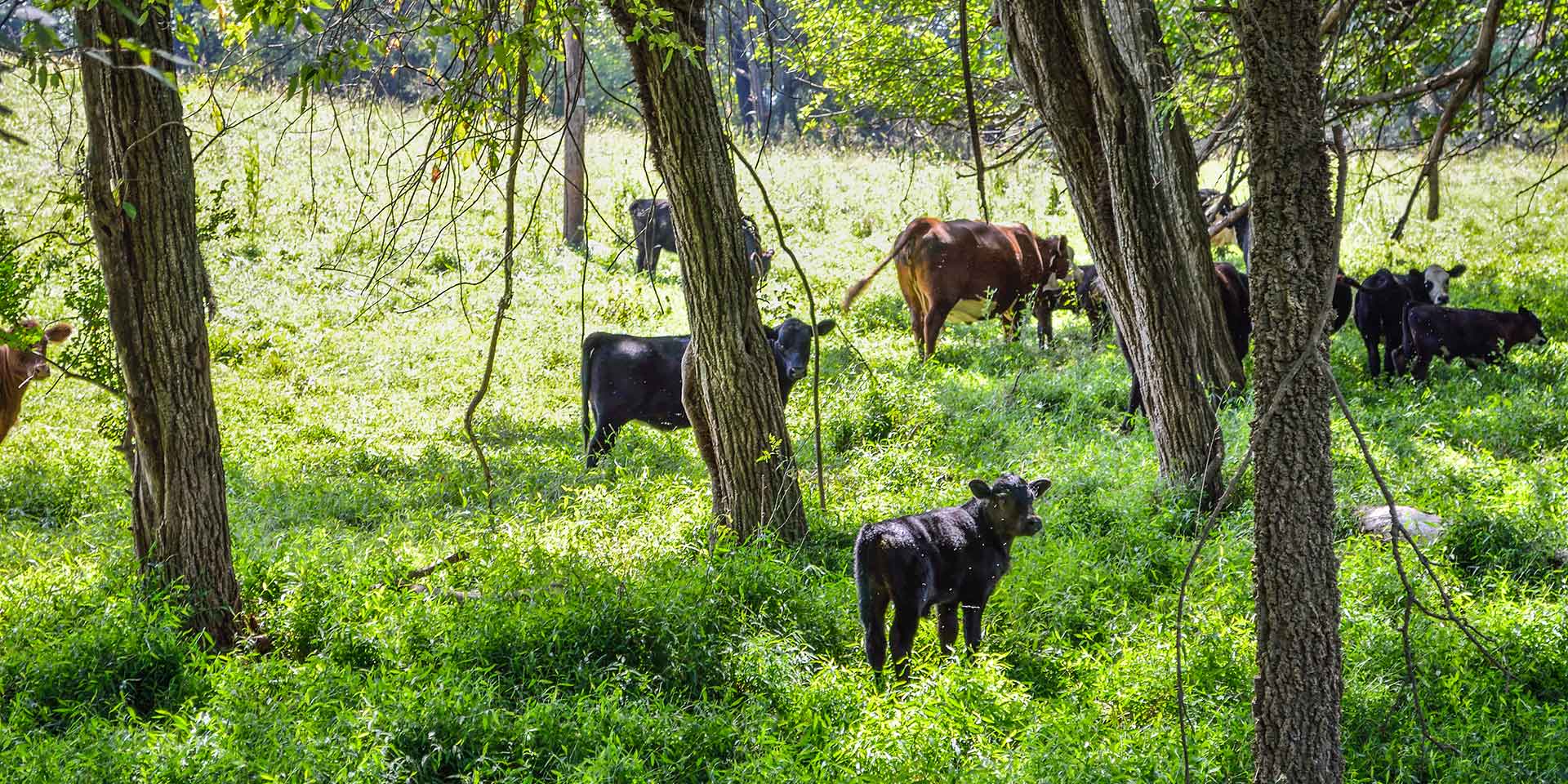
Interest in native trees like hickory and their nuts is growing as agroforestry — an Indigenous method of sustainable land management and farming that integrates trees and shrubs with livestock and/or crops — becomes more commonplace. A new generation of farmers is employing climate-change mitigation and adaptation strategies as alternatives to conventional agriculture.
Tree nuts can help diversify our food supply; utilizing wild nuts as a food source declined as our food system became more industrialized.
From trash to treasure
Despite a reputation as a “trash tree” because of its poor-quality lumber and unpalatable, bitter-tasting nuts, the yellowbud hickory is “just an absolutely incredible plant,” enthuses Nichols.
It is naturally drought and flood resistant; extremely tolerant of cold, heat and humidity; a good grower and the most widespread variety of hickory. Once matured, yellowbud trees require little care, produce for decades and because of their huge physical size — 80 feet or more — can support bigger agricultural systems.
At Yellowbud Farm in Massachusetts, organic breeder Jesse Marksohn is developing improved genetics, observing what he calls the trees’ “generosity and resiliency” and variations in their behavior in order to best propagate them. Over the past three years, he’s sold 5,000-plus saplings. While acknowledging that may be a small number overall as compared to a more developed tree nut like the chestnut, to him it indicates a meaningful increase in exploring the yellowbud’s use in tended contexts.
Agroforestry is important, says Noah Simon, a partner in Breadtree, so a region can grow enough food to meet its needs, and particularly for upstate New York. According to the USDA’s 2022 Agricultural Census, nearly 1,900 of the state’s dairy farms have gone under since 2017, endangering valuable agricultural land. Simon believes agroforestry could offer an ecologically and economically viable succession plan for the properties.
Breadtree has planted approximately 17 acres of yellowbuds there. It’s also constructing a tree-nut processing plant and conducting research like trialing interplanting strategies. Simon hopes to sell oil by 2029; it takes from five to seven years for trees in a tended context to mature; wild trees take up to 30, says the USDA.
“In an agroforestry setting or silvopasture, where people have cows, sheep or animals pastured in the area with scattered hickories spread there,” says Thayer, “that’s shown to be really labor efficient, really economically productive. You tend to get very productive hickories in those scenarios.” Hickories pull calcium from the subsoil and drop it as loose litter, increasing grass production.
Some tree crops produce more oil per acre per year than field crops, adds Thayer. In well-managed contexts, canola produces 140-150 gallons per acre per year. The pecan tree, which as the yellowbud’s closest relative Thayer assumes is a reasonably good analog, can produce 150-200 gallons per acre. He thinks that number is a fair expectation for the yellowbud. “I can’t overemphasize how much more sustainable” they are as an oil source than any field crop,” he says. Simon says that regardless of harvest conditions, these kinds of nut trees produce much more in an orchard or savanna landscape than they do in a closed canopy forest because they have much more access to the sun.
Wild yellowbuds, however, do present an untapped opportunity. Based on Geographic Information System (GIS) analysis and educated guesswork, Simon offers a rough ballpark of the current extent of wild hickories in New York State and their projected yield if harvested: He estimates that 1.1 million gallons of oil could be produced annually, conceivably replacing the annual olive oil consumption of approximately 4.4 million people.
The challenges — and potential pitfalls — of scale
In Johnson County, Iowa, Levi Geyer of Fancy Twig Farm has been taking advantage of his area’s unharvested sustainable resource, foraging hickory nuts on neighbors’ properties and public lands to produce oil.
He collects from late September to mid-November, kneeling and squatting to gather fallen nuts, an arduous task not many are willing to take on. That’s an issue if the industry is to scale. Though hand-harvesting is surprisingly efficient, some foragers and farmers often employ a tool called a nut wizard, which enables them to stand while collecting nuts. However, some theorize that foragers may be less inclined to conduct the pre-harvest preparation necessary to use it. Other harvesting equipment, like a vacuum, can be utilized depending on the area and operation scale.
At “a really great site,” Geyer, a recent college grad who was raised on a farm, can pick up to 15 gallons in an hour. He hopes to procure 1,500 gallons this year to produce 100 gallons of oil, the most of any producer.
Improved processing and a greater nut supply is key to making the oil more accessible to consumers and chefs. Geyer has designed and built dehuskers and other equipment, which he sells to the trade.
KTCC, currently an all-volunteer, grassroots group, gets its nuts from its producer-members. In addition, the cooperative wants to convince other tree owners to sell them their nuts and not cut down the trees. But, says Kudasik, “Changing people’s mindsets to think of them (yellowbud hickory nuts) as a high value, one of the most delicious foods you could ever eat, is going to take some work on our part.”
Like olive oil, hickory oil has a smoke point of 450 F and can be used for sauteing, roasting, baking and salad dressings. The oil’s nutritional value offers another competitive edge: Similar to olive oil, it also contains antioxidants, a high percentage of oleic acid and has a high content of monounsaturated and polyunsaturated fatty acids, which are beneficial for human blood vessels and heart.
Thayer pours some over blueberries. Kudasik loves it on his French toast.
“The mouthfeel in the body of it is great,” says Sam Gelman, chef-owner of The Webster in Iowa City. He purchased hickory oil from Geyer last year. Because the flavor is mild and he usually uses a roasted nut oil in his cooking, Gelman requested smoked and roasted versions. He employed them in a popular summer tomato salad with yuba, white soy sauce and yuzu juice. However, he says the artisan product is currently too expensive for larger-scale cooking use.
KTCC charges $22 for a 5-ounce bottle. Comparatively, a 16.9-ounce bottle of California Olive Ranch, an award-winning, regeneratively and commercially produced olive oil, costs $17.99 online. Despite hickory oil’s cost, purveyors have sold out of their stock. KTCC’s Elfers says numerous requests illustrate clear demand for the oil.
Looking toward the future
A friendly sense of collaboration pervades this group of enthusiasts. Participants are thinking long term: Various purveyor partnerships and joint projects regarding genetics, forest/tree mapping and field research, as well as several other processing hubs are in the works.
Geyer worries that if hickory oil becomes as popular as olive oil, it will become a commodity taken over by Big Ag and venture capitalists. “I want to show how we can produce food for our community in a way that re-localizes power,” he says, “and gives us options beyond the options that are given to us by billionaires, and to assert that we are the most capable at taking care of the land in a beneficial way.”
“This is a really interesting, important and big question,” says Simon, “with all of these kinds of novel agricultural industries that are emerging around tree crops in the Northeast. What is the right balance between growth and economies of scale and a scale of industrial production that can actually feed the population or impact the food system at any meaningful scale?” There’s a risk of falling into the ways of industrial agriculture, where the farmer is squeezed on price, intermediaries benefit, and the land is not well stewarded.
Geyer is leading with his values. He’s planting yellowbuds for free throughout his area to bring people together, reestablish connections between them and their food, and encourage others to plant the trees and use their gifts. His goal is to plant 500 trees each spring.
He says his work addresses problems of hunger, the environment and land access for beginning farmers like himself. “The underlying root cause behind environmental destruction is greed and consolidation of wealth. Just doing agroforestry does not address that.”
To Marksohn, the increasing efforts toward planting and foraging and the flourishing demand for hickory oil point to the beginnings of systemic shifts he’s hoping to bring about.
“We live on the garden planet. We can be in relationship with these sentient arboreal beings to co-create unbelievable abundance and biodiversity,” he says. “These (trees) are thinking, remembering, decision-making, sensory beings. They can provide for us and we can provide for them. We have a huge opportunity in one area with how many hickories are in the landscape to begin deepening that relationship and mutual respect. There’s all these other positive outcomes of human health and ecosystem health when we begin to do that.”
Get the latest food news from FoodPrint.
By subscribing to communications from FoodPrint, you are agreeing to receive emails from us. We promise not to email you too often or sell your information.
Top photo by Levi Geyer.
More Reading
RFK Jr. calls for regenerative agriculture — companies heed the call by greenwashing
April 6, 2026
The unexpected role of hair, fur and wool in sustainable agriculture
March 30, 2026
Oats can improve soil and water quality. All that’s missing is a market for them.
March 12, 2026
Your guide to buying and preparing a heritage turkey or pastured turkey this Thanksgiving
November 18, 2025
How urban orchards improve a community's access to fresh, healthy food
October 30, 2025
The meat industry smeared the Planetary Health Diet. Now its creators are back with more evidence.
October 10, 2025
From Ludacrisp to Cosmic Crisp: How new apples are bred
October 8, 2025
Can recycled soil blends support a more sustainable future?
September 5, 2025
This fall, get involved in one of these campus sustainability initiatives
August 26, 2025