


How to spot a true farmers market
As peak season begins, here’s how to spot a true farmers market and know where your produce really comes from.
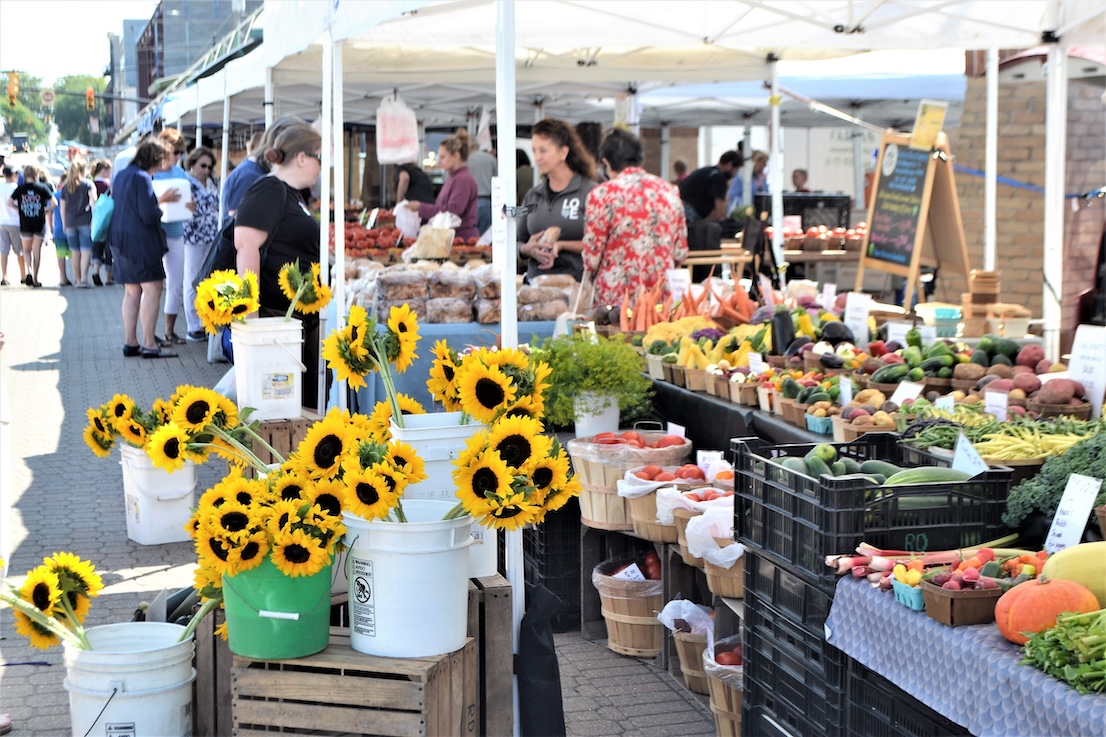
It’s prime time for nectarines, tomatoes and all the best summer produce. But one of the best places to source locally grown fruits, vegetables and other grocery staples like eggs and dairy — the farmers market — seems to be struggling with a few identity issues.
“I’m noticing a really weird thing where people are encouraging people NOT to go to their local farmers market because they have wholesale produce,” writes one user on Threads, as another user voices concerns about farmers reselling produce they didn’t grow. Meanwhile, a video on TikTok shows a market employee transferring Driscoll’s blueberries into berry cartons. “I’m sick of expecting produce, meats and homemade goods but instead getting vinyl graphic shirts that say ‘Mama’,” another person comments on Instagram.
People understandably want reassurance that when they shop at a farmers market, their money supports local farmers. Particularly in this summer of cyclospora, shoppers want to know they’re buying something better than what they’d get at a supermarket. And let’s face it: Though the term “farmers market” implies actual farm-fresh seasonal produce sold directly to consumers, it’s easily co-opted for marketing. (A grocery store chain with “farmers market” in the name does not a farmers market make.) So what makes a “true” farmers market? How can you tell if a market stand is selling produce they grew rather than reselling wholesale or store-bought items? If you have to wade through a bunch of t-shirts, soap and candles to get your groceries, does that mean your market isn’t local? Let’s discuss.
Know your seasons and growing region
How do you tell if a farmers market is legit? First, know your seasons; a stand selling out-of-season produce is a sign that they didn’t grow that food (with one caveat, below). FoodPrint’s Seasonal Food Guide allows you to search by location and time of year. Most state agriculture extension offices also offer seasonal charts, outlining when you can expect what, as do markets themselves.
Also know which products can be stored and sold later, such as tubers, root vegetables and apple varieties that keep well throughout the winter and into early spring. And remember: Growing seasons vary greatly based on location and weather events — flooding, drought, late freezes, extreme heat and so on — affecting farmers.
“Shoppers who are seeking out a fully local grocery experience should keep a close eye on the types of produce vendors are selling,” says Allie Bronston, who co-founded the new producer-only Harvey Park Farmers Market in Denver, Colorado, with her husband, Corey Sampson. “Here in Colorado, a red flag for reselling might be someone who offers products like mangos, bananas or avocados, none of which can grow in our climate.”
Produce should be fresh, adds Darlene Wolnik, program director at the Farmers Market Coalition. “Anything withered that was supposed to be fresh out of the ground should be questioned.” (An exception would be delicate fruit picked riper than what you’d find in a store; it bruises easily during transit.) If only one farmer from the bunch has a vastly different product than the rest, it’s worth asking why. But remember that operating out of the large-scale commodity system allows farmers to grow unique crops — think cold-hardy kiwi berries, gooseberries and currants — or different varieties of more common produce.
Shoppers who are seeking out a fully local grocery experience should keep a close eye on the types of produce vendors are selling.
When she managed a market in New Orleans, Wolnik recalls a farmer growing cold-hardy strawberries that ripened in November, when the strawberry season had traditionally started around February. “We had a few years when we had to be out by the table while at market, talking about the change to savvy shoppers, having the same info about these new earlier varieties on chalk signs, social media and in our newsletter about why we had them at the market so early,” she says. It took time, but that planning and transparency led to customer clarity and trust. “Now, all strawberry farmers use multiple varieties at all markets and shoppers know why.”
Look for “producer-only” markets
“Producer-only” (or “grower-only”) means that farmers and ranchers can only sell what they grew or raised, and prepared and specialty foods must be made in the state or region of the market. Check the market’s website or social media to see if they describe themselves as producer- or grower-only; this indicates the market does not permit resale, says Bronston. “When markets use this terminology, vendors themselves expect market organizers to uphold that promise with complete integrity, so customers can typically trust it.”
GrowNYC Greenmarkets in New York City require each producer to submit annual applications detailing crop plans, a list of products they want to sell and when each product should be available. “We have a handful of farmers who sold at that very first market on 59th Street in 1976 who are still in the program today,” says assistant director of food access and agriculture, Liz Carollo. “Even those farmers submit an application yearly.” A three-person inspection-and-compliance team also ensures that everyone adheres to strict producer-only standards.
This level of transparency and trust comes from markets managed by nonprofits or other entities with clearly communicated rules and regulations. “Some people really want to dive in and know where their food comes from, get to know their farmer and know every detail about growing practices,” says Carollo. “But a lot of people just want to see that Greenmarket brand and [know they can] trust this. There’s accountability here.”
At the Harvey Park Farmers Market, an exception to the producer-only rule came when an April freeze wiped out entire crops for the market’s two fruit vendors based in Western Colorado’s Delta County. One vendor, Topp Fruits, sells fruit through a partnership with Rancho Durazno, another Colorado fruit farmer whose crops in neighboring Mesa County were spared. “That had to be an adaptation to our mission, just due to circumstances,” says Bronston.
Know the type of market
Today, farmers market sites in the U.S. number around 8,000, says Darlene Wolnik. The lack of a national definition of what exactly comprises a farmers market means the experience of visiting one varies greatly from place to place. There also isn’t a central entity passing down farmers market rules. About 25 states have independent farmers market associations providing support in various aspects of market management. The Farmers Market Coalition does the same on a national level, while also working with states that don’t have their own farmers market association.
“The culture of the region has a lot to do with how farmers markets are developed,” says Wolnik. A single definition would be difficult to create since markets reflect their agricultural sources and cater to a wide range of shoppers.
Farmers markets are the center of well-functioning local food systems, she adds. “It’s the space where you can walk in, ask questions and buy seasonally available groceries. Because the community informs how the market operates, it’s also a democratic center.” Porous by design, a farmers market can shift to fit the needs of the community over time.
As someone who is also writing a book about the modern farmers market, Wolnik spends a lot of time researching various aspects of these venues. Her advice: Know the market type. “Flagship” markets tend to be large, often with a “festival atmosphere” meant to attract a wide range of residents and visitors; you’ll often see more prepared foods and crafts here. “Neighborhood” markets serve specific communities, with a focus on education and specifically curated local vendors. “Campus” markets — close to hospitals or office buildings — are meant for people working nearby. They may not always prioritize local food and may even allow one farmer selling for a few other farms. “Food security” markets cater to underserved communities, often centering neighbors as the main vendors selling produce.
Each market organizer chooses their design and goals for the site. Rather than asking if something meets your definition of a farmers market, it can be more useful to ask what type of market it is and set your expectations accordingly. Don’t assume every market will be alike; shop around to find the one that fits your shopping style.
“It might be a community market, where it’s all businesses putting things out in front of their door, or it might be an organic, producer-only farmers market that is focused on the neighborhood. That’s the beauty of the 8,000 market sites,” says Wolnik. A diversity of types means shoppers can support the markets that work for them. “As long as it’s transparent, then I can choose.”
Why you might see more crafts in certain areas
Though Greenmarket remains eager to stick to their mission of helping small- and medium-sized farms within the region stay viable, Carollo doesn’t look down on markets that offer items beyond produce. One of her favorite markets in Alabama features both local produce and a bounty of jewelry, baskets, shell art and other coastal crafts. “There’s something for everyone in that instance, but it’s very clear to see that the produce being sold comes directly from the producer,” she says.
It’s hard to build revenue from selling food alone, adds Bronston. She and Sampson have day jobs as well, so although they operate the farmers market as a business, their focus remains on the community. “Our bottom line isn’t as important for us as making it the space that we really want it to be, and that can come at the expense of some commission revenue if you’re not adding artisans,” says Bronston.
For some communities where local food isn’t as abundant, adding crafts can help a market stay afloat. “The combo of what does your growing season look like and what does revenue need to look like to remain open — maybe you start to embed other things so that the market can exist,” says Bronston.
The community holds the power
Ultimately the local community informs vendor selection. “The least understood thing about farmers markets is that they are managed by somebody or some entity,” says Wolnik. No large corporation calls the shots; you’re not in a supermarket chain or big box store.
In this moment when we’re contemplating AI and climate issues, a farmers market in a local neighborhood is a really beautiful answer to a lot of questions. Existentially, it feels like a really important part of a community.
“You have an influence over whether that is a producer-only market by going in to talk to that manager,” she says. Many markets have clearly marked information booths; to find the market manager, start there. If it’s not obvious who’s running the market, ask a few of the vendors to find out who’s in charge. Then, if you think someone is reselling produce they bought at a grocery store, you can speak up. If you’re not happy with an aspect of the market, you can ask questions about why the market is run that way.
“I hope that producer-only farmers markets continue to gain some traction in communities because we’ve seen just how beautiful it can be,” says Bronston. “In this moment when we’re contemplating AI and climate issues, a farmers market in a local neighborhood is a really beautiful answer to a lot of questions. Existentially, it feels like a really important part of a community.”
Related Posts
 Local Food & Farmers Markets, Sustainable Agriculture
Buying better beans: Look beyond the supermarket to find tasty, affordable dried legumes
September 15, 2026
Sourcing dried beans has never been easier as farmers across the country are producing beautiful and flavorful varieties.
 Cooking Sustainably, Local Food & Farmers Markets
10 ways to save money at the farmers market
July 31, 2026
Fresh, local, seasonal food is for everyone. Use these money-saving tips to get the most from the farmers market.
 Cooking Sustainably, Food Waste
Beyond fermentation: A new book explores the many methods of food preservation
July 17, 2026
While fermentation may be the food trend of the moment, Julia Skinner's new book explores the full spectrum of food preservation techniques.