


Buying better beans: Look beyond the supermarket to find tasty, affordable dried legumes
Sourcing dried beans has never been easier as farmers across the country are producing beautiful and flavorful varieties.
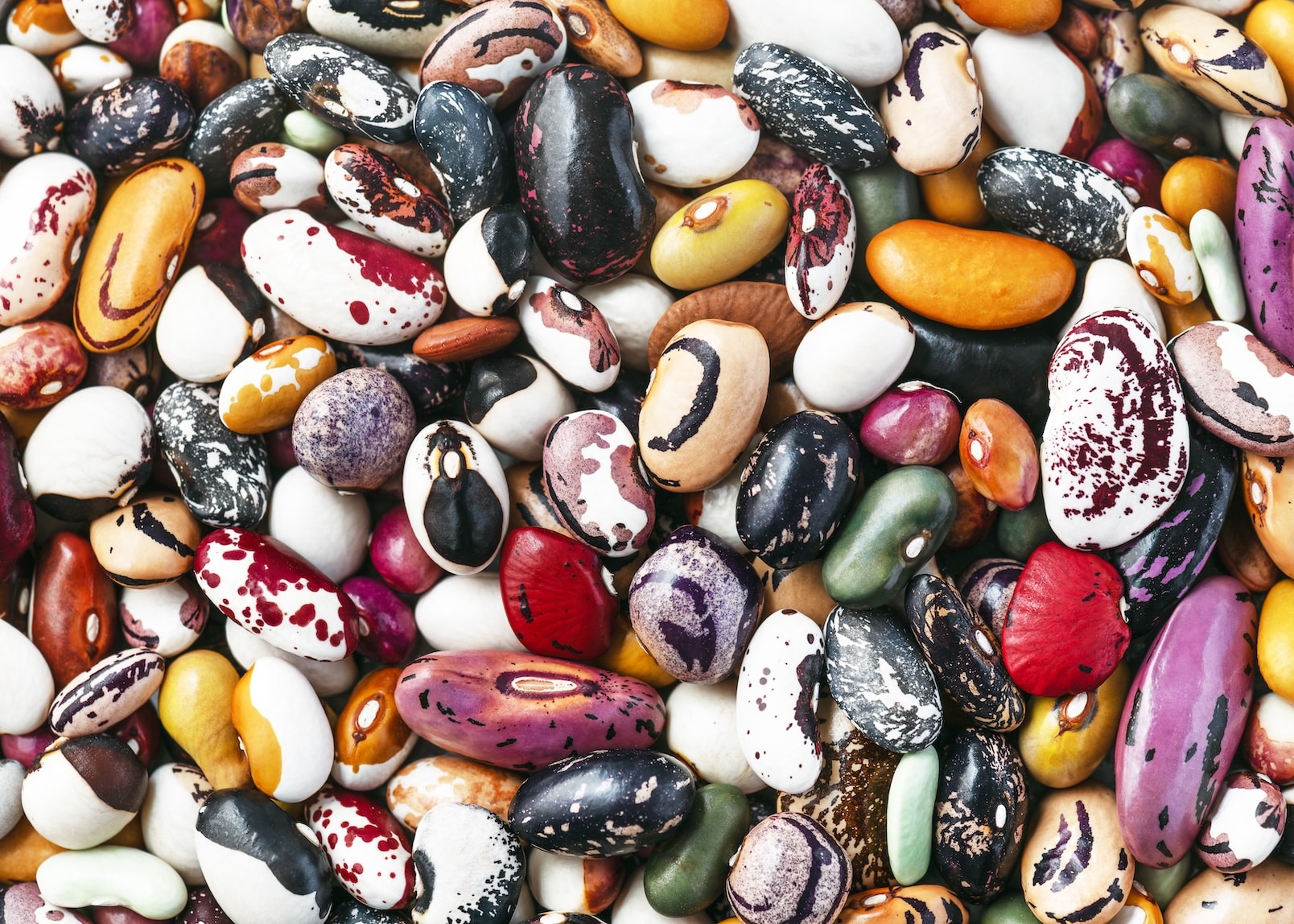
Do you find yourself more interested in beans lately? Maybe you ate a particularly tasty bean dish at a restaurant, marveled at a handful of kaleidoscopic heirloom beans on Instagram or have a bean-obsessed friend who keeps telling you about her daily dense bean salad habit. Whatever your reason for eating more beans, one of the best ways to make delicious — and cost-effective — beans at home is to cook dry beans.
As far as bean sourcing, your choices aren’t limited to stale supermarket beans or fancier options from a bean club (though no shade to either option). Farmers grow beans all around the country. You can buy their beans at a farmers market, from a local market sourcing regionally or from a farmer who sells beans directly from their website. If you’ve been waitlisted for a bean club, you may not be surprised to hear that some farmers are struggling to meet a growing demand for fresh crop beans of all colors and sizes, whether due to climate change, the cost of farmland or other hurdles. Below, a few farmers detail the specific challenges they face and how they’ve risen to meet them.
A bean collective in upstate New York
New York state used to be the top producer of dry beans in the U.S., with the modern dry bean industry starting there in the mid-1800s. In the Finger Lakes region, “A lot of the markets and processing went away but it’s within memory that it happened,” says Kristen Loria. In 2021, she founded Buttermilk Bean, a bean farmer collaborative. “It felt like something that has gradually been lost in the past 50 years or so, and that there was an opportunity to help revive something that used to be here,” she says.

Buttermilk Bean sells locally in the Finger Lakes and Hudson Valley regions, plus a few spots in Philadelphia and one in Chilmark, Massachusetts. You can also sign up for a winter or spring bean share to receive 8 to 16 pounds of freshly harvested, dry beans directly in the mail. While most of Buttermilk Bean’s customers are in the Northeast, they have bean share members all over the country, “even one in Alaska,” says Loria. “A lot of what we’re doing is celebrating the regional bean culture, feeding our regional community,” she says, but one beauty of dry beans is their ability to be shipped. “That’s opened a lot of opportunities for us.”
The farmers in the Buttermilk Bean collective grow a variety of beans organically, highlighting staple, heirloom and modern varieties alike: Think black turtle, kidney and pinto, but also tiger eye (swirly, dark and light brown skin with notes of chestnut), purple stardust (speckled, mild-flavored like a cannellini) and flor de junio (varying shades of thin, mauve skin, with a creamy interior). Four farms, including Loria’s own Lo Rida Farm, currently grow at a small scale — 1 to 2 acres — near Ithaca, New York, with a few larger organic farmers farther west. The collective model makes it possible for them all, regardless of size or bean type, to find a market. “It gives us the opportunity to have more varieties to share with our customers,” Loria adds.
Creating more value through specialty beans in Michigan
Farther west, Kevin Messing runs Sheridan Acres in Ubly, the heart of Michigan bean country. The state produces more than 400 million pounds of edible beans per year — 17 percent of the beans grown in the U.S. — making them the second-highest bean producer in the country, behind North Dakota. “Michigan was a huge navy bean producer through the mid-1900s. Now over half of the Michigan acres are black beans,” says Messing, whose grandparents and great-grandparents also grew beans.
Messing has worked to expand what a local Michigan bean can be. An orca bean — white-skinned with black speckles, resembling the whale, and creamy and mild-textured within — first drew Messing to heirloom varieties. This year, in addition to other staple crops like wheat and corn, he’s growing 15 acres of heirlooms — sold directly to consumers and restaurants — with 20 to 25 more acres of black beans sold commercially to bean companies.
I’m trying to create value in farming a system versus just chasing narrow margins and dollars.
“Access to farmland and farmland in general is so expensive, and I’m really lucky that my family farmed and my dad allowed me room to experiment,” says Messing. He and his wife, Sarah, bought their own section of the farm, but “I’m trying to do more with less.” Growing and direct-marketing heirloom beans created more value. Whereas neighboring farms work on larger scales within commodity markets, “I’m trying to create value in farming a system versus just chasing narrow margins and dollars.”
Growing beans without much water in Colorado
While summers in New York and Michigan tend to be hot and humid, farther west in dry and drought-prone Colorado, beans also thrive. “They’re a lot more drought-tolerant than people think they are, especially when you get into pintos, black beans and cowpeas,” says farmer Roy Pfaltzgraff. In northeastern Colorado, where Pfaltzgraff runs PFZ Farms with his wife, Emily, and parents, precipitation averages 14 inches in a year. They’re a dryland farm, growing crops without additional irrigation.
“We are able to keep our own seeds back and we find we get better quality beans because they’re acclimated more to our soil,” says Pfaltzgraff. Those saved seeds handle the dry conditions better than seed beans grown under irrigation. Beans work well in a rotational crop system, too. “It’s one way to spread out the seeding and harvest and acres, and make us more efficient with the equipment that we have,” he says.
While they’ve grown a wide variety of dry-climate–friendly legumes, including chickpeas, pintos and red beans, “The one that we’ve consistently grown is black-eyed peas, which are a type of cowpea,” says Pfaltzgraff. They’re a little more challenging to grow and don’t yield as well as other beans, so “farmers tend to steer away from them a little bit more,” and — in a classic case of supply and demand — he can fetch a better price from bean companies. “That’s one reason why I started raising beans,” says Pfaltzgraff. There are about eight bean companies within 60 miles of the farm, “so I can call around, see who has the best price and then deliver there.” PFZ Farms also sells their beans and other products directly through their website. Customers can opt for shipping or pick up on the farm.
Protecting Indigenous beans and growing methods in Arizona
In Arizona, where water is also scarce, seed-saving is especially important for the Button family. They operate Ramona’s American Indian Foods, farming along the Gila River in Sacaton. The Buttons grow many Sonoran Desert food crops, including bavi — also called tepary beans — small, high-fiber, high-protein beans long cultivated by the Akimel O’odham and Tohono O’odham people.
Because water was diverted from the Gila River Indian Community in the late 1800s and early 1900s, the area went through a prolonged drought, forcing many to quit farming. The few that stayed tried to keep their traditional crops as well as they could, but those dwindled over time. Although tepary beans are drought-tolerant, that lack of water put so many farmers out of business that the bean inventory ran so low as to nearly become extinct.
“My father said you have to protect this bean,” says Ramona Button, who founded the farm with her husband, Terry, in 1974. Ramona’s father, Francisco Smith, was a farmer and seed saver; he kept white and brown tepary beans, allowing Ramona and Terry to revive the bean. Initial demand came primarily from elders. “And so it was a long process of reintroducing the bean, bringing it back to where it was available, and then trying to find a way to introduce it back to the younger generations that had become unaccustomed to them,” says Terry Button, who manages the farm. “It’s gradually become recognized again as a staple food in Indian communities. And we’re proud to have been a part of facilitating that resurrection of the crop.”
You can buy their beans (and other products, including wheat berries, garbanzos and heritage corn) at several stores throughout Arizona, the Southwest and beyond, or directly from their website. “We’ve had some remarkable Native chefs that have shared their efforts and promoted our beans just by purchasing them and putting them on their menus,” says Terry Button. “We’re quite thankful for all of that. It’s given us a lot of exposure. It’s also given us a lot of encouragement to be able to sustain what we do, because there are times when you wonder if you want to continue.”
Climate instability is making growing beans hard all around the country
It’s obvious but still worth noting: Extreme weather makes farming hard, and it’s getting harder. “You just never know what you’re going to get,” says Loria. In New York’s Finger Lakes region, a wet spring can delay planting, and rain can impact harvest, too.
Since Buttermilk Bean farmers grow organically, pests like the bean beetle are hard to manage as well. “When something like that comes along, you have to think about ways to adapt,” says Loria. “Farmers are used to a million surprises every season and just doing their best to make it work, get a crop.”
In Michigan, beyond consistently planting a week or two earlier than normal due to warmer temperatures, the weather variability the last three years means either too much or not enough rain, plus extreme heat. “It’s amazing in 10 years how much I feel like it’s changed,” says Messing.
“The variability in our climate has definitely increased over my lifetime, but it’s even noticeable over the last five years,” says Pfaltzgraff.
Some years are complete losses, says Terry Button, with beans not even coming up after planting. Other years, monsoon and winter rains can damage bean crops. “When that happens, they’re almost not recoverable at all,” he says, since it’s too hard to sort through the bad beans to get the few good ones left. “And the cost of labor today exceeds the value of the product that you’re trying to work with.”
Beans’ unique challenges
Equipment also presents a challenge, especially for farmers working with heirloom beans on a smaller scale relative to large operations. “The commercial varieties have been bred and more adapted to the conventional styles of harvest,” says Messing. While a farmer can harvest black and navy beans with a combine harvester, heirlooms tend to ripen unevenly and grow closer to the ground. Modern combines can’t handle unripe, green material and don’t pick up those lower-hanging bean pods. Messing found it more cost effective to source older machines for harvest, which do a better job harvesting heirloom varieties and work better for his small scale.
Beans must also be cleaned prior to selling, which requires its own equipment. “I’m in an area where there are 10 or 15 companies that clean, bag and ship beans, but they’re cleaning millions of pounds a year,” says Messing. “So for me to bring in 2,000 or 4,000 pounds of one bean — they can’t clean it.” Old, repaired small-grain cleaning equipment works best for him, “because the cost of new is, again, astronomical as well.”
“It’s not obvious where to go or even what type of equipment is out there,” says Loria. For harvesting in particular, “It isn’t something that you can just call up a dealer and find.” Because Buttermilk Bean operates on a collaborative model, they’re able to share equipment — including machines for cleaning, sorting and packing — which also keeps operating costs down.
For all their difficulties, farmers grow beans for many reasons. “A fundamental tenet of organic production is that you really do need a diverse crop rotation,” says Loria. Legumes can fix nitrogen back into the soil and replenish nutrients depleted from other crops like wheat and corn. Since diseases and pests target plants in the same family, planting something different in the same field, like beans, disrupts those cycles.
And financially, beans represent an opportunity for farmers. “If you’re mostly selling to commodity markets, you don’t have a lot of control over your prices, which often are tied to livestock feed and global commodity prices,” says Loria. As a food-grade crop, dry beans can provide a more stable and higher return for farmers, especially when sold within regional markets and direct to the consumer. That isn’t to say that farmers are out there price-gouging on beans; rather, they’re able to set prices that accurately reflect the labor required to grow their product.
Why local and regional beans are worth seeking out
Beans are like any agricultural product: If you take a little care with sourcing, you’ll not only taste the difference, you can ask questions about growing practices and support people who value nutrition and soil health. Pfaltzgraff recalls his shock at the amount of herbicides, fungicides and insecticides that large-scale farms can apply. “If you buy direct from the farmer, you can learn more about what their practices are and make decisions from that,” he says.
“I support all bean consumption, even if they’re not mine; I think eating beans is the most important thing,” adds Messing. But one thing that makes farmers like him different? They’re growing, cleaning and packaging everything right there, working with the beans from start to finish. “Anyone that’s buying from us, they’re supporting our farm directly.”
I support all bean consumption, even if they’re not mine; I think eating beans is the most important thing.
As consumers, we have so many options. It’s worth spending a few more dollars to benefit businesses that in turn support their own communities. “My mom was a nurse, and she saw the decline in the health of folks, and the need, the people wanting the foods back into our system,” says Brandy Button, one of Ramona and Terry’s daughters. “We’re so excited that our tribe owns their own grocery store. Our foods are now available for our people to go in and purchase.”
Beans, humble though they may be, have become more than a source of protein and fiber. “We’ve created our package in a way that it’s a piece of knowledge when we hand it to you,” she adds. “It’s knowledge, nutrition and history. And that’s what we want to pass on to everyone we’re sharing it with.”
Where to buy beans
- Beanstory sources organic, single-origin beans from small regenerative farms.
- Blue House Farm offers California-grown organic heirloom beans.
- Buttermilk Bean is a New York-state farming collective with a seasonal heirloom bean subscription; beans are also available for mail order or local pickup.
- Ramona Farms is an Indigenous-owned and -run bean producer selling tepary and other dry heirloom beans (plus grains).
- Rancho Gordo specializes in fresh-harvest heirloom beans indigenous to the Americas, which are available for online order (and through their subscription-based — and typically sold-out — Bean Club).
- Sheridan Acres, a fourth-generation Michigan family farm, sells a variety of heirloom beans online.
Related Posts
 Sustainable Agriculture
A new book celebrates radicchio, a cold-season stunner
October 20, 2026
Explore radicchio’s rich history, diverse varieties and culinary uses in Lane Selman’s new book celebrating the beloved Italian vegetable.
 Plastics & PFAS, Sustainable Agriculture
The problem of plastic mulch in organic agriculture
September 30, 2026
Organic farmers rely on plastic mulch to control weeds, but a change to USDA organic standards could allow biodegradable mulch film if experts can agree on their impacts on soil.
 Social Justice, Sustainable Agriculture
A new book honors Black contributions to American agriculture
September 23, 2026
Eleventh-generation farmer Michael Carter Jr. talks about his new book “Africulture” and how Africans and their descendants made American agriculture — and America itself.