


Celebrating beans in Sean Sherman and Crystal Wahpepah’s new cookbooks
Cookbooks by Sean Sherman and Crystal Wahpepah highlight beans’ deep roots in Indigenous foodways.
Arikara. Deseronto Potato Beans. Cranberry beans. Pintos. Black, brown and white tepary. These are just some of the beans — both heirloom and common — that populate the pages of the recent cookbooks by two celebrated Indigenous multihyphenates: “A Feather and a Fork” by Kickapoo chef-restaurateur-food warrior Crystal Wahpepah and “Turtle Island” by Oglala Lakota chef-restaurateur-activist Sean Sherman, who is also the founder of the nonprofit NATIFS. Crack the jewel-toned covers of these books and you’ll find beans transformed from humble dried seeds into soupy bowls, chilis and stews; salads and succotashes; tamale and taco fillings; even tender dessert cakes.
Though the broader applications may sound familiar, the beans themselves may not. And that’s because these chefs are on parallel missions to highlight the varied foods and ingredients of Native American cuisine, the stuff that has always grown and grazed on this land, swam in its waters, and been cultivated by the people who lived here long before European colonizers arrived: corn, chokecherry, wild onions, squash; bison, turkey, salmon and trout; black walnuts, acorns, chestnuts, and yes, beans.
Beans, of course, are a pillar of the mutually beneficial Three Sisters planting method, a foundational practice of Indigenous agriculture and diet in which beans, corn and squash are grown — and often eaten — together. “The three crops nurtured one another and the soil like family,” writes Wahpepah, “that is why they’re called the Three Sisters. Beans pulled nitrogen from the air and fed it to the dirt. Squash spread their leaves as ground cover to tamp down weeds so that the corn could shoot high, reaching for the sun.”

A similar philosophy of interdependence and caretaking describes Wahpepah’s approach to cooking. Restoring health — physical, spiritual and emotional — to her community is a critical part of her mission. And beans are one essential pathway. For the Kickapoo, she says, “beans have been a critical component of our foodways for nearly eight hundred years.” Although she typically cooks with drought-resistant tepary beans grown in Arizona, she notes that all beans “are very important to the health of our bodies as well as the land. … Beans are low in fat and sugar, and high in soluble fiber, which makes them a powerful deterrent to chronic inflammatory diseases such as diabetes and high blood pressure.”
Sherman, too, celebrates the nutritious benefits of beans and other Indigenous ingredients, stressing the importance of normalizing “these health-sustaining foods. That was the early driving force behind my work — to help address the health issues plaguing our tribal communities, including high rates of diabetes, obesity, and heart disease.”

While some of these nutritious foods must be foraged, like crabapples and goldenrod, or hunted, like beaver and moose, beans are a highly accessible and affordable mainstay. “Several species of beans are native to the Americas,” writes Sherman, “including some of the most common ones we eat today, like black beans, pinto beans and cranberry beans as well as lima beans and runner beans.” Both chefs celebrate unique heirloom varieties specific to a particular region and/or tribe, but supermarket-ubiquitous varieties are welcome at the table, too. As Wahpepah encourages, “Make substitutions where necessary. … More than anything, I want the idea of Native American food to not be an anomaly. These bright, healthy, sustainable foods and foodways are the truly original American diet, grown naturally and made here for millennia. We should not be strangers to these foods, but in community with them.”
After all, beans, notes Wahpepah, “are one of nature’s most versatile gifts.”
Sourcing Indigenous and heirloom bean varieties
Both Sherman and Wahpepah source their foods very intentionally, with the goal of decentering European ingredients and lifting up Indigenous producers, farmers, foragers, seed savers and beyond. Their restaurants and cookbooks highlight foods that are seasonal, hyperlocal or hyperregional, foraged, hunted, homegrown and rooted in tradition without being hemmed in by it. While some ingredients may be difficult to find for that reason, the beans are among the most accessible: “Indigenous seed savers are working to revive these heirloom varieties and reunite them with their ancestral lands and people,” writes Sherman. Seek them out from some of the purveyors below, but also feel free to swap in like for like.
NATIFS (North American Traditional Indigenous Food Systems): Nonprofit founded by Sean Sherman to promote Indigenous foodways education and facilitate Indigenous food access. Their shop sells heirloom beans and other Indigenous foods, food products and more
Native Seeds/SEARCH: Conserves and shares the seeds of the people of the desert Southwest and Mexico
Ramona Farms: A Native-owned farm selling beans, grains and other products
Tocabe Indigenous Marketplace: A brick-and-mortar eatery in Colorado that also sells Native-produced ingredients
TrueLove Seeds: A farm-based seed company offering culturally important and open pollinated vegetable, herb and flower seeds
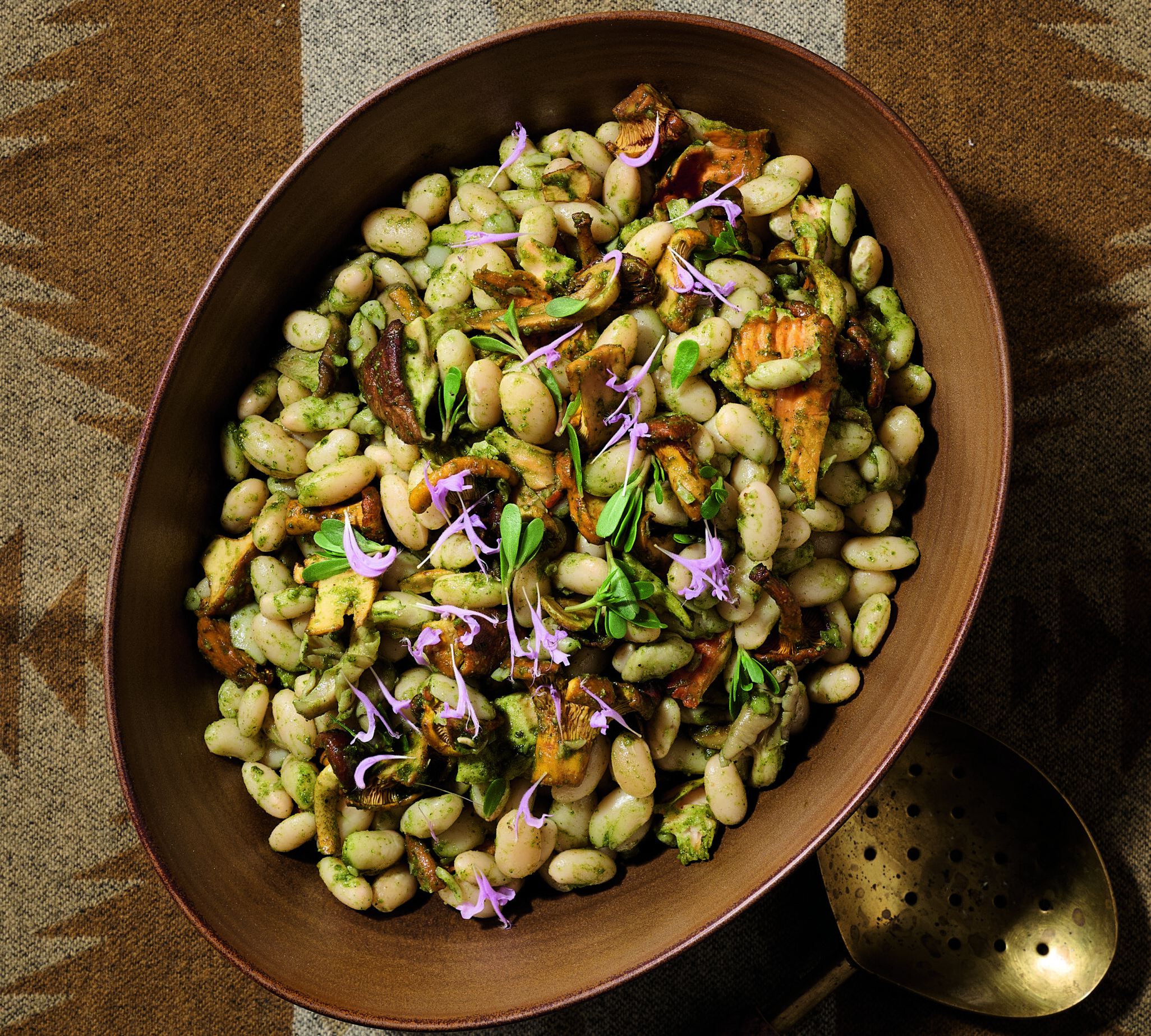
Recipe: Deseronto Potato Beans, Roasted Mushrooms, and Purslane
Sean Sherman, “Turtle Island”
Serves: 4 to 6
The Deseronto Potato Bean is a Mohawk heirloom from the Tyendinaga Reservation in Ontario that has a starchy, potato-like texture. You can seek out seeds to grow in your garden or substitute other large white beans in this simple, earthy dish, featuring roasted mushrooms, ramp powder, and the juicy crunch of purslane. You’ll need to soak the beans overnight.
Ingredients
1 cup dried Deseronto Potato Beans or other large white beans, such as cannellini, soaked overnight and drained
Sea salt
1 pound mixed wild mushrooms, such as chanterelles, sliced ½ inch thick
1½ teaspoons Rose Hip Powder (see below) or store-bought
2 tablespoons Ramp Powder (see below) or 1 tablespoon garlic powder and 1 tablespoon onion powder
2 tablespoons cider vinegar
1 tablespoon maple syrup
¼ cup sunflower oil
1 cup fresh purslane, coarsely chopped, for garnish
2 tablespoons fresh or dried wild bergamot
Method
In a medium pot, combine the soaked beans with water to cover by 2 inches and cook for 45 minutes to 1 hour 15 minutes, until tender. Drain and let cool. Season with salt and let stand so the beans can absorb the seasoning.
Position the rack in the middle of the oven and preheat the oven to 400°F.
Spread the mushrooms over a large baking sheet and roast for about 15 minutes, stirring once halfway through, until wilted and tender. Season well with salt and sprinkle with the rose hip powder.
In a bowl, whisk together the ramp powder, vinegar, syrup, and oil. Fold in the seasoned mushrooms and the cooked beans. Taste and season with salt.
Transfer to a serving bowl, garnish with fresh purslane and wild bergamot flowers, and serve.
Ramp Powder
To make ramp powder, you can dehydrate ramp leaves in a dehydrator or arrange them on racks in a dry room near a fan. When the leaves are completely dry, pulverize them in a food processor. Store at first in a paper bag to make sure there is no residual moisture, then transfer to a jar, seal tightly, and keep in a dark place for up to 1 year.
Rose Hip Powder
Makes: ⅓ cup
If you’re making a powder from rose hips you gather yourself, make absolutely sure you remove all of the seeds. They are hard enough to chip a tooth!
½ cup dried seedless rose hips
Put the dried seedless rose hips in a spice grinder (or a coffee grinder that isn’t used for coffee, since you don’t want the powder to taste like espresso) and grind them to a fine powder.
“Reprinted with permission from Turtle Island: Foods and Traditions of the Indigenous Peoples of North America by Sean Sherman with Kate Nelson and Kristin Donnelly © 2025 by Sean Sherman. Photographs copyright © 2025 by David Alvarado. Illustrations copyright © 2025 by Jimmy Dean Horn Jr. Published by Clarkson Potter, an imprint of Penguin Random House.”
Related Posts
 Cooking Sustainably, Local Food & Farmers Markets
10 ways to save money at the farmers market
July 31, 2026
Fresh, local, seasonal food is for everyone. Use these money-saving tips to get the most from the farmers market.
 Cooking Sustainably, Local Food & Farmers Markets
How to spot a true farmers market
July 30, 2026
As peak season begins, here's how to spot a true farmers market and know where your produce really comes from.
 Cooking Sustainably, Food Waste
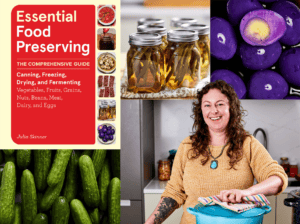
Beyond fermentation: A new book explores the many methods of food preservation
July 17, 2026
While fermentation may be the food trend of the moment, Julia Skinner's new book explores the full spectrum of food preservation techniques.