


Not your grandma’s Tupperware: A new era of meal prep
Meal prep is gaining popularity as climate and affordability concerns grow, with today’s preppers embracing tools beyond plastic Tupperware.
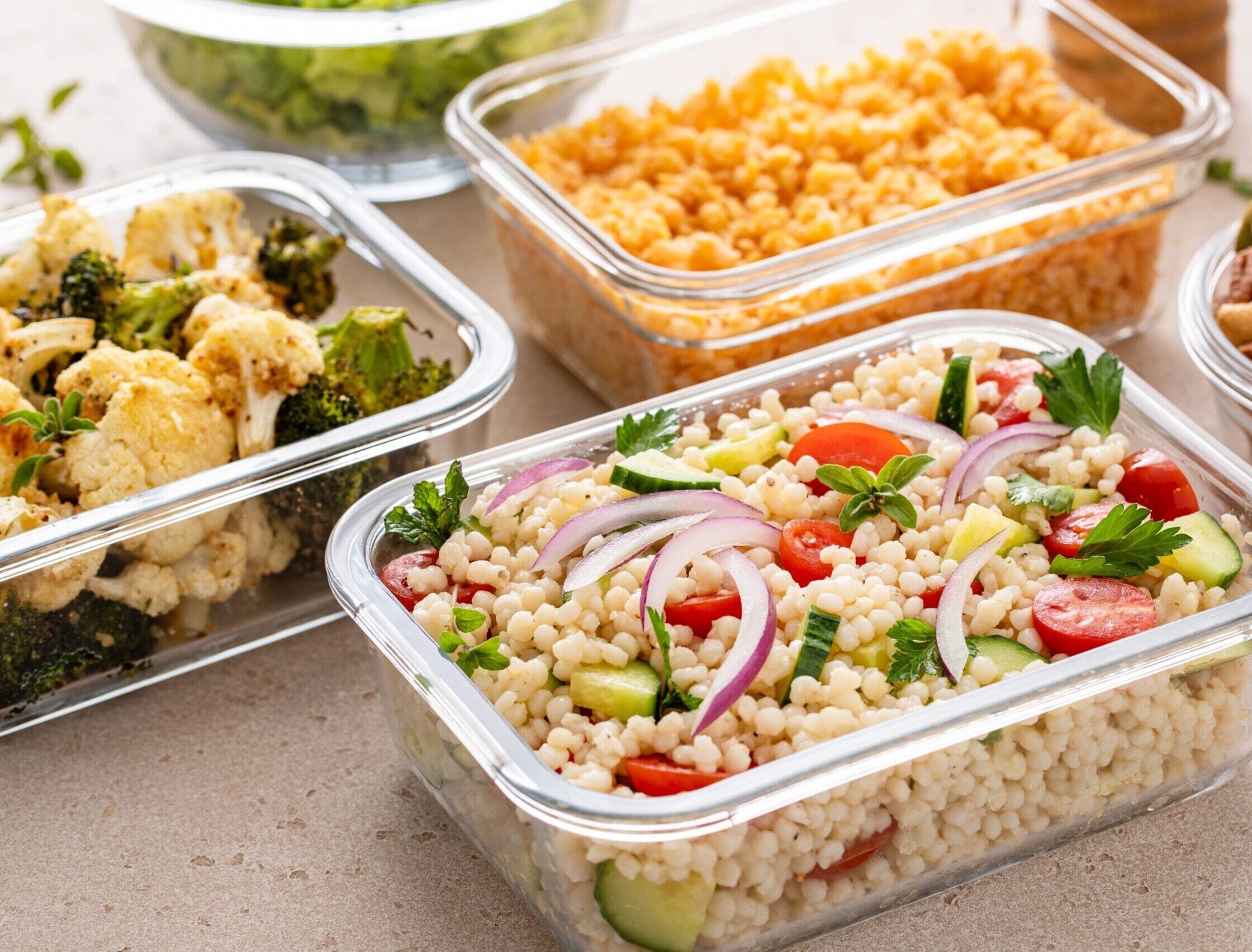
If you spend much time on the internet, then you’ve probably witnessed a scene just like this one: Rows of perfectly portioned meals, placed into food-storage containers and arranged on a countertop in a sparkling clean kitchen, as a visibly fit person shows off their week of meal prep. They look organized, like they have their life together. But if the idea of choking down the dry chicken breast that was cooked on Sunday for your work lunch on Friday sounds deeply unappealing, you’re not alone.
Meal prep is often framed in these glossy, fitness influencer terms that don’t work very well for those who view food as more than fuel but also as an enjoyable part of daily life. This sort of content suggests that the purpose of meal prepping is, first and foremost, to optimize one’s health. “Meal prep … tends to live predominantly in that gym bro world of restriction, of, like, I want to get exactly the right macros,” says Sarah Hart, a food educator and cooking content creator. “But then I think now with the affordability crisis that we’re having just with groceries, it also lives in a planning and budgeting realm, too.” Although meal prepping can be a healthy choice for a lot of people, it can also function as a strategy to reduce food waste and save money in the kitchen — not to mention time, particularly for busy families.
In the midst of our worsening climate and affordability crises, meal prep is exactly the sort of tool so many home cooks need. It has moved beyond the fitness influencer sphere, with food educators and authors, content creators and parents all embracing food planning and preservation as both a cost-cutting measure and a path toward a more sustainable kitchen. To do it, they’re using the practices past generations depended on during tough times — like canning and dehydrating — while utilizing new approaches designed for modern lifestyles.
The birth of food storage
Long before the era of the gym bro, long-term food storage looked very different. Widespread use of home refrigerators didn’t take off until the late 1920s. It wasn’t until 1946 that the first consumer food-storage solution, Tupperware, hit the market. Tupperware’s first product was called the Wonderbowl, a plastic food-storage container that changed the way we save leftovers. Before this point, homemakers sometimes covered extra food with shower caps, an undeniably creative idea but one with limited practicality. There was a gap in the market for a solution that preserved food for a longer period of time while also having some degree of portability: Tupperware successfully met that need. At the time, the idea of using plastic to create this kind of vessel was revolutionary, and the product was regarded specifically for its strength and airtight seal.
Tupperware was primarily marketed toward homemakers in its early days. Within a few years of its initial release, women started hosting Tupperware parties to sell the brand’s products. These parties soon made Tupperware a household name — and helped many otherwise unemployed women generate an income.
However, for decades, Tupperware was only available as a plastic product. As concerns have grown over PFAS “forever chemicals” and other toxins leaching into food from heated plastic, and dishwashers releasing microplastics from these products, an opening in the market has emerged for different solutions.
Other materials enter the chat
For Crystal Schmidt, author of the books “Freeze Fresh” and “Freeze Fresh Meal Prep,” glass food-storage containers are a preference for refrigerated food. “I like to use glass when I can because I believe it’s the healthiest type of container,” she explains. The lack of exposure to potentially harmful chemicals is one factor she takes into consideration, but sustainability is another. “I have been using the same glass containers for over a decade,” says Schmidt, “and they’re still going strong, so from a sustainability standpoint their lifespan is fantastic!” It’s difficult to measure and compare how sustainable different food-storage materials are, considering the varying environmental costs of their production, transport, and recyclability, but generally speaking, the longer you can keep a container, the better. This makes glass and stainless steel top choices for many food preppers concerned about both plastic pollution and health.
Perhaps consumers’ environmental concerns explain why Tupperware has recently launched a new glass collection in tandem with a new cookbook, “The Tupperware Cookbook,” that is focused on using meal prep to reduce food waste.
While glass storage containers are great for the fridge, they’re not always a perfect solution for the freezer, which is why many people opt for silicone-based containers. One brand, Souper Cubes, developed a storage container specifically for frozen, batch-cooked meals. Their “cubes” were designed to fill the hole left by traditional food-storage solutions, which mostly offered larger-size tubs and thus required people to store, freeze and thaw substantial portions of food that they couldn’t finish in time. The option of pre-portioning smaller sizes before freezing eliminates the waste, and using silicone allows users to easily pop frozen foods out of their trays and store them in other vessels, negating the need to purchase multiples of same-size products.
For Hart, the silicone cubes were also appealing for their size. Using the product, she created what she refers to as “LEGO lunches.” She freezes various meal components — rice, chicken, beans, veg — and then mixes and matches those components to create lunches that taste different and feature different ingredients every day. She says she doesn’t spend one day a week prepping a ton of different meal components to create her LEGO lunches. Rather, she freezes extras of dishes she was planning on cooking anyway and builds up a store of different meal components in her freezer that she can thaw and use the next day or two months into the future.
But if you’re freezing a lot of different types of food for different purposes, there’s no one-size-fits-all solution. Stainless steel containers and silicone freezer bags can work for many purposes, like when meal preppers are looking for lighter-weight packaging. Schmidt, for instance, doesn’t use glass in the freezer, since it can crack if not stored properly. To preserve the food she grows in her garden, she prefers freezer bags “because they take up less space, they don’t break, and you can squeeze the air out of them, preventing freezer burn,” she says. And although they’re billed as being disposable, you can hand-wash and reuse them.
Meal prepping to reduce food waste and save money
Food waste is a huge problem in the United States and across the world. One study has shown that American households waste nearly a third of the food they buy. And although large corporations are guilty of contributing to the food waste crisis on a massive scale, individual waste also plays a significant role in the issue. “People don’t like to hear this,” says Anne-Marie Bonneau, author of “The Zero-Waste Chef,” “but actually, consumers waste more food than each of those other sectors. So, if food waste were a pie, the biggest slice would be households.” In fact, households are responsible for 33.5 percent of all the food wasted in the U.S. — about 23.5 million tons in total.
Throwing away this much wasted food results in a loss of around $2,900 per year for an average American family of four. This is money we’re essentially just pitching in the trash, which is especially problematic as grocery prices continue to rise, fueling the food affordability crisis. “Food’s not getting cheaper,” says Bonneau. “It just seems to keep getting more expensive.” To make matters worse, wasted food is responsible for a significant amount of methane emissions, which is contributing to climate change.
$2,900
The average value of food wasted by an American family of four each year.
This is exactly why meal prep deserves a reframe. When a lot of people think about meal prep, according to Sarah Hart, “They just think of, like, some form of dietary thing where you’re trying to get it right, so you’re being restrictive and boring.” Instead, it can be an act of sustainability, cost-cutting, even self-care: By shifting our energy toward preparing and portioning food intentionally ahead of time, or making and storing extra, we save ourselves the mental and physical burden of scrambling to assemble a meal later, as well as the environmental and financial burden of buying food that ultimately doesn’t get used. It also allows us to be strategic: “The cost of food feels astronomical,” says Schmidt, “and knowing some basic preservation techniques can help you save money by reducing your food waste, or allow you to take advantage of sales and low prices when you find them.”
As our world continues to change in light of climate catastrophe and widening global conflict, the future of our food seems uncertain. Learning how to better utilize the ingredients we have on hand — and knowing how to store them to prevent food waste — can give us a much-needed sense of control in our own kitchens, at least.
Related Posts
 Cooking Sustainably, Local Food & Farmers Markets
10 ways to save money at the farmers market
July 31, 2026
Fresh, local, seasonal food is for everyone. Use these money-saving tips to get the most from the farmers market.
 Cooking Sustainably, Local Food & Farmers Markets
How to spot a true farmers market
July 30, 2026
As peak season begins, here's how to spot a true farmers market and know where your produce really comes from.
 Cooking Sustainably, Food Waste
Beyond fermentation: A new book explores the many methods of food preservation
July 17, 2026
While fermentation may be the food trend of the moment, Julia Skinner's new book explores the full spectrum of food preservation techniques.