
School meals are about to get a lot less local — and less healthy
In early September of 2025, the U.S. Department of Agriculture (USDA) announced its release of $18 million in “reinvigorated” funding for Farm to School grants intended to help “make our children healthy again.” The news was greeted with relief by school meal and nutrition education professionals — not least because just six months earlier, USDA cancelled $10 million worth of such grants, endangering 30 years’ worth of progress made in teaching kids about fresh food and granting them greater access to it.
This funding irony was accompanied by several others in the kid food space. Namely, the cancellation of over $1 billion in already awarded federal funds to assist schools and childcare facilities (among other entities) in purchasing fresh food from local farms; over $35 billion in cuts to the Supplemental Nutrition Assistance Program (SNAP) that currently serves around 34 million children — as of this writing, the government shutdown means the program will run out of money by the beginning of November; and the slashing of other federal monies that help small farmers — including those supplying schools — stay in business. Add to this the chronically low federal reimbursement rates for school meals, and the already monumental task of feeding kids healthfully seems more arduous than ever.
It’s unclear exactly how and when the impacts of these cuts will be felt. But, says, Lihlani Nelson, deputy director and senior researcher of the Center for Agriculture and Food Systems at Vermont Law and Graduate School, “I think it’s going to happen in the next year or two where you notice, Oh, these things” — say, educational visits from farmers that help connect the dots between healthier fresh foods and getting kids to eat them — “aren’t happening anymore.” Some states and cities continue to offer various healthy meal supports while they still have money in their own coffers, so the landscape is not all doom and gloom (for the moment). Below, we break down some of the current landscape for school meals.
Farm to School programs
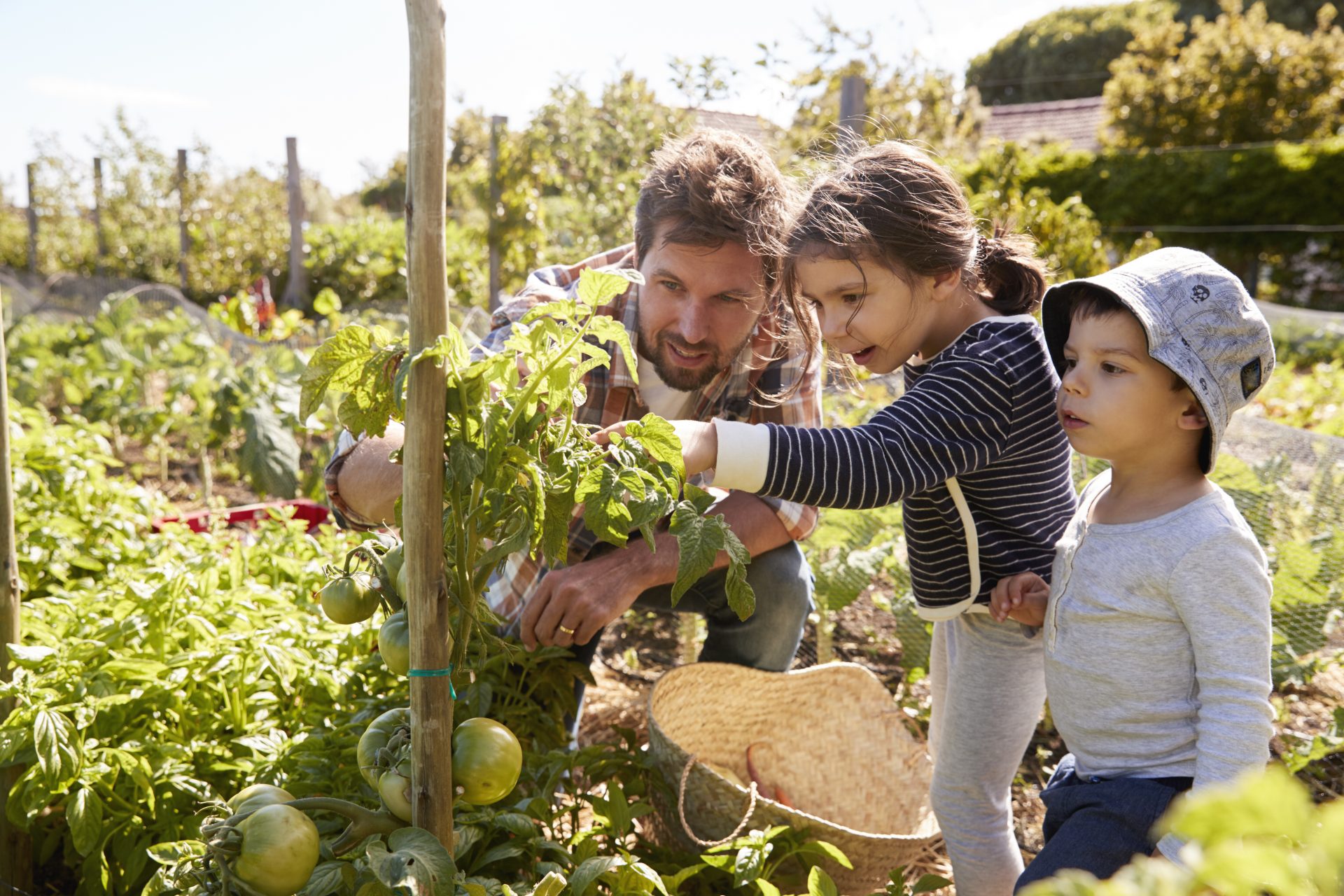
Since it was launched in 2012, 45.6 million kids at almost 75,000 schools have participated in Farm to School-based programming in one way another: visiting farms, planting school gardens, being fed more fresh foods at school meals. And while it’s good news that USDA did release those Farm to School funds, they come with timing and other challenges. For starters, the grants are bigger — between $100,000 and $500,000. And as in previous years, they have a mandate that applicants like farmers, school meal directors and school districts find money from other entities to match 25 percent of the grant. Says Sunny Baker, senior director of programs and policy at the National Farm to School Network, an applicant has to “find $33,000 [of] outside [money] just for the minimum grant, which does make this exceptionally hard for smaller-scale communities.”
Additionally, there’s a new requirement that grant seekers apply with a child nutrition partner. “That’s an awesome idea but in practice, that means you have till [application deadline] December 5 to build trust, build relationships, get this together to apply,” Baker says. And as Nelson points out, many state and municipal agencies are already experiencing budget crises. In one fiscally challenged Massachusetts town, “They’re like, ‘We literally can’t apply for grants,’” she says, because budget constraints mean there’s no longer the staff to fill out applications.
Kids attending schools in California, however, benefit from the state’s vibrant and deeply considered Farm to School program that received $100 million in (state) grants between 2021 and 2024 and was just infused with an additional $20 million. Rather than focusing just on helping farmers offset their costs related to selling to schools and helping schools buy local, California has “facilitated the whole supply chain,” says Beth Katz, a food systems researcher who was co-lead of a new study on the initiative. It has trained school food workers and invested in kitchen infrastructure to facilitate scratch cooking. And it has supported nonprofits and other groups working to support local procurement and education programs. For example, there are now permanent staff housed within the state’s food and agriculture department who make introductions between producers and school district reps, and translate school needs — what produce is desired, at what price and in what amounts — to help farmers plan what to grow. Says Katz, “It really dwarfs any other state or federal program.”
Local food for schools
One Biden administration response to fragile supply chains created by the Covid-19 pandemic was to simultaneously improve both school nutrition and regional food systems with the Local Food for Schools (LFS) program. This USDA grant opportunity was intended to strengthen state initiatives boosting schools’ ability to buy fresh food from local farmers. This past March, the Trump administration cancelled LFS and its $660 million worth of funding.
“While a lot of schools do have the capacity to still buy local within their current budgets, that LFS money” — what Baker calls a “much-needed boost to school food budgets” that encouraged many food-service directors to buy local for the first time — was starting to create necessary, longer-term changes that are now threatened. Baker mentions an Arkansas farmer who “amped up his infrastructure in order to sell to schools, purchased equipment, and was working on getting his hamburger patties to the exact specs that the school districts needed. He lost those contracts when LFS was cancelled.” Some farmers have responded to these sorts of funding loss by hiring fewer workers and cutting back on plantings; another potato farmer whose school contract was cancelled donated the crop to a food pantry — a lovely gesture belying the uglier reality of his lost income.
"States are under immense pressure to fill in for federal cuts to so many programs. They’re going to have to decide what to invest in and how to prioritize different programs that all need funding right now.”
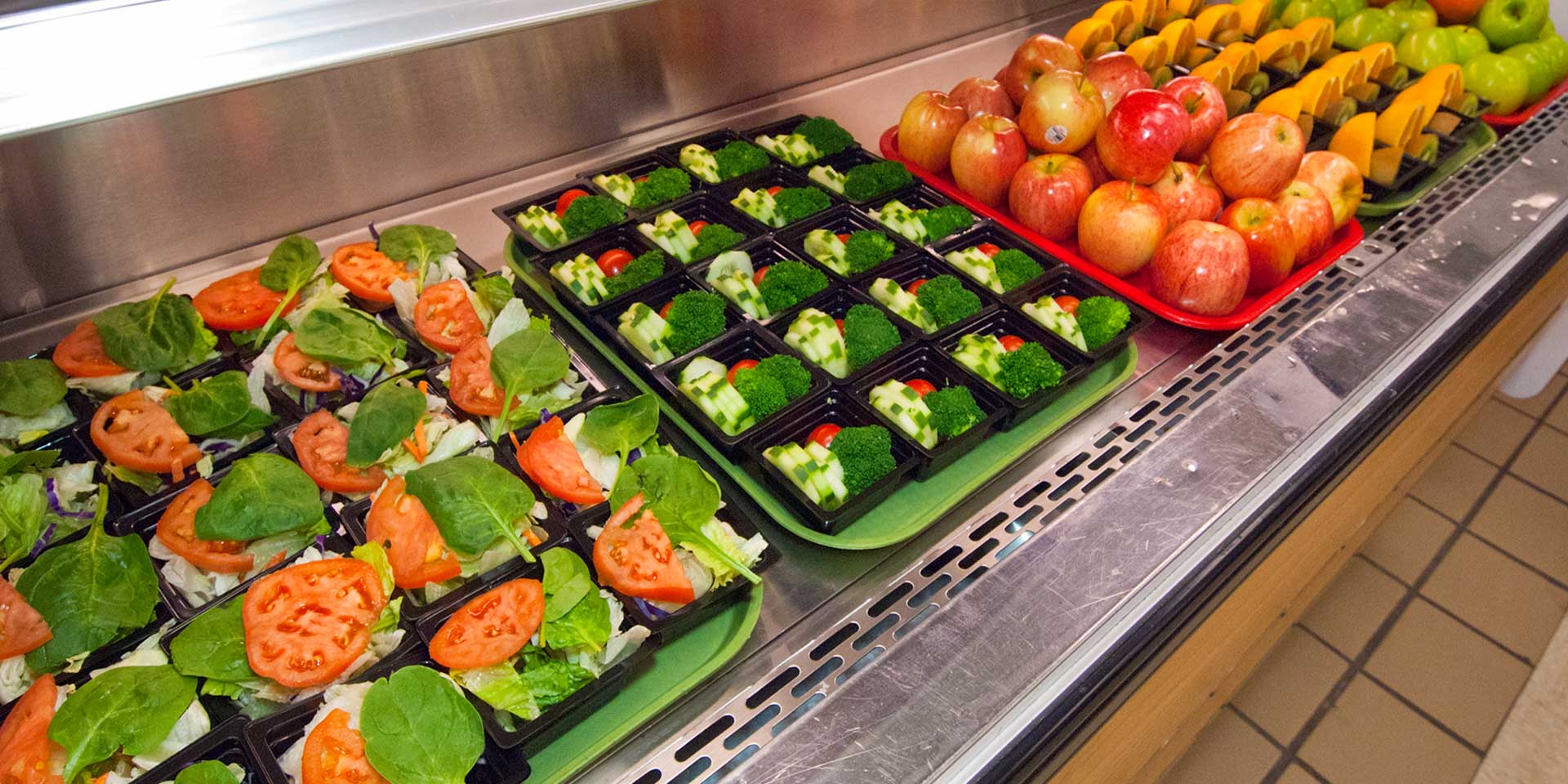
School districts that were already engaged in local food purchasing are in a better position to keep those efforts going “because they’ve seen the value of it,” Nelson says. However, “It’s going to be harder for schools that haven’t done any of that before to try to start something new when [budgets are] so tight.” Washington D.C. and at least 16 states — including Connecticut, Colorado and Utah — already have local food–purchasing programs in place. Interestingly, red-leaning Iowa is getting set to give local food procurement a whirl, earmarking $70,000 for schools to buy state-grown produce and meats; as is deep-red Oklahoma, which allocated $2.5 million for schools to buy produce, nuts and animal-based foods from local farmers and ranchers — proving the issue is nonpartisan. Vermont recently passed a one-time funding infusion of $500,000 to make up for cancelled LFS money.
Whether any of these state-led initiatives will be able to continue or expand as lost federal dollars further strain their coffers remains to be seen. “States are under immense pressure to fill in for federal cuts to so many programs,” says Nelson. They’re “going to have to decide what to invest in and how to prioritize different programs that all need funding right now.”
State initiatives
What would help ease the challenges poised to hit school meal programs across the country? Katz and other sources see hope in the push for Universal School Meals, which offers free breakfasts and lunches to all students regardless of income. During the pandemic, when universal meals were temporarily enacted for all states, “We saw how well it worked to help reduce the paperwork burden [for schools] of separating kids into three categories: free kids, reduced-price kids, kids with the ability to pay,” Katz says.
Nine states have passed universal meals to date. One of the major advantages to this sort of legislation is that it increases participation in school meals. Explains Katz, “The more kids who are eating school food, the more reimbursement dollars come back to that district [from USDA], and the more they can reinvest in their program” — preferably favoring local procurement (New Mexico incentives this) and increasing wages for cafeteria workers.
Still, “We’re depending right now on exceptional food-service directors to go out of their comfortable budget range to provide the really good food that kids deserve,” says Baker. “With the changes that we’re seeing happen and the funds being rolled back, it’s going to be so much harder for school districts to work with local farmers, because we’re not going to have as many local farmers. It’s going to be harder to stretch your budget to buy local blueberries when you’re worried about so much else.”
Where does she see hope? “The resilience and the strength of the communities that are doing this work is incredible. It’s much harder to cancel a contract with a watermelon grower if you are going to see him the next time you’re at the farmers’ market. Those relationships are where my hope lies.”
Get the latest food news from FoodPrint.
By subscribing to communications from FoodPrint, you are agreeing to receive emails from us. We promise not to email you too often or sell your information.
Top photo by Lance Cheung/ UDSA.
More Reading
Food Freedom advocates cite the benefits of deregulation. Food safety is not one of them.
November 21, 2025
How urban orchards improve a community's access to fresh, healthy food
October 30, 2025
Beyond pecan pie: Growers look for new markets for this native nut
October 24, 2025
Why you should seek out local whole-grain flour, and how to use it
October 15, 2025
From Ludacrisp to Cosmic Crisp: How new apples are bred
October 8, 2025
You haven’t had wasabi until you’ve had it fresh — and local
September 11, 2025
Preserving heirloom date varieties in the Coachella Valley
August 21, 2025
No-cook meals: 40+ ways to enjoy peak summer produce without turning on your stove
August 12, 2025
Can rye growers get consumers and retailers excited about rye?
May 19, 2025